 ultimate-guide
Is Expensive Outdoor Gear Worth It? A 2026 Guide
Table of Contents
- Is Expensive Outdoor Gear Actually Worth It?
- Price vs. Performance: The Real Cost of Quality
- Cost-Per-Use: The Framework That Changes Your Buying Decisions
- Best Budget Hiking Gear Brands That Deliver Real Value
- Is Ultralight Gear Worth the Money? Breaking Down the Premium
- Repairability vs. Replaceability: Why Maintenance Matters
- Outdoor Gear Maintenance Tips to Extend Equipment Life
- When to Splurge and When to Save on Outdoor Equipment
Last Updated: August 14, 2026
Is Expensive Outdoor Gear Actually Worth It?
The question outdoor enthusiasts ask most often is whether paying premium prices actually delivers better performance and durability. Expensive outdoor gear isn't inherently superior, but understanding when the investment pays off separates smart buyers from those who overspend on features they'll never use.
At GreatAdventureSupply, the answer depends on three factors: your use case, the specific category of gear, and how you calculate value. A $300 sleeping bag might feel excessive until you realize it will last 15 years and perform in conditions a $80 alternative cannot. Conversely, a premium tent brand's flashy colorway costs extra without adding function.
The real issue isn't price, it's understanding what you're actually paying for. Material science, manufacturing precision, warranty coverage, and repairability all factor into cost. This guide walks you through the framework that separates justified investment from marketing hype, so you can confidently choose gear that matches your actual needs and budget.
Price vs. Performance: The Real Cost of Quality
The relationship between price and performance in outdoor gear is nonlinear. A $50 sleeping pad and a $150 sleeping pad don't deliver three times the warmth. What changes at higher price points is material durability, weight savings, and edge-case performance.
Expensive outdoor gear often costs more because of proprietary materials and manufacturing processes. Down insulation with higher fill power (measured in cubic inches per ounce) traps more heat in less volume. Waterproof-breathable membranes like Gore-Tex cost significantly more than basic coatings, but they manage moisture in ways that extend gear life and comfort. Technical apparel uses precision weaving and finishing that cheaper alternatives skip.
The diminishing returns principle applies hard here. A $200 backpack outperforms a $70 backpack dramatically. A $400 backpack might only improve comfort by 10-15% over the $200 option. At the premium tier, you're often paying for weight savings, warranty coverage, and brand reputation rather than fundamental performance gains.
Entry-level equipment serves casual users well. If you camp once yearly, a budget tent works fine. If you're running multi-day expeditions in variable conditions, the gap between cheap and quality becomes critical. Seam sealing, fabric weight, pole materials, and zippers all affect whether your shelter survives week-long use or fails mid-trip.
Cost-Per-Use: The Framework That Changes Your Buying Decisions
This framework transforms how you evaluate expensive outdoor gear purchases. Instead of staring at a price tag, divide the total cost by realistic annual use, then multiply by expected lifespan.
Example: A $300 tent used 20 nights per year over 10 years = $300 ÷ (20 × 10) = $1.50 per night. A $100 tent lasting 3 years = $100 ÷ (20 × 3) = $1.67 per night. The expensive option is cheaper over time.
This calculation flips the script for expensive gear categories. Sleeping bags, boots, and backpacks are investment pieces if you use them regularly. A $400 sleeping bag used 50 nights annually over 12 years costs $0.67 per use. A $120 bag lasting 3 years at the same usage costs $0.80 per use. The premium option wins.
Cost-per-use reveals when you should splurge and when budget gear makes sense. Specialized equipment you'll use occasionally, ice axes, avalanche transceivers, technical climbing gear, justifies premium quality because failure has real consequences. Casual items like picnic blankets or basic flashlights don't warrant premium pricing.
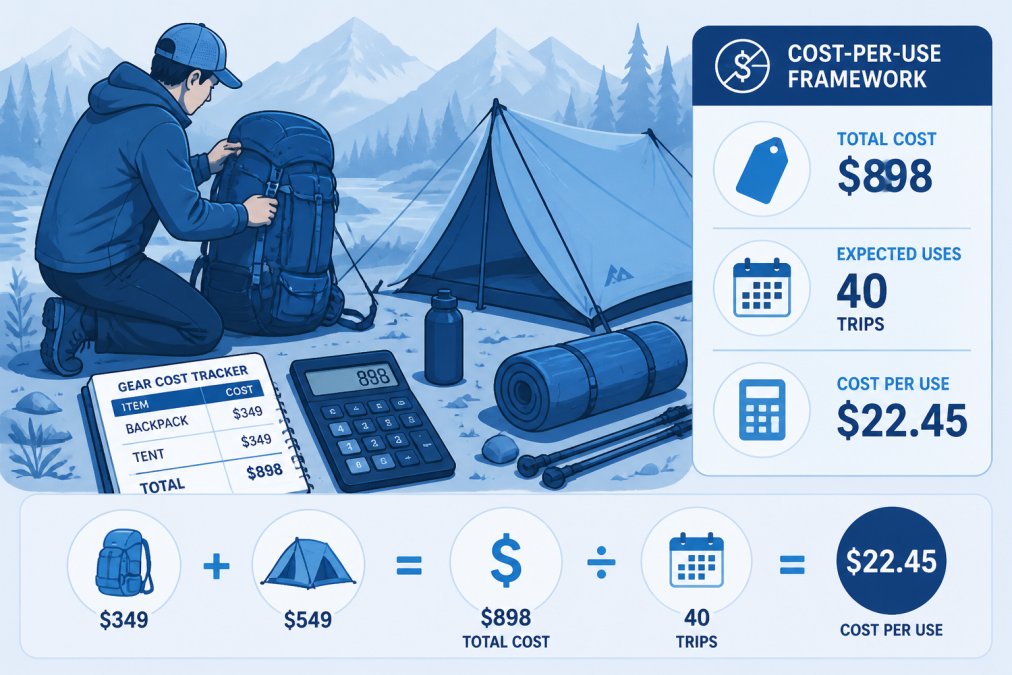
Track your actual usage patterns for a season before buying premium versions. If you think you'll camp 30 nights yearly but actually camp 8 times, the math changes completely. Overestimating use is one of the biggest mistakes outdoor shoppers make.
Best Budget Hiking Gear Brands That Deliver Real Value
Not every budget option is junk, and not every expensive brand deserves its price tag. Several brands hit the sweet spot between affordability and functional design.
Budget-friendly brands focus on eliminating unnecessary features and marketing costs. A sleeping bag from a direct-to-consumer brand often costs 40% less than an equivalent mainstream option because there's no retail markup. The insulation performs identically; you're just not paying for a fancy store display.
Some options work well for beginners testing whether they'll stick with the hobby.
The catch: budget brands rarely offer the durability or warranty coverage of premium options. Zippers fail sooner. Seams weaken faster. Fabrics degrade under UV exposure more quickly. If you're planning occasional day hikes, this doesn't matter. If you're a regular backcountry user, the savings evaporate when you replace gear every 2-3 years instead of 8-10.
Hybrid strategy: Buy budget for items you rarely use and will likely outgrow (entry-level backpacks, basic rain jackets). Invest in premium versions of gear you use constantly (sleeping bags, boots, core layers). This balances cost and performance across your entire kit.
Is Ultralight Gear Worth the Money? Breaking Down the Premium
Ultralight backpacking has created an entire premium segment where ounces cost dollars. A standard 3-season tent weighs 4-5 pounds. An ultralight equivalent weighs 1.5-2 pounds and costs double the price.
The question: is the weight savings worth the premium? For day hikers and car campers, absolutely not. For thru-hikers covering 15-20 miles daily, every pound matters. Carrying 15 pounds versus 25 pounds over 2,000 miles changes the experience fundamentally. Foot pain, knee stress, and fatigue compound with heavier loads.
Ultralight gear uses advanced materials, silnylon fabrics, carbon fiber poles, proprietary insulation, that cost more to manufacture. The engineering is more complex. Tolerances are tighter. You're paying for material science and precision manufacturing, not just brand prestige.
The tradeoff: ultralight gear often sacrifices durability and weather resistance. A 1.5-pound ultralight tent handles fair weather well but struggles in sustained wind or heavy snow. It's designed for specific conditions. A heavier tent offers more margin for error and longer lifespan.
Cost-per-use analysis usually justifies ultralight gear for serious backpackers. If you're covering 500+ miles yearly, the weight savings compound into real comfort and injury prevention. If you're doing occasional weekend trips, the premium doesn't justify itself.
Repairability vs. Replaceability: Why Maintenance Matters
This distinction separates durable goods from disposable ones. Expensive outdoor gear should be repairable, meaning you can replace worn components rather than discarding the entire item.
Premium brands design for repairability. Zippers are replaceable. Seams can be re-sealed. Fabric patches work. Pole segments swap out. Boots can be resoled. This extends useful life significantly. Budget gear is often glued together in ways that make repair impossible. A broken zipper on a $80 tent means buying a new tent. A broken zipper on a $300 tent means a $20 replacement.
Environmental impact tilts heavily toward repairability. Buying a new tent annually because the old one broke creates waste. Investing in quality gear you can repair for years aligns with sustainable consumption. The outdoor industry increasingly emphasizes this distinction.
Check repairability before buying. Can you order replacement parts? Does the brand offer repair services? Are there independent repair shops in your area? These questions matter more for expensive gear because you're betting on long-term ownership.
Outdoor Gear Maintenance Tips to Extend Equipment Life
Maintenance separates 3-year gear from 10-year gear. Most outdoor enthusiasts neglect this, then blame quality when gear fails prematurely.
Clean gear promptly after use. Dirt, salt, and debris break down fabrics and coatings. Rinse tents with fresh water, wipe down backpacks, and clean boots. This takes 15 minutes and extends life years.
Store gear properly. Hanging a wet tent in direct sun degrades fabric. Storing a sleeping bag compressed in a stuff sack permanently damages insulation. Hang sleeping bags loosely, store tents dry and uncompressed, and keep backpacks in cool, dry spaces. Moisture and heat are the enemies.
Re-seal seams periodically. Seam sealant wears away. Every 2-3 years, inspect seams and reapply sealant if water beads no longer form. This costs $15 and prevents leaks that ruin trips.
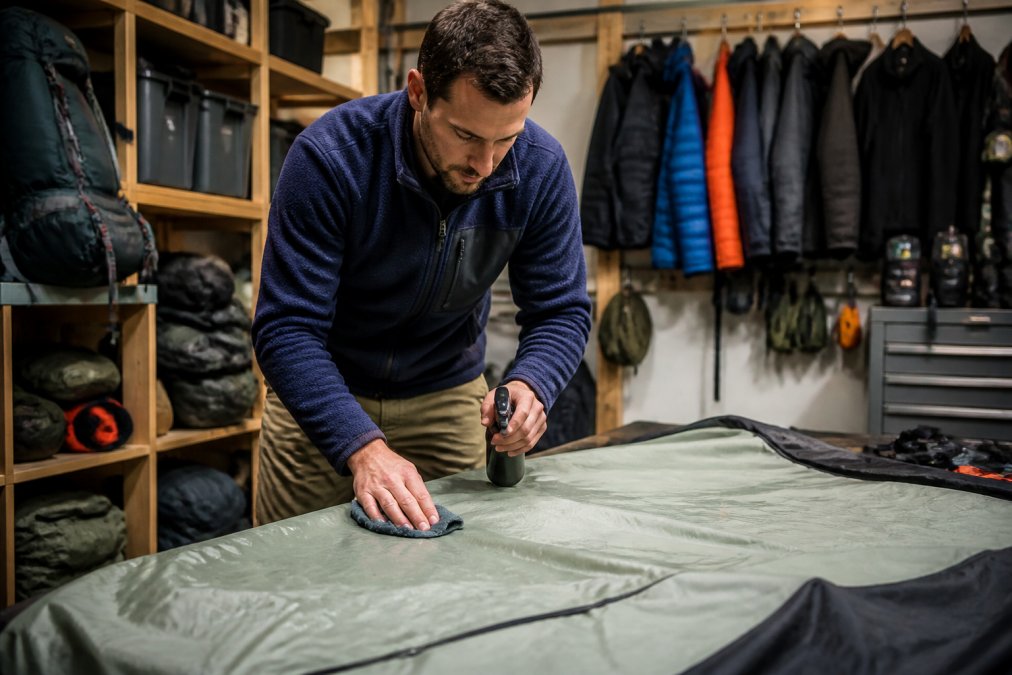
Treat water-resistant coatings. Fabric coatings degrade from UV exposure and washing. Reproofing treatments restore water resistance. Apply every 1-2 years depending on use frequency. This prevents expensive replacement.
Inspect zippers and hardware. Zippers fail more often than fabric. Clean zippers with a soft brush, apply zipper lubricant, and replace slider assemblies when they strip. Hardware corrosion is less common but happens in salt-water environments, rinse thoroughly after coastal trips.
Replace insulation strategically. Down loses loft over time. If your down sleeping bag stops warming adequately, professional re-down services can refresh it for a fraction of replacement cost. Synthetic insulation can't be refreshed, but proper storage slows degradation.
When to Splurge and When to Save on Outdoor Equipment
Strategic spending maximizes value. Splurge on gear you use constantly and that directly affects safety or comfort. Save on items you use rarely or that don't impact core function.
Splurge on:
- Sleeping bags (used 100+ nights yearly)
- Boots (direct impact on foot health)
- Backpacks for regular use (comfort matters over distance)
- Water filtration (non-negotiable for safety)
- Navigation tools (safety-critical)
- Core insulation layers (worn constantly)
Save on:
- Stuff sacks and organization (function is identical across price points)
- Casual rain jackets (used infrequently)
- Compression bags (cheap alternatives work fine)
- Carabiners for non-critical uses (redundant safety items)
- Lightweight cookware (performance is similar)
- Dry bags (basic waterproofing is sufficient)
The pattern: splurge where failure creates real consequences or where you spend significant time. Save where the gear is backup, rarely used, or where performance is identical across price points.
Brand equity matters less than specifications. A sleeping bag from an unknown brand with proper fill power and construction performs identically to a famous brand's equivalent. You're paying for reputation, not function. Understand what you're actually buying before deciding if the premium makes sense.
According to outdoor gear durability research from Backpacker Magazine, gear failure rates correlate more strongly with maintenance and usage patterns than with brand prestige. Expensive gear fails when neglected. Budget gear lasts when maintained properly.
Consider the rental market as a testing ground. Rent expensive gear before buying. A $300 sleeping bag feels wasteful until you've tested it on actual trips and confirmed it meets your needs. Many outdoor retailers offer rental programs, use them to validate purchases.
The Outdoor Industry Association's sustainability report emphasizes that the most sustainable purchase is one you'll actually use and maintain. Buying expensive gear you won't use is worse than buying budget gear you will. Honest self-assessment prevents waste.
The decision to invest in expensive outdoor gear ultimately rests on three questions: Will you use it enough to amortize the cost? Will you maintain it properly to extend its life? Does the performance gap justify the premium for your specific use case? Answer those honestly, and you'll make choices you won't regret. At GreatAdventureSupply, we help you evaluate these tradeoffs with our curated collections of proven gear, equipment selected for real-world performance, not marketing hype. Browse our inventory and find the right balance between investment and practicality for your next adventure.
Frequently Asked Questions
What is the cost-per-use rule for determining if expensive outdoor gear is worth it?
Cost-per-use divides the total price by the number of times you'll realistically use the item. A $300 tent used 30 times costs $10 per use; the same tent used 5 times costs $60 per use. This framework reveals whether premium gear makes financial sense for your activity level. High-end equipment becomes a better investment the more frequently you use it, making it worthwhile for regular adventurers but potentially wasteful for casual users.
Does expensive outdoor gear actually last longer than budget alternatives?
Premium gear often outperforms budget options in harsh conditions due to superior materials, construction, and warranty coverage. High-end waterproof-breathable membranes, down fill power, and technical apparel tend to maintain performance longer. However, longevity depends on maintenance and usage patterns. Well-maintained budget gear can outlast neglected premium equipment. The real advantage of expensive gear is consistent performance in extreme conditions and reduced failure risk during critical moments on the trail.
Are ultralight backpacking items worth the premium price?
Ultralight gear reduces weight significantly, critical for multi-day backcountry trips where every ounce matters. However, the price-to-performance ratio diminishes at the extreme end. A $400 ultralight tent saves 2 pounds versus a $150 budget tent; whether that justifies the cost depends on trip frequency and distance. Ultralight gear shines for thru-hikes and remote expeditions but may be unnecessary for car camping or casual day hikes. Evaluate your actual use case before paying premium prices for marginal weight savings.
What's the best way to maintain outdoor gear to extend its life?
Regular maintenance dramatically extends gear lifespan and performance. Clean gear after each trip, rinse tents, dry sleeping bags thoroughly, and wipe down technical apparel. Store equipment in cool, dry conditions away from direct sunlight. Repair small damage immediately before it spreads. Treat waterproof-breathable membranes periodically to maintain water resistance. Proper maintenance often costs less than replacement and protects your investment, whether you own budget-friendly alternatives or premium equipment. This practice is equally important for all price points.
This article was written using GrandRanker