 ultimate-guide
Why Use Braided Line for Saltwater Fishing
Table of Contents
- Why Braided Line Outperforms Mono in Saltwater
- Braided Line vs Monofilament for Saltwater: Key Differences
- How to Tie a Leader to Braided Line
- Best Braided Line for Spinning Reels
- Common Downsides and How to Manage Them
- Equipment Compatibility: Rod Guides and Reel Capacity
- Frequently Asked Questions
Last Updated: September 27, 2026
Why Braided Line Outperforms Mono in Saltwater
Braided line dominates saltwater fishing because its zero-stretch construction delivers direct contact with your lure, sharper hook sets, and far better bite detection in deep or moving water. The case for why use braided line for saltwater fishing starts with one fact: mono stretches, and stretch is the enemy of feel.
Braid isn't better at everything, just at what matters most in current, structure, or depth. The trade-offs are real but manageable.
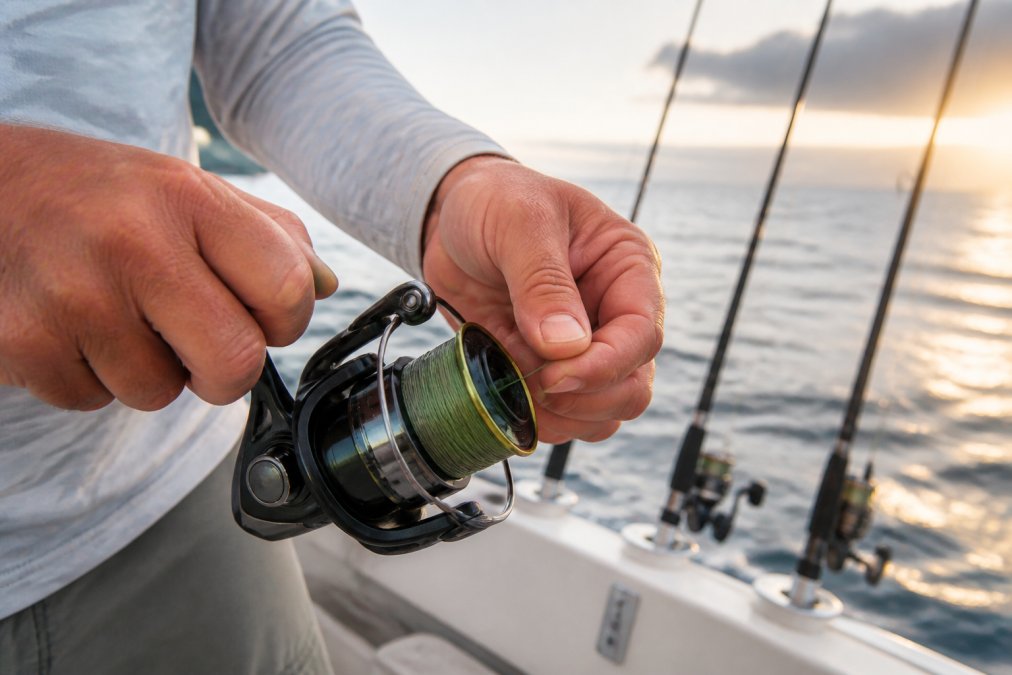
A taut braid main line transmits the tap of a fish mouthing your bait almost instantly, while monofilament absorbs that signal before it reaches your hand. That sensitivity is why braid is standard on serious saltwater setups.
Braided Line vs Monofilament for Saltwater: Key Differences
Braided line and monofilament differ in four ways that change how you fish: stretch, diameter, abrasion resistance, and memory. Braid is a woven fiber with near-zero stretch and a thin diameter for its strength. Monofilament is a single extruded strand that stretches under load and holds a coiled "memory."
Sensitivity and Bite Detection
Bite detection is the strongest argument for braid. Because braid has essentially no stretch, every tick, bump, and soft take travels straight up the line to your rod tip and hand, while monofilament cushions those signals and delays your reaction. For bottom fishing, jigging, or working a lure through current, that delay costs fish, a common mistake is blaming a slow bite when a stretchy main line is muting the strike.
Casting Distance and Diameter Advantages
Braided line casts farther than mono of equal strength because it's far thinner for the same pound test. That thin diameter cuts wind resistance and friction, adding distance on every cast, and more line capacity on the same reel, which matters when a fish makes a long run. A 30-pound braid is dramatically thinner than 30-pound mono, so you fish heavier line without sacrificing distance or capacity.
Abrasion Resistance and Durability
Braid resists abrasion well against structure, with a caveat. The woven fibers are tough and don't degrade from UV exposure the way mono does over a season, holding up against rocks, dock pilings, and oyster bars. The catch: bare braid has poor abrasion resistance against itself and sharp edges, exactly why saltwater anglers run a fluorocarbon leader. The leader takes the abrasion and the teeth, while the braid main line handles casting and sensitivity.
American Sportfishing Association on line and tackle guidance
How to Tie a Leader to Braided Line
Tying a leader to braided line requires a knot that grips slick, low-friction braid, which is why the FG knot is the standard for saltwater. Braid slips out of knots that work fine on mono, so you need a connection designed for it. The FG knot is a knotless-style weave that cinches into a slim, strong braid-to-leader connection that passes through rod guides cleanly and holds under heavy drag pressure.
Step-by-Step: The FG Knot
- Lay about 18 inches of fluorocarbon leader across your fingers and hold the braid tag end.
- Wrap the braid over and around the leader in an alternating over-under pattern, 16 to 20 times.
- Keep tension on the wraps so they stack tightly without overlapping.
- Pass the braid tag end back through the loop you created at the start.
- Wet the knot and pull the braid steadily so the wraps cinch down onto the leader.
- Trim the leader tag close and finish with a few half hitches over the wraps to lock it.
- Test with a firm pull before you cast.
Choosing the Right Braid-to-Leader Knot
The FG is the gold standard, but not the only option. The right knot depends on your leader diameter, conditions, and how much time you have.
| Knot | Best For | Tying Difficulty | Guide Passage |
|---|---|---|---|
| FG Knot | Heavy leaders, long casts, big fish | High | Excellent |
| Alberto Knot | Mid-weight leaders, quick reties | Moderate | Very good |
| Albright Knot | Heavier mono leaders, simple setups | Moderate | Good |
| Double Uni | Inshore, low light, cold hands | Low | Fair |
| PR Knot | Extreme strength, dedicated jigging | Very high | Excellent |
A few practical rules of thumb.
Leader Length and Diameter Matching
Leader length is not arbitrary. A short leader of 18 to 24 inches is enough for most inshore casting, where fish are not line-shy and you want the braid doing the casting work. Step up to 3 to 6 feet in clear water, around pressured fish, or near structure where the leader takes the abrasion. For vertical jigging and bottom fishing, a 6 to 10-foot leader gives enough abrasion resistance without dragging a long, heavy connection through the guides on every drop.
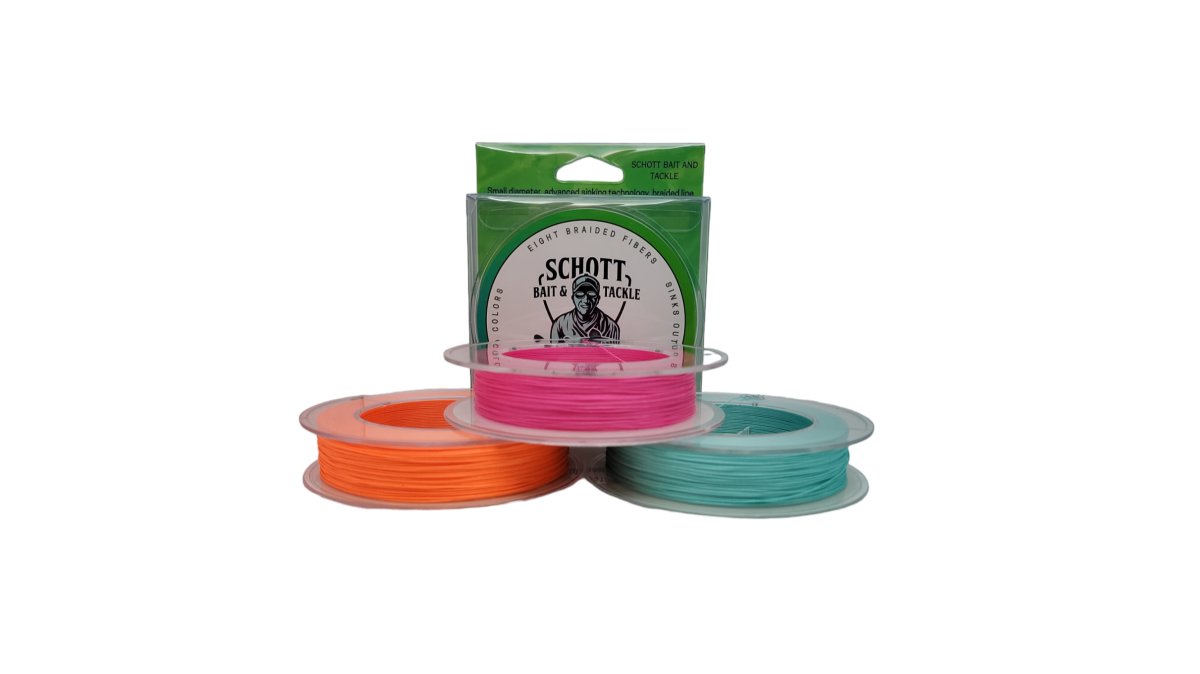
Sinking Braided Fishing Line | Schott →
Troubleshooting Braid-to-Leader Knots
Best Braided Line for Spinning Reels
The best braided line for spinning reels is matched to your target species, water depth, and cover, not simply the highest pound test on the shelf. Spinning reels reward thin, smooth, low-memory braid because it flows off the spool with fewer tangles. For finesse setups, 10 to 15-pound braid covers drop-shot and Ned rig presentations. For all-around saltwater work, 15 to 30-pound braid handles most inshore and nearshore situations.
| Braid Weight | Best For | Typical Setup |
|---|---|---|
| 10-15 lb | Finesse, drop shot, Ned rig | Light spinning |
| 15-30 lb | All-around inshore and nearshore | Medium spinning |
| 30 lb + | Deep water, heavy cover | Heavy spinning |
Common Downsides and How to Manage Them
Braid's downsides are real, but every one has a fix. The complaints anglers raise most are wind knots, backlashes, and the need for a leader. None should keep you on mono if sensitivity and casting distance are your priorities.
Wind Knots and Backlashes
Wind knots and backlashes happen when loose line loops off the spool and tangles on the cast, and braid's slick surface makes it prone to them. The fix is disciplined line management: close the bail by hand, keep steady tension when retrieving, and avoid overfilling the spool. Spooling also matters, if braid goes on loose, it digs into itself under drag pressure.
Equipment Compatibility: Rod Guides and Reel Capacity
Rod guides and reel capacity are the two equipment factors that decide whether braid performs or fights you. Match your gear to the line and the whole system works better.
Rod Guides: Why Braid Wears Them Differently
Braid's thin diameter and abrasive surface put different demands on rod guides than monofilament does. Mono is a smooth, relatively soft extruded strand that glides across a guide ring. Braid is a woven fiber with a rougher surface, and under tension it acts like a fine saw against softer guide materials, the mechanism behind grooving complaints on older rods.
Reel Capacity and Drag Systems
Braid's thin diameter lets you load more line on the same spool, a real advantage when a fish runs. A reel that holds 200 yards of 20-pound mono might hold 300 yards or more of 20-pound braid, extra capacity that keeps a long-running fish from spooling you.
Environmental Impact and Line Disposal
Braid does not break down quickly, a durability advantage on the water and a disposal problem off it. Cut tag ends, worn line, and backlashed tangles belong in the trash or a dedicated line recycling program, never over the side. Many tackle shops and marinas maintain monofilament and braid recycling bins, and a small line spool in your bag makes it easy to pack out what you cut.
NOAA Fisheries on responsible fishing practices
Frequently Asked Questions
What are the downsides of braided fishing line?
Braided line has zero stretch, which can make hook sets too aggressive and pull hooks from soft-mouthed fish. It's also more visible underwater, so a fluorocarbon leader is often needed. Wind knots and backlashes are more common until you adjust your casting stroke. Braid can cut through rod guides over time if they're not smooth, and it doesn't degrade as quickly as mono, so it should be disposed of responsibly.
Is 20lb braid stronger than 20lb mono?
Yes, at the same rated pound test, braid typically has a much higher tensile strength and a smaller diameter. A 20lb braid is often equivalent in diameter to 6-8lb mono, which means you can fit more line on your reel and cast farther. However, braid has less abrasion resistance than mono, so a leader is essential around rocks and structure.
Does braided line require a monofilament or fluorocarbon leader?
In most saltwater situations, yes. A fluorocarbon leader adds abrasion resistance, reduces visibility, and provides a bit of stretch to absorb sudden runs. For toothy fish like bluefish or Spanish mackerel, a wire leader may be needed. The leader also makes it easier to break off if you get snagged, saving your main line.
How does braided line affect casting distance in saltwater?
Braid's smaller diameter and lack of line memory let it flow through the guides more smoothly, which typically increases casting distance by 10-20% compared to mono of the same pound test. It also cuts through wind better. Just be sure to wet the line before casting to reduce friction and prevent wind knots.