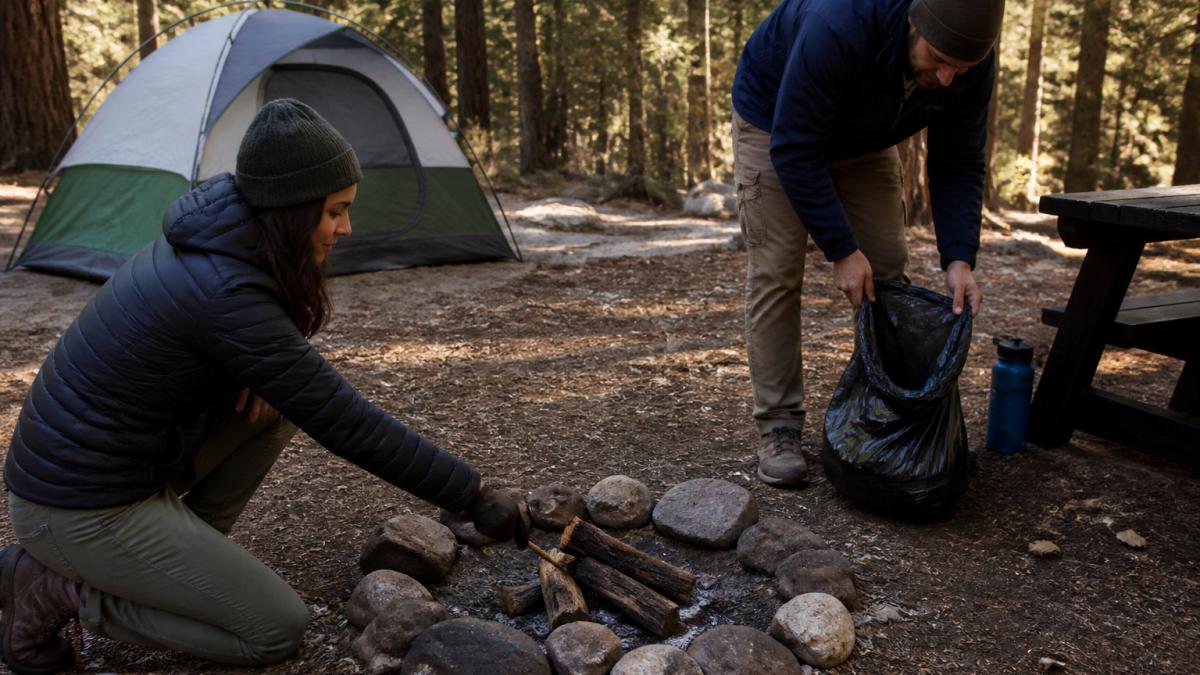
 ultimate-guide
Camping Etiquette for National Parks: 2026 Guide
Table of Contents
- Why Camping Etiquette for National Parks Matters More Than Ever
- Campground Noise Etiquette: Quiet Hours, Generators, and Digital Devices
- How to Store Food in Bear Country: Bear Boxes, Lockers, and Wildlife-Resistant Storage
- Leave No Trace Principles in Practice: From Campsite Boundaries to Gray Water
- Pet Rules, Leash Laws, and Pet Waste Etiquette at National Parks
- Reservations, Permits, and Arrival Procedures: What to Know Before You Go
- Camping Etiquette for Group Camping and Accessibility: Respecting Shared Spaces
- Conclusion: Pack Your Manners and Gear for a Better Trip
- Frequently Asked Questions
Last Updated: October 2, 2026
Why Camping Etiquette for National Parks Matters More Than Ever
Camping etiquette for national parks is the set of shared rules and habits that keep campgrounds, trails, and wildlife healthy while ensuring every visitor gets a fair shot at a good trip.
This guide walks through the rules that matter most, from quiet hours to bear boxes, so your next trip runs smoothly instead of ending in a ranger visit.
Campground Noise Etiquette: Quiet Hours, Generators, and Digital Devices
Campground noise etiquette starts with one rule: quiet hours, typically 10 p.m. to 6 a.m., are enforced, not suggested. Rangers can and do issue citations for violations, and the citation usually arrives because a neighbor logged a complaint, not because a ranger was patrolling for fun.
Generators add a second layer. Most parks restrict generator hours to short daytime windows, and some prohibit them in tent loops entirely. A generator that runs during allowed hours still causes friction if it is positioned near a tent pad, so point the exhaust away from neighboring sites and keep the unit on your own pad. Check your specific park's National Park Service camping regulations before you pack one.
Digital noise is the etiquette gap most campers miss
A Bluetooth speaker at moderate volume in the afternoon is usually fine. The same speaker at 11 p.m. is not. What most guides skip is that "digital noise" includes three separate problems:
- Amplified audio. Sound carries farther across water and down canyon walls than across open forest. A speaker that seems quiet at your picnic table can be clearly audible three sites over. Test your volume from 50 feet away before assuming it is fine. Headphones solve the problem entirely and are the single easiest etiquette upgrade a camper can make.
- Drones. The National Park Service prohibits launching, landing, or operating unmanned aircraft on lands and waters it administers (Uncrewed Aircraft in the National Parks (U.S. National Park Service)). That means no drone flights from your campsite, no matter how quiet the drone is, the rule is about the aircraft, not the decibel level. If you want aerial footage, fly outside park boundaries and follow FAA rules for recreational flight.
- Light pollution. High-intensity lanterns, string lights, and vehicle headlights aimed at a neighbor's tent are a form of noise. Use a red-light or low-lumen setting after dark, aim lights down and inward, and turn off exterior vehicle lights when you arrive at night rather than leaving them on while you set up.
A practical quiet-hours checklist
- Know your park's posted quiet hours and treat the start time as a hard stop, not a suggestion.
- Move conversations inside your tent or to a whisper after quiet hours begin.
- Silence phone notifications; a single loud alert at 2 a.m. travels through canvas.
- If you arrive after dark, set up with a headlamp on low, not a lantern on high.
- If a neighbor is violating quiet hours, contact the campground host or ranger rather than confronting them yourself.
How to Store Food in Bear Country: Bear Boxes, Lockers, and Wildlife-Resistant Storage
Food storage is the rule that gets campers cited most often, and it is also the one that keeps bears alive.
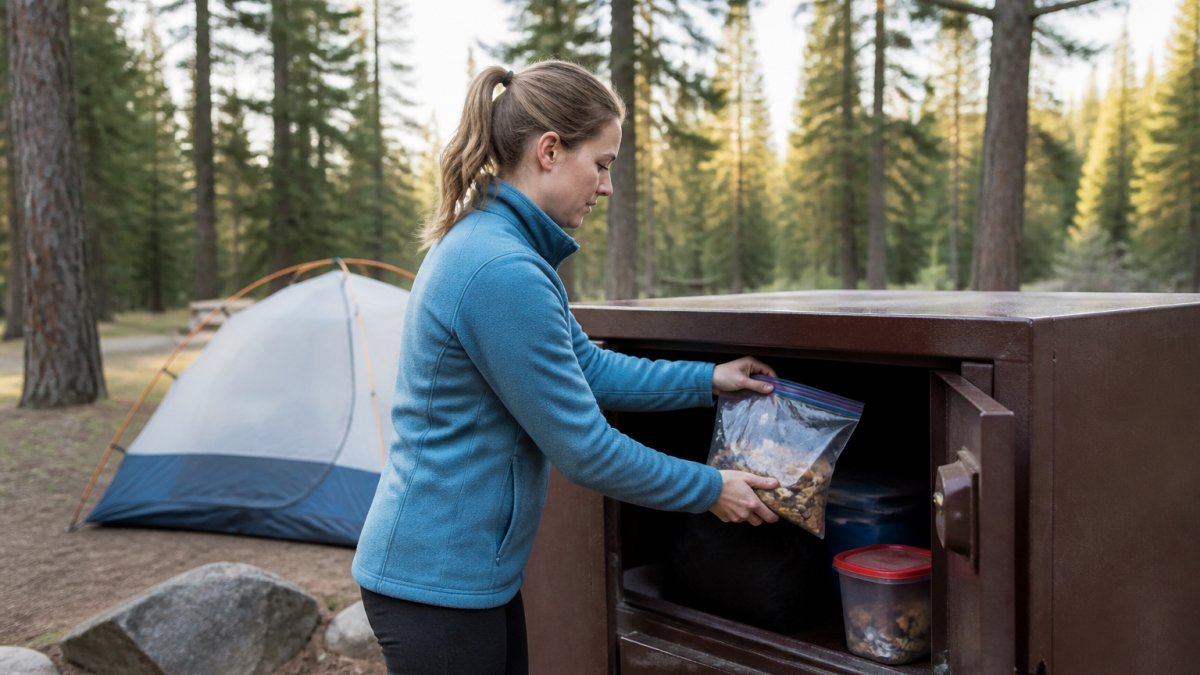
The list of "scented items" is longer than most people think:
- Food and drinks, including sealed packages
- Coolers, even empty ones
- Toiletries, toothpaste, and sunscreen
- Pet food and bowls
- Cooking clothes and dish towels
A common mistake is leaving a cooler out "just for a minute" while setting up camp. That minute is when a bear walks through. Store first, unpack second.
Leave No Trace Principles in Practice: From Campsite Boundaries to Gray Water
Leave No Trace principles translate into concrete habits at the campsite level. The seven principles cover planning, durable surfaces, waste, wildlife, campfires, and respect for others, and the Leave No Trace Center for Outdoor Ethics publishes the full framework.
In practice, that means:
- Camp only on designated campsite pads or durable surfaces
- Keep your site boundary tight; do not trample vegetation to make room
- Pack out all trash, including food scraps and micro-trash
- Use a campfire ring only where fires are allowed, and check fire bans first
- Strain and pack out gray water, or dispose of it per park rules, never in a stream
Pet Rules, Leash Laws, and Pet Waste Etiquette at National Parks
Leash laws in national parks are strict: pets must be on a leash no longer than six feet at all times, and most trails and backcountry areas are closed to pets entirely.
What most guides miss is how much pet waste matters. Bag it, then carry it out. Leaving a bagged pile on the trail is still littering, and rangers treat it that way.
Before you go, check your park's pet regulations. Rules vary widely between frontcountry campgrounds and backcountry zones.
Reservations, Permits, and Arrival Procedures: What to Know Before You Go
Reservation systems and permits are the logistics layer of camping etiquette. Most popular parks now require advance reservations for campsites, and many backcountry routes require a separate wilderness permit. Showing up without one is the fastest way to be turned away.
Arrival procedures matter too:
- Check in at the visitor center or campground host station if required
- Confirm your site number and check-out time
- Read the park alerts board for fire bans, wildlife activity, and closures
- Know where the nearest dump station is if you have a black water tank
A quick stop at the visitor center on arrival saves hours of guesswork later.
Camping Etiquette for Group Camping and Accessibility: Respecting Shared Spaces
Group camping dynamics and accessibility etiquette are the two areas competitors cover least, and they matter most in shared loops. A group of ten that treats the campground like a private venue ruins the trip for everyone around them, and a camper who blocks an accessible path does the same thing with a single cooler.
Group camping: logistics before personality
Most group friction is a logistics problem, not a personality problem. Solve it before you arrive:
- Book the right site type. Many parks offer dedicated group sites with higher occupancy limits and their own rules on vehicles, generators, and quiet hours. Booking two adjacent standard sites and treating them as one large site usually violates occupancy and vehicle limits.
- Assign roles. Name one person as the noise and quiet-hours lead, one as the food-storage lead, and one as the waste and recycling lead. Rotate the roles daily on longer trips so no one burns out.
- Set a shared quiet-hours agreement. Agree on a hard stop for amplified audio and group conversation, and pick a central gathering spot that is not directly beside another party's tent.
- Contain your footprint. Keep group gear, coolers, and chairs inside your site boundary. Spreading into the loop road or an empty neighboring pad is the most common group complaint.
- Stagger generators and cooking. If multiple vehicles have generators or camp stoves, coordinate start times so the loop is not hit with everything at once.
- Plan shared meals around one cook station. A single consolidated kitchen reduces traffic, noise, and food-storage mistakes.
- Leave the site better than you found it. Groups generate more micro-trash. Do a final sweep of the entire site, not just your own tent area.
Accessibility etiquette: keep shared infrastructure clear
The principle is simple: accessible sites, paths, and facilities are not overflow parking or gear staging. In practice, that means:
- Keep ramps, paved paths, curb cuts, and accessible restroom entrances clear at all times.
- Do not park vehicles, bikes, or coolers in the shared corridor near an accessible site.
- If you are camping near an accessible site, keep your gear inside your own boundary so the neighbor has room to maneuver adaptive equipment.
- Do not use an accessible campsite or accessible parking space as a short-term staging area, even for a few minutes.
- Offer help only when it is requested. Many campers using adaptive equipment have their own routines and do not need unsolicited assistance.
- Keep service animals and pets leashed and away from accessible paths and ramps.
When the two overlap
Large groups and accessible sites often sit near each other in the same loop. The overlap is where etiquette breaks down fastest. If your group is near an accessible site, treat the accessible path as a no-gear zone, keep group noise pointed away from that site, and check with the campground host if you are unsure where your group's footprint should end.
Conclusion: Pack Your Manners and Gear for a Better Trip
The rules in this guide only work if your gear supports them. A cooler that seals properly, a storage system that keeps scented items contained, and a camp kitchen that keeps food off the ground all make etiquette easier to follow. GreatAdventureSupply carries the Workspace Camp Collection, a modular camp kitchen and storage system with a nesting soft cooler and dry stash containers, plus the VOZ Camp Kitchen with a built-in sink and water tank for clean gray water handling. Get started with GreatAdventureSupply and pack gear that makes good camping habits automatic.

Frequently Asked Questions
Is camping permitted in national parks?
Yes, camping is permitted in most national parks, but many require reservations and permits, especially during peak season. Camping is usually restricted to designated campsites or campgrounds. Backcountry camping often needs a wilderness permit. Check the specific park's website for rules, as some parks have strict quotas or seasonal closures. Always camp only in designated areas to protect natural resources.
What are the seven principles of Leave No Trace?
The seven Leave No Trace principles are: 1) Plan ahead and prepare, 2) Travel and camp on durable surfaces, 3) Dispose of waste properly, 4) Leave what you find, 5) Minimize campfire impacts, 6) Respect wildlife, and 7) Be considerate of other visitors. Following these principles helps protect national parks for future generations and ensures a positive experience for everyone.
How do I properly store food to prevent wildlife encounters in national parks?
Store all food, trash, and scented items in a bear box, food storage locker, or wildlife-resistant container. Never leave food in your tent or unattended. In backcountry areas, hang food at least 10 feet off the ground and 4 feet from tree trunks. Use bear canisters where required. Proper food storage in bear country is critical to avoid attracting wildlife and keeping both animals and campers safe.
What are the quiet hours rules in federal campgrounds?
Most federal campgrounds enforce quiet hours from 10 p.m. to 6 a.m., though times can vary by park. During these hours, generators must be off, music should be kept low or use headphones, and voices should be kept down. Some parks have generator hours limited to certain times of day. Always check the specific campground's rules and respect your neighbors' right to a peaceful night.