 ultimate-guide
How to Read Outdoor Gear Reviews: A Practical Guide
Table of Contents
- Why Reading Outdoor Gear Reviews Matters
- How to Spot Fake Gear Reviews and Affiliate Bias
- Understanding Outdoor Gear Testing Methodology
- What to Look for in Backpacking Gear Reviews
- Distinguishing Between Expert Reviews and User-Generated Content
- Reading Product Lifecycle and Long-Term Performance Data
- How to Evaluate Technical Specs and Material Science Claims
- Conclusion
Last Updated: August 24, 2026
Why Reading Outdoor Gear Reviews Matters
Outdoor gear reviews are your primary defense against buying equipment that fails when it matters most. Whether you're planning a week-long backcountry trek or a casual family camping trip, the gear you choose directly impacts your safety, comfort, and enjoyment.
The problem is that not all reviews are created equal. Some are written by people who've genuinely tested gear in harsh conditions. Others are written by affiliate marketers who've never left their desk. Learning how to read outdoor gear reviews is essential because it determines whether you make informed decisions or get misled by marketing hype and hidden financial incentives.
This guide walks you through the specific techniques for evaluating outdoor gear reviews, spotting bias, understanding testing methodology, and distinguishing between genuine expertise and paid promotion. By the end, you'll know exactly what to look for when reading reviews and how to separate the signal from the noise.
How to Spot Fake Gear Reviews and Affiliate Bias
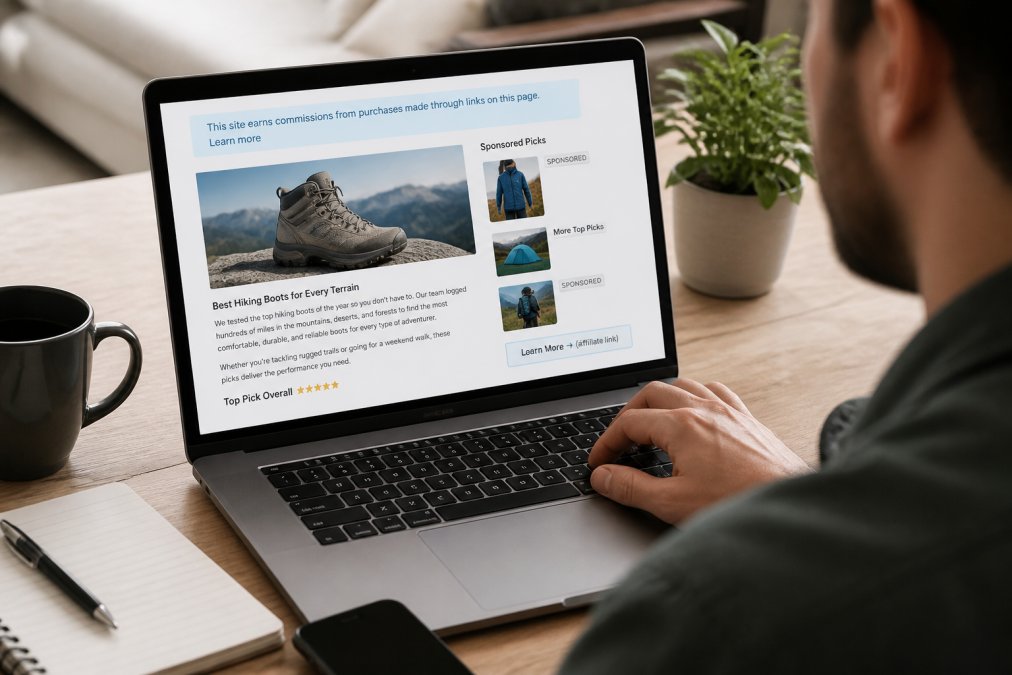
Identifying affiliate disclosure and sponsored content
Affiliate bias is the most common form of deception in outdoor gear reviews. A reviewer earns a commission every time someone clicks their link and makes a purchase, creating pressure to recommend products regardless of actual quality.
Federal Trade Commission guidelines require reviewers to clearly disclose when they have a financial stake in a product's sale (the FTC). Look for phrases like "affiliate link," "we earn a commission," "sponsored by," or "paid partnership" near product recommendations. Many reviewers bury these disclosures in fine print or use vague language that doesn't make the financial relationship obvious. A transparent reviewer puts the disclosure at the top in clear language. If you have to hunt for it, that's a red flag.
Sponsored content is slightly different from affiliate marketing. A brand pays a reviewer directly to feature their product, creating even stronger incentive to be positive. Look for sponsored badges or brand partnership disclaimers. These aren't automatically disqualifying, but they deserve extra scrutiny.
Red flags that signal deceptive marketing
When a reviewer recommends every single product they review, that's a major red flag. No honest person thinks all gear in a category is equally good. If a review site recommends everything, they're optimizing for affiliate commissions, not your interests.
Genuine reviews identify limitations and trade-offs. Deceptive reviews only list pros and avoid mentioning cons. They use superlatives like "best" or "perfect" without explaining what actually makes the product special.
Watch for reviews that lack specific details about testing conditions. A credible reviewer explains where they tested gear, for how long, under what weather conditions, and what they were actually doing. They mention specific problems encountered and how the gear performed under stress. Vague reviews that say "great quality" or "highly recommend" without specifics are selling marketing copy, not actual experience.
Be skeptical of reviews that focus heavily on unboxing or appearance rather than real-world performance. Unboxing content is entertainment, not evaluation. Real testing happens on the trail, in the rain, over multiple seasons.
Understanding Outdoor Gear Testing Methodology
The difference between lab testing and field testing
Lab testing happens in controlled environments where specific variables are isolated and measured. For example, a lab test of a tent might measure waterproofing by spraying the fabric with a precise amount of water at a controlled angle for a set duration. This produces consistent, repeatable results.
Field testing happens in real conditions where variables aren't controlled. A tent tested in the field gets exposed to actual rain, wind, temperature fluctuations, and the wear and tear of being packed and unpacked repeatedly. Field testing reveals practical issues that labs can't predict, like how zippers perform when wet or whether seams hold up to repeated stress.
The best reviews combine both approaches. They reference technical specifications from lab testing and include field testing results. Reviews that rely only on specs without field experience miss the reality of how gear actually holds up. Reviews that only mention field experience without referencing technical specifications can't explain why something performed the way it did.
Standardized testing metrics and technical specifications
Understanding technical specifications allows you to compare gear objectively rather than relying solely on reviewer opinion.
For tents and rain gear, hydrostatic head (measured in millimeters) indicates water resistance. A rating of 1,000 mm is considered waterproof for light rain. 10,000 mm handles heavy rain and sustained moisture (peer-reviewed research). Denier describes fabric weight; higher denier means more durable but also heavier.
For backpacks, capacity is measured in liters, but suspension system design, hip belt effectiveness, and weight distribution matter more than absolute capacity.
For sleeping bags, temperature rating is most important, though ratings vary between manufacturers. Fill power (for down bags) indicates how much insulation the down provides (nist.gov). Higher fill power means warmer bags with less bulk.
A reviewer who references these metrics and explains what they mean demonstrates real expertise. When you see specific numbers and technical terms used correctly, you're reading someone who understands the category.
What to Look for in Backpacking Gear Reviews
Evaluating durability and real-world performance
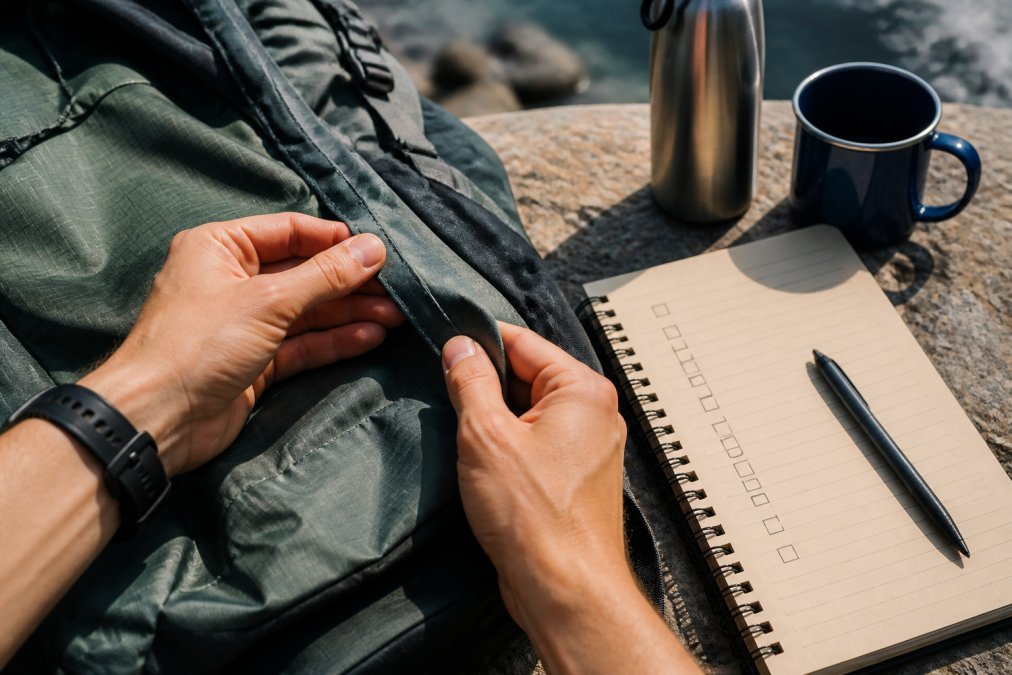
Durability is where field testing becomes essential. A piece of gear might look perfect in a lab test but fail after a few weeks of actual use. Credible reviews mention how long gear lasts, what typically fails first, and whether the product holds up to repeated use.
Look for reviews that discuss specific wear and tear patterns. Does a backpack's suspension system stay stable after months of use? Do tent seams start leaking after the first season? Does a sleeping bag's insulation compress over time? These details separate experienced reviewers from people who tested gear once or twice.
Real-world performance means testing gear in the conditions it's designed for. A three-season tent tested only in mild weather isn't a complete evaluation. Credible reviewers test gear across the range of conditions it's meant to handle.
Pay attention to how reviewers describe failure modes. If a piece of gear failed during testing, did they explain why? Understanding how and why gear fails tells you whether the product is genuinely flawed or whether the reviewer pushed it beyond reasonable limits.
Verified purchase reviews versus unboxing content
Verified purchase reviews carry more weight than unboxing videos because they prove the reviewer actually bought and used the product. Look for badges or indicators showing the reviewer purchased the item through a legitimate retailer.
Unboxing content has a place in gear evaluation, but it's limited. Unboxing videos show packaging and first impressions. They don't show durability, performance under stress, or long-term reliability.
The most credible reviews come from people who've used gear for extended periods, weeks or months, not hours. They've had time to identify problems that show up gradually and tested gear across multiple seasons or conditions.
User-generated reviews from verified purchasers can be valuable, but treat them carefully. Individual users have limited perspective. A single five-star review from someone who used a tent once tells you less than a detailed review from someone who's tested multiple tents across various conditions.
Distinguishing Between Expert Reviews and User-Generated Content
Expert reviews come from people with deep knowledge of a category. They understand technical specifications, have tested dozens of products, and can contextualize how one item compares to others.
User-generated content comes from everyday people sharing personal experience. This can be valuable; real customers encounter problems that experts might miss. However, a single user's experience is limited.
When reading user-generated reviews, look for patterns. If one person says a tent leaks, that might be user error. If dozens of verified purchasers mention the same leak problem, that's a real design flaw.
Expert reviews provide context that user reviews can't. An expert can explain why a product performs a certain way and which use cases it's best suited for. User reviews tell you whether average people are satisfied.
The best approach combines both. Use expert reviews to understand technical capabilities and category context. Use user-generated reviews to confirm that real customers are satisfied and to identify recurring problems.
Reading Product Lifecycle and Long-Term Performance Data
Products have lifecycles, and understanding where a product sits in its lifecycle affects how you should interpret reviews. A brand-new product with mostly five-star reviews might not have real long-term data yet. A product that's been on the market for years has proven durability records.
Credible reviews mention how long a product has been available and whether long-term performance data exists. If a reviewer is evaluating a product that's been on the market for less than six months, they should acknowledge that long-term durability is unknown.
Look for reviews that reference customer feedback and warranty claims. If a brand has high return rates or warranty issues, that's a signal that the product has problems. If customers keep buying the same product year after year and report good long-term durability, that's evidence the product holds up.
The product lifecycle also affects pricing and availability. Credible reviews acknowledge these factors and help you understand whether the current price represents good value.
How to Evaluate Technical Specs and Material Science Claims
Technical specifications and material science claims require careful evaluation because they're often where marketing hype diverges from reality. A brand might claim their fabric is "new," but what actually matters is whether the specifications support those claims.
Actual specifications include denier, hydrostatic head, weight per square meter, or tensile strength. These are measurable, comparable values. When you see specific numbers, you can evaluate whether they're actually better than competing products.
Material science claims often focus on insulation, waterproofing, or breathability. Down insulation is measured by fill power. Synthetic insulation is evaluated by weight and warmth retention at specific temperatures. Waterproofing is measured by hydrostatic head. Claims that lack specific numbers are marketing, not science.
Be skeptical of claims that sound too good to be true. A fabric that's simultaneously lighter, more durable, more waterproof, and more breathable than everything else is probably marketing exaggeration. Trade-offs are normal in gear design.
Credible reviewers explain the trade-offs they observe. They mention when a product excels in one area but compromises in another. They avoid claiming that any product is objectively "best"; instead, they explain which products are best for which situations.
The quality of outdoor gear reviews directly determines whether you end up with reliable equipment or expensive mistakes. By learning to spot affiliate bias, understanding testing methodology, evaluating durability claims, and distinguishing between expert and user-generated content, you develop the critical literacy needed to make smart gear decisions.
When you're ready to purchase, GreatAdventureSupply offers expertly curated collections of outdoor gear selected for real-world performance and durability. GreatAdventureSupply simplifies your shopping experience by offering reliable, multifunctional equipment proven to perform when it matters most. Add to cart and explore collections built for adventurers who demand gear that actually works.
Frequently Asked Questions
Q: How can you tell if an outdoor gear review is biased?
A: Look for several markers: missing or buried affiliate disclosures, overly positive language without mentioning drawbacks, lack of side-by-side comparisons, and reviews that don't address durability or real-world conditions. Biased reviews often fail to explain testing methodology or rely on unverified claims. Check whether the reviewer discloses how long they actually tested the product in field conditions versus casual use.
Q: What should I look for when reading backpacking gear reviews?
A: Focus on verified purchase reviews from users who've taken multi-day trips. Check for specific details about durability, weight-to-performance ratio, and how the gear performed under actual field conditions. Read reviews that mention wear and tear over time, not just unboxing impressions. Look for honest assessments of both strengths and limitations, and prioritize reviews that include technical specifications like hydrostatic head ratings for tents or denier counts for fabric.
Q: Are sponsored outdoor gear reviews reliable?
A: Sponsored content can provide useful information, but it carries inherent bias toward the brand paying for placement. A reliable sponsored review will clearly disclose the sponsorship upfront, include both strengths and real weaknesses, and reference independent testing data or third-party verification. Be skeptical of sponsored reviews that lack transparency about the relationship, avoid mentioning drawbacks, or rely only on the manufacturer's claims without field testing evidence.
Q: How do I know if a review tested gear in real outdoor conditions?
A: Genuine field-tested reviews include specific details about conditions, duration, and wear patterns. Look for mentions of how the gear performed during actual camping, hiking, or hunting trips, not just controlled lab settings. The reviewer should describe real-world challenges like weather exposure, weight distribution over hours, or material degradation. Long-term reviews that track product performance over months or seasons are more credible than single-use impressions or unboxing videos.
This article was written using GrandRanker