 ultimate-guide
How to Maintain Outdoor Clothing Longevity
Table of Contents
- How to Maintain Outdoor Clothing: The Foundation
- How to Wash Waterproof Jackets and Technical Fabrics
- Drying Methods That Prevent Heat Damage
- DWR Re-Application Guide for Water Repellency
- Storing Down Sleeping Bags and Jackets Correctly
- Best Gear Repair Kits and Common Damage Fixes
- Frequency of Cleaning Based on Usage and Activity
- Material-Specific Care and Environmental Impact
- Frequently Asked Questions
Last Updated: August 31, 2026
How to Maintain Outdoor Clothing: The Foundation
Outdoor gear doesn't stay durable by accident. The difference between clothing that lasts one season and gear that performs for years comes down to deliberate maintenance. Technical fabrics require different treatment than everyday clothing. Your waterproof jacket, down sleeping bag, and synthetic base layers have engineered features, DWR coatings, moisture-wicking fibers, seam sealing, that degrade under standard laundry conditions. This guide covers the specific techniques that preserve breathability, water repellency, and structural integrity.
How to Wash Waterproof Jackets and Technical Fabrics
Washing waterproof jackets correctly is the foundation of gear longevity. The goal is removing dirt and salt without damaging the DWR layer or ePTFE membrane that makes the jacket waterproof.
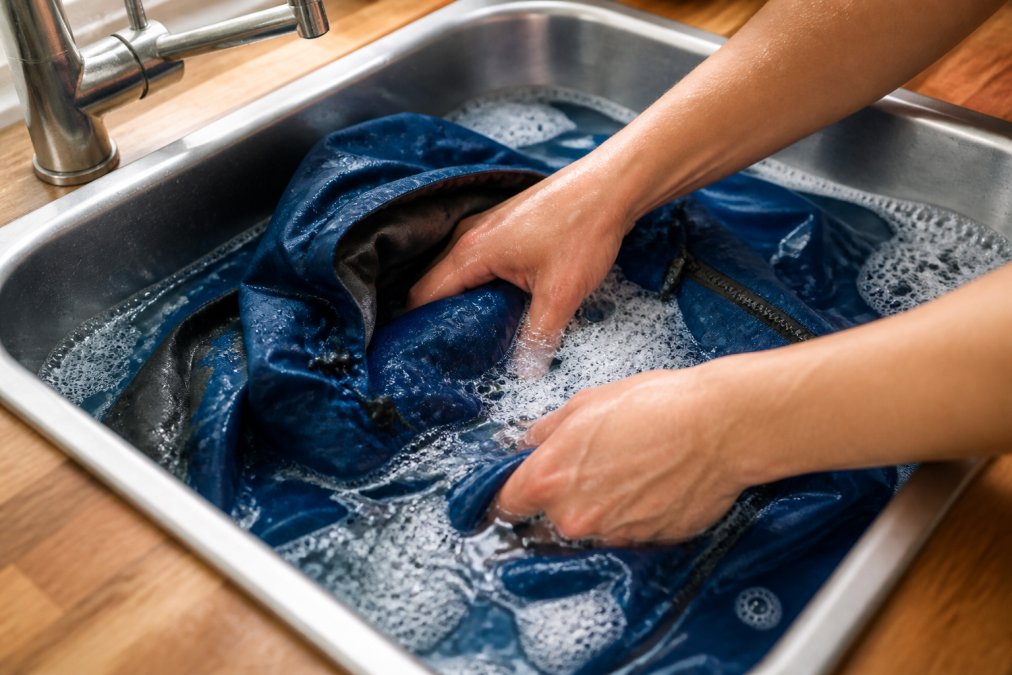
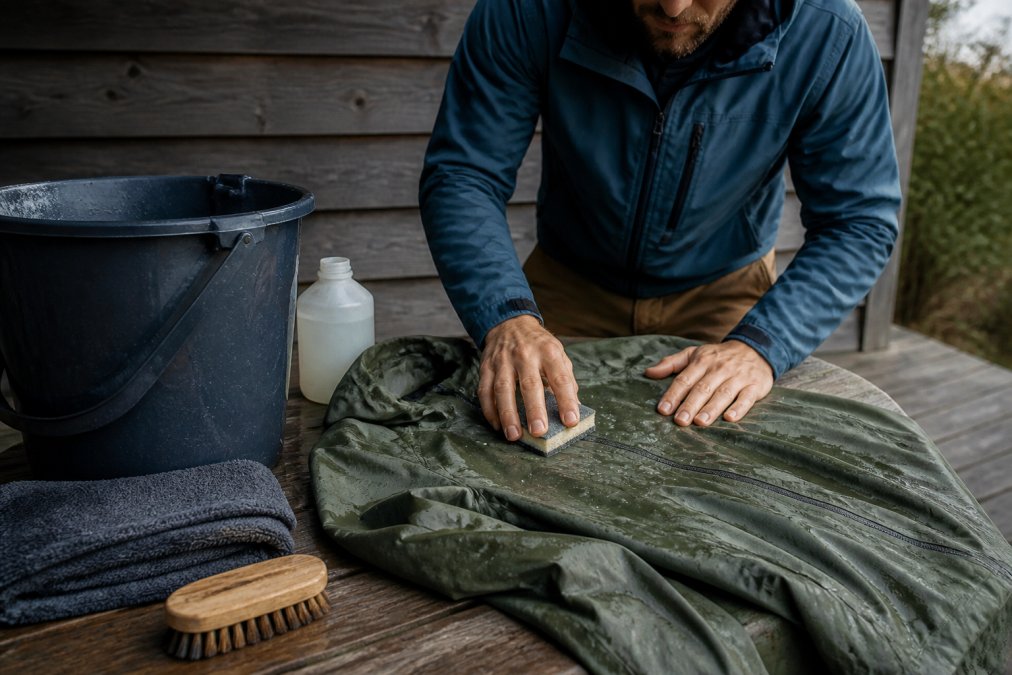
Start with cold water and technical detergent, never standard laundry soap. Fill a sink with cool water, add detergent, and submerge the jacket for 10-15 minutes to loosen embedded dirt, salt, and sweat (peer-reviewed research). Gently agitate by hand, paying attention to high-wear areas: collar, cuffs, underarms, and hem. Use a soft brush for stubborn stains, but avoid aggressive scrubbing.
Rinse thoroughly with cool water until the water runs clear. Residual detergent interferes with water repellency, so repeat the rinse 2-3 times if heavily soiled.
Choosing the Right Technical Detergent
Technical detergents are formulated for synthetic fibers and coated fabrics without surfactants that strip protective layers. Look for detergents labeled for outdoor gear or waterproof fabrics. Avoid fabric softeners, bleach, and enzyme-based cleaners, which break down synthetic fibers and compromise seam sealing.
Gentle Cycle and Cold Water Protocol
Hand washing is superior for heavily used gear. If using a machine, place the jacket in a mesh laundry bag and select the delicate cycle with cold water only. Skip the spin cycle entirely. Remove the jacket immediately after washing to prevent mildew. Never dry-clean technical jackets; solvents strip DWR coatings permanently.
Drying Methods That Prevent Heat Damage
Hang the jacket on a padded hanger in a well-ventilated space away from direct sunlight. Open all zippers and cuffs for air circulation. Drying typically takes 24-48 hours. Never use a tumble dryer, even on low heat, heat damages the DWR coating, can shrink fabrics, and may warp seam sealing.
DWR Re-Application Guide for Water Repellency
DWR (Durable Water Repellent) coating makes your jacket bead water instead of soaking it. Over time, this coating wears away through use, washing, and UV exposure.
When and Why DWR Treatment Degrades
DWR coating typically lasts 1-2 years of regular use. You'll notice degradation when water stops beading and instead spreads into wet patches. This doesn't mean the jacket is no longer waterproof, but the DWR coating makes the membrane work harder. DWR degrades faster with frequent washing, direct sunlight, high-friction environments, and salt exposure.
Restoring Water Repellency at Home
You can restore DWR coating using commercial spray or wash-in treatments. Spray treatments are faster but less durable (2-4 months) (peer-reviewed research). Wash-in treatments bond more effectively and last longer (6-12 months).
For spray application: clean and dry the jacket, then apply in a well-ventilated area. Most sprays require 24 hours to cure.
For wash-in treatments: add the treatment to the final rinse cycle or soak the jacket in the solution. Air-dry completely before using.
Test by pouring water on the sleeve. If it beads and rolls off, the treatment worked. If water spreads, apply a second coat.
Storing Down Sleeping Bags and Jackets Correctly
Never store down gear in a compressed stuff sack or vacuum bag for extended periods. Compression breaks down delicate filaments that create loft. Store in a large, breathable mesh bag or cotton storage sack.
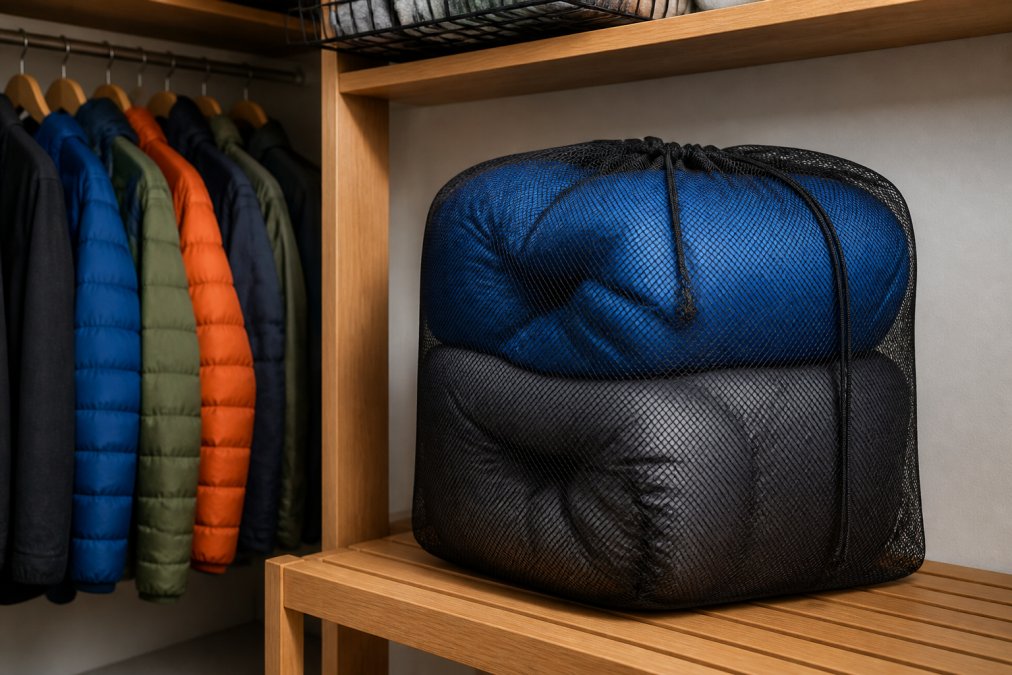
Choose a cool, dry, dark location with stable temperature. Avoid basements, attics, or garages where humidity fluctuates. A bedroom closet is ideal.
Seasonal Storage Protocols
After your last use of the season, clean the gear and dry it completely. Store loosely in a breathable bag. Before the next season, air it out in sunlight for a few hours to remove odors and allow full re-lofting.
Preventing Mildew and Fiber Breakdown
Store gear in an environment with relative humidity below 60% (the CDC). Place silica gel packets inside the storage bag if needed. Check monthly for signs of mildew. If spotted, remove the gear and air it in sunlight immediately. Never use plastic storage containers or vacuum bags for long-term storage; breathable bags prevent moisture accumulation.
Best Gear Repair Kits and Common Damage Fixes
Small damage repaired immediately prevents catastrophic failure. A small tear becomes a rip that compromises waterproofing. Carrying a basic repair kit extends gear life significantly.
Patching Synthetic Fabrics and Seam Repairs
Tears in synthetic fabrics require patches designed for technical materials. For small tears (under 2 inches), clean the area and apply an adhesive-backed patch following product instructions. Larger tears may need patches on both sides.
For seam damage, inspect carefully. If only the thread is broken, re-stitch using outdoor-grade thread. If the seam itself is torn, patch the damaged area. For permanent repair, consider taking the jacket to a tailor experienced with technical fabrics.
Zipper Lubrication and Delamination Prevention
Stuck zippers respond to lubrication with graphite-based products or silicone sprays designed for outdoor gear. Apply lubricant to the teeth and work the slider up and down several times. Wipe away excess to prevent dirt accumulation.
Delamination, where the outer fabric separates from the inner membrane, usually results from impact or excessive flexing. Small delamination can be repaired with adhesive-backed patches. Larger delamination typically requires professional repair. Prevent it by avoiding unnecessary stress on seams and storing gear loosely.
Frequency of Cleaning Based on Usage and Activity
Wash after every 3-5 days of continuous use, or whenever visible dirt or salt residue appears. Day-hiking in dry conditions requires washing once per season. Backpacking in wet conditions or saltwater fishing requires washing after each trip.
Spot-clean between washes using a damp cloth to remove surface dirt without full washing. Sweat and salt are particularly damaging, so wash gear soon after exposure.
Material-Specific Care and Environmental Impact
Synthetic Fibers vs. Natural Fabrics
Synthetic materials dominate modern outdoor gear and are durable and lightweight. However, they degrade under UV exposure and heat. Always dry away from direct sunlight and never use hot water or heat drying.
Wool is naturally antimicrobial and requires less frequent washing. Wash in cool water with mild detergent and lay flat to dry. Never tumble-dry wool.
Down requires specific storage and care outlined earlier. Synthetic insulation tolerates compression and varied storage conditions better.
Protecting Gear from UV Degradation and Abrasion
Store gear indoors when not in use. If hanging to dry, choose a shaded location. On multi-day trips, store your pack in shade during breaks.
Abrasion damage occurs when gear rubs against rock or vegetation. Inspect high-wear areas regularly: pack straps, pack bottoms, and jacket cuffs. Patch damage before it progresses. Using protective gear covers or packs with reinforced bottoms reduces abrasion.
Proper maintenance transforms outdoor gear into a long-term investment. Gentle washing, air-drying, DWR re-application, careful storage, and prompt repair are standard practices among experienced outdoors people. Your gear performs best when you treat it as a system with interconnected components, each maintenance task supports the others.
=== FAQ ANSWERS (audit these too, same rules) ===
[1] Q: How often should you wash technical outdoor gear? A: Wash technical outdoor clothing every 3-5 uses during active seasons, or when visibly soiled. High-moisture activities like hunting in humid conditions warrant more frequent cleaning. Off-season gear stored properly may need just one cleaning per year. Over-washing degrades DWR coatings and synthetic fibers faster than regular use does, so balance cleanliness with preservation.
[2] Q: Can you use regular laundry detergent on waterproof jackets? A: No. Regular detergents contain surfactants and additives that strip away DWR (Durable Water Repellent) coatings and damage the ePTFE membrane underneath. Use technical detergent specifically formulated for outdoor gear. These preserve hydrophobic treatments and breathability while removing dirt, sweat, and salt without compromising fabric integrity or waterproof rating.
[3] Q: What is the best way to restore DWR coatings on outdoor clothing? A: Clean the garment first with technical detergent, then apply a DWR treatment spray or wash-in product according to manufacturer instructions. Some treatments require tumble drying on low heat to activate, while others air-dry. Reapply DWR every 12-24 months depending on usage. This restores water repellency and extends the lifespan of your most expensive pieces significantly.
[4] Q: How should you store down jackets to maintain loft? A: Store down jackets uncompressed in a breathable mesh bag in a cool, dry location away from direct sunlight and humidity. Avoid vacuum-sealed storage, which crushes insulation loft permanently. Ensure 50-70% humidity levels to prevent mildew and fiber breakdown. Check seasonally for pests and moisture. Proper storage preserves the insulation's thermal performance and extends garment lifespan by years.
Frequently Asked Questions
How often should you wash technical outdoor gear?
Wash technical outdoor clothing every 3-5 uses during active seasons, or when visibly soiled. High-moisture activities like hunting in humid conditions warrant more frequent cleaning. Off-season gear stored properly may need just one cleaning per year. Over-washing degrades DWR coatings and synthetic fibers faster than regular use does, so balance cleanliness with preservation.
Can you use regular laundry detergent on waterproof jackets?
No. Regular detergents contain surfactants and additives that strip away DWR (Durable Water Repellent) coatings and damage the ePTFE membrane underneath. Use technical detergent specifically formulated for outdoor gear. These preserve hydrophobic treatments and breathability while removing dirt, sweat, and salt without compromising fabric integrity or waterproof rating.
What is the best way to restore DWR coatings on outdoor clothing?
Clean the garment first with technical detergent, then apply a DWR treatment spray or wash-in product according to manufacturer instructions. Some treatments require tumble drying on low heat to activate, while others air-dry. Reapply DWR every 12-24 months depending on usage. This restores water repellency and extends the lifespan of your most expensive pieces significantly.
How should you store down jackets to maintain loft?
Store down jackets uncompressed in a breathable mesh bag in a cool, dry location away from direct sunlight and humidity. Avoid vacuum-sealed storage, which crushes insulation loft permanently. Ensure 50-70% humidity levels to prevent mildew and fiber breakdown. Check seasonally for pests and moisture. Proper storage preserves the insulation's thermal performance and extends garment lifespan by years.
Protecting your gear investment starts with the right maintenance routine, and having quality products on hand makes the process simpler. GreatAdventureSupply carries everything you need: technical detergents, DWR treatments, repair kits, and protective storage solutions. When you're preparing for your next expedition, ensure your gear is ready with proper maintenance supplies. Explore our curated outdoor maintenance collection and add essential care products to your cart today.
This article was written using GrandRanker