 ultimate-guide
How to Choose Durable Camping Gear: A 2026 Guide
Table of Contents
- What Makes Camping Gear Durable
- Essential Camping Gear Checklist for Durability
- Camping Gear Material Guide: Fabrics, Coatings, and Insulation
- Best Camping Gear Brands with Lifetime Warranty
- How to Maintain Camping Gear for Long-Term Performance
- Evaluating Durability: What to Look for When Shopping
- Common Mistakes When Choosing Camping Gear
- Conclusion
Last Updated: August 9, 2026
What Makes Camping Gear Durable
Durability comes down to material quality and assembly. A tent that fails after one trip or a sleeping bag that loses insulation after a season costs far more over time than investing in gear built to last. At GreatAdventureSupply, we've learned that durability isn't a single feature, it's the intersection of material quality, construction integrity, and design that accounts for how gear actually gets used.
Material Quality and Specifications
Material specifications tell you exactly what you're getting. A tent fabric labeled 70-denier ripstop nylon indicates the weight and weave structure. Ripstop construction, where reinforced threads run through the weave at intervals, prevents small tears from spreading into large ones.
Waterproof ratings matter just as much. The hydrostatic head measurement tells you how much water pressure a fabric can withstand before moisture penetrates. A tent floor rated for 5,000mm hydrostatic head will resist water far better than one rated at 1,500mm.
Seam-sealed construction is where many budget tents fail. Even if the fabric itself is waterproof, water finds its way through needle holes at seams. Check whether a tent's seams are sealed on both the interior and exterior; full sealing lasts significantly longer than partial sealing.
Construction Methods That Last
Double-stitched seams distribute load across more thread and resist failure longer than single-stitched seams. Look for equipment where critical stress points, where straps attach, where zippers meet fabric, where poles connect to panels, use reinforced construction with additional fabric patches underneath.
Grommet placement and quality matter for tents and tarps. A grommet is the metal ring that anchors guy lines. Quality grommets are backed with reinforced fabric that spreads the load across a wider area.
The way poles attach to fabric determines whether a tent maintains its shape through wind and snow load. Sleeves that slide over poles distribute stress evenly. Pole construction itself matters: aluminum poles resist bending better than fiberglass, and thicker-wall aluminum lasts longer than thin-wall.
Essential Camping Gear Checklist for Durability
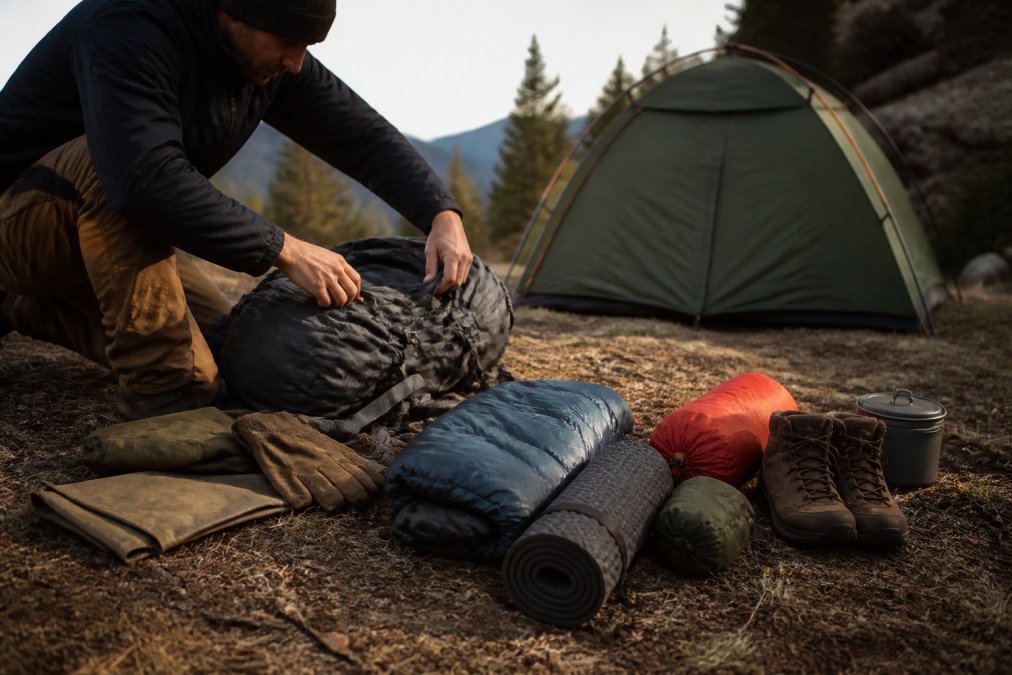
When building a gear collection that will last, focus on items that take the most abuse: your shelter, sleep system, pack, and clothing layers.
| Gear Category | Durability Priority | What to Check |
|---|---|---|
| Tent | Seam sealing, ripstop fabric, pole attachment | 70D+ ripstop, full seam sealing, reinforced pole sleeves |
| Sleeping Bag | Insulation type, baffle construction | Down fill power 700+, sewn-through baffles, quality zippers |
| Backpack | Stitching, fabric weight, load-bearing seams | Double-stitched stress points, 500D+ fabric base, reinforced hip belt |
| Base Layers | Fabric weight, seam construction | Merino wool or synthetic blends, flat-lock seams |
| Boots | Leather quality, sole construction | Full-grain leather, Goodyear welt or cement-stitched sole |
Start with shelter and sleep system, since these experience constant stress from weather and repeated setup. A quality tent and sleeping bag form the foundation of a durable gear collection.
Camping Gear Material Guide: Fabrics, Coatings, and Insulation
Understanding materials determines whether gear lasts three years or ten.
Tent and Shelter Materials
Ripstop nylon is the standard for tent fabrics because the reinforced weave prevents tears from spreading. A 70-denier ripstop resists punctures better than 40-denier but weighs more. For backpacking tents, 40-50 denier is acceptable. For base camp camping, 70-100 denier offers better durability.
Polyurethane coatings are cheaper but degrade over time when exposed to UV light, often leaking after 3-5 years of regular use. Silicone coatings resist UV degradation far better and maintain waterproofing for 7-10+ years.
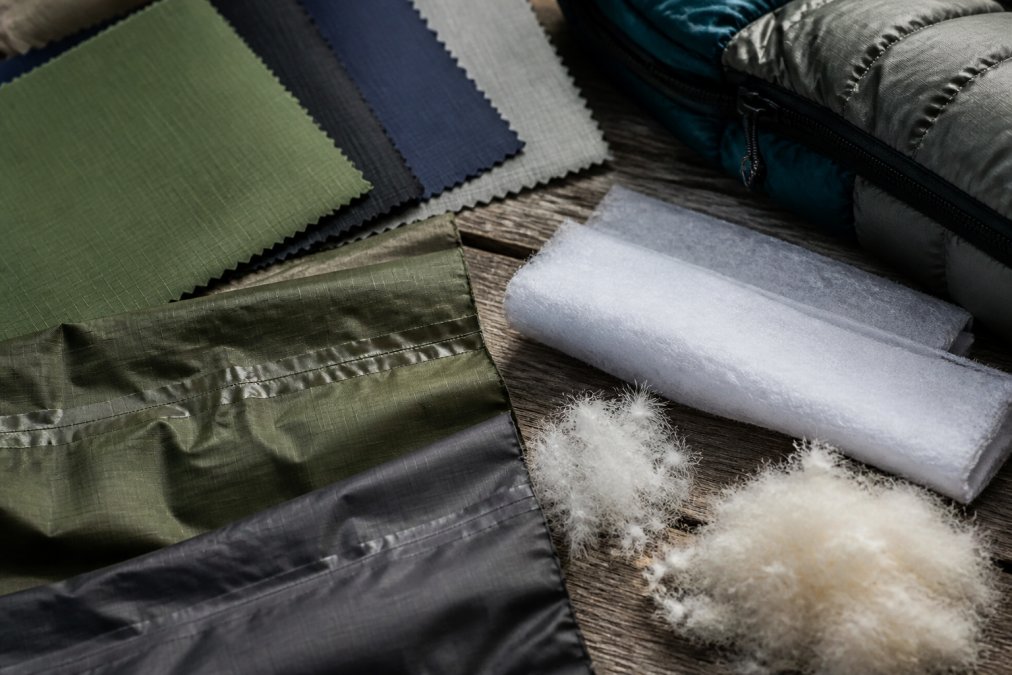
Tent floors take more abuse than fly sheets because they contact ground moisture, rocks, and roots. Floors should use heavier fabric than the tent body, often 100-150 denier with full waterproof coating.
Insulation and Base Layer Fabrics
Down insulation has the highest warmth-to-weight ratio. Down fill power, measured in cubic inches per ounce, indicates loft quality. A 700-fill-power down provides better insulation per ounce than 550-fill-power. Higher fill power (800+) lasts longer before compression reduces performance. Down loses insulation when wet.
Synthetic insulation (polyester-based materials like PrimaLoft or Thermolite) maintains warmth when damp and dries faster than down. It doesn't achieve the same weight-to-warmth ratio as high-fill-power down but is more forgiving in wet conditions.
Merino wool in base layers resists odor, regulates temperature across a wider range than synthetics, and maintains performance through repeated washing. Merino is more durable than cotton or cheap polyester because the fiber structure resists pilling.
Moisture-wicking synthetics dry faster than wool and cost less but pill more easily and degrade faster under UV exposure.
Pack and Accessory Durability
Backpack fabric weight matters significantly. Packs using 500-denier fabric on the base and 1000-denier on high-stress areas resist punctures far better than 200-300 denier throughout. Load-bearing seams should be double-stitched and reinforced with fabric patches underneath.
Zippers are often the first component to fail. YKK zippers are industry standard for durability. Quality zippers cost more but last the life of the pack.
Webbing and straps should use nylon or polyester rated for load-bearing. Look for webbing at least 1.5 inches wide on primary load straps. Attachment points should be reinforced with stitching that runs in a box pattern rather than a simple line.
Best Camping Gear Brands with Lifetime Warranty
Brands that offer lifetime warranties back their durability claims with real commitment. When evaluating brands, look for what their warranty actually covers. Some cover manufacturing defects only; others cover damage from normal use. The best warranties repair or replace failed components rather than requiring full replacement.
Reputable outdoor brands typically offer warranties of 5-10 years on tents, sleeping bags, and packs, with many extending lifetime coverage on frames and structural components. Brands without warranty programs or with limited 1-year warranties tend to prioritize cost over longevity.
GreatAdventureSupply curates collections from manufacturers with strong durability records and transparent warranty policies. Ask about warranty coverage before buying, it's one of the clearest indicators of how much durability the manufacturer engineered into the product.
How to Maintain Camping Gear for Long-Term Performance
Durability doesn't end when you buy gear. How you care for equipment between trips determines whether it lasts three years or ten.
Cleaning and Storage Best Practices
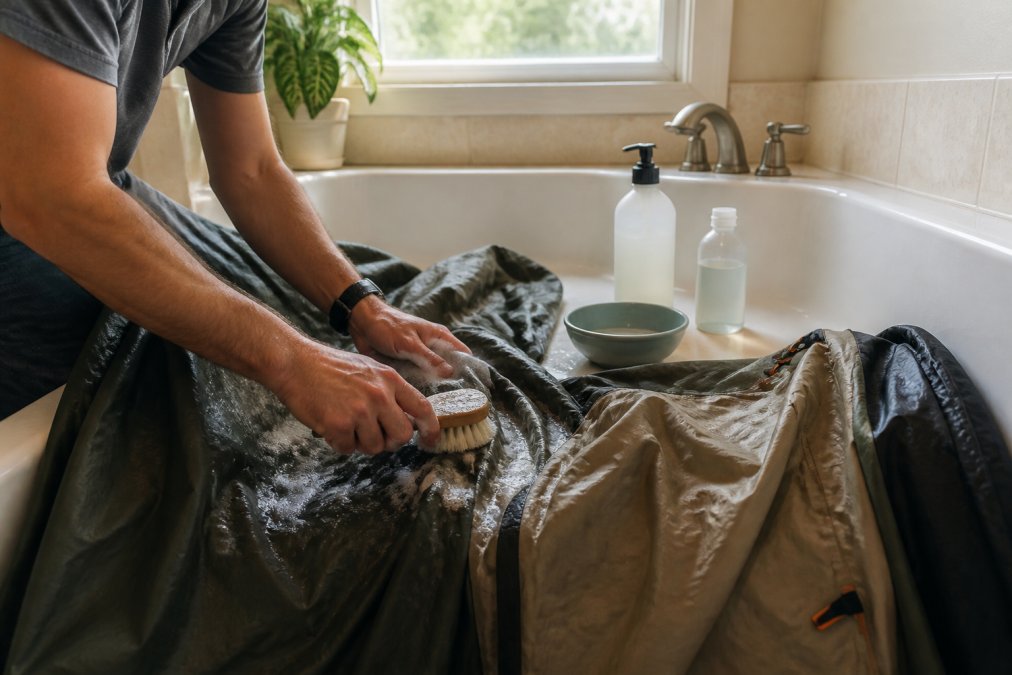
Clean gear promptly after trips. Dirt, salt, and organic material break down fabrics faster than weather exposure alone. Rinse tents and packs with fresh water and mild soap, then air-dry completely before storage. Never store damp gear; moisture promotes mold growth.
For sleeping bags, store them uncompressed. Compression bags are useful for packing, but leaving a sleeping bag compressed year-round damages insulation permanently. Store sleeping bags in a large, breathable storage bag where they can fully loft.
Boots and leather gear need conditioning. Condition leather boots annually with quality leather conditioner to maintain flexibility and water resistance.
Zippers should be cleaned and lubricated. Brush out debris with a soft brush, then apply silicone-based lubricant. This prevents the common failure mode of seized zippers.
Check seams and fabric for damage before storage. Small holes or separated seams are easy to repair in the off-season.
Field Repairs and Seasonal Care
Carry a basic repair kit on every trip: needle and thread, adhesive patches for fabric, seam sealer, and duct tape. Most gear failures happen mid-trip, and field repairs buy you time to reach camp safely.
Fabric tears under 2 inches can be sealed with adhesive patches applied to both sides. Seam separations can be temporarily sealed with seam sealer applied to the inside of the seam.
Pole damage is harder to field repair. A bent pole can be splinted with a stick and duct tape to restore enough structure to set up shelter. Replace the pole after the trip.
UV degradation is a slow process but matters over years. Store gear in a dark place and avoid leaving it in direct sunlight for extended periods when not in use.
Evaluating Durability: What to Look for When Shopping
Specific durability markers separate equipment that will last from equipment that won't.
Warranty Coverage and Repairability
Read the warranty carefully. A 5-year warranty on a tent is standard; a 10-year warranty is excellent. Limited 1-year warranties are a warning sign that the manufacturer doesn't expect the gear to last.
Check whether the warranty covers damage from normal use or only manufacturing defects. Ask whether the company repairs components or requires full replacement.
Repairability matters as much as warranty. Can you order replacement zippers, poles, or fabric patches from the manufacturer? Gear that can be repaired lasts longer than gear that must be replaced when a single component fails.
Cost-Per-Use and Long-Term Value
A tent that costs twice as much but lasts twice as long has the same annual cost. Calculate expected lifespan based on materials and construction. A tent with silicone-coated ripstop and quality seam sealing should last 7-10 years with proper care. A tent with polyurethane coating and single-stitched seams might last 3-5 years.
Consider whether the gear is repairable. A pack with sealed zippers that can't be replaced is worthless once they fail. A pack with standard YKK zippers that you can replace for $20 is valuable for years after zipper failure.
Quality gear that lasts holds resale value better than cheap gear that fails. You can recover 30-50% of your initial investment on durable gear versus 10-20% on disposable gear.
Common Mistakes When Choosing Camping Gear
The biggest mistake is confusing waterproof with water-resistant. Water-resistant fabrics slow moisture but eventually fail. Waterproof fabrics block water indefinitely if maintained. Check whether a tent is labeled waterproof (hydrostatic head 3,000mm or higher) or water-resistant.
Another common error is ignoring seam sealing. A beautiful tent with unsealed seams will leak in moderate rain. Ask specifically whether seams are sealed and whether sealing covers all seams.
Buyers often choose based on weight alone. A lighter tent is valuable only if it's durable enough for your use. A 2-pound tent made with thin fabric might fail in a week of hard use. A 3-pound tent with strong construction lasts for years.
Overlooking warranty and repairability is costly. Warranty coverage and the ability to repair components matter far more than most people realize until they face a failure in the field.
Storing gear improperly, leaving sleeping bags compressed, storing damp tents, leaving boots in direct sunlight, accelerates failure. Proper storage costs nothing but adds years to gear life.
Choosing durable camping gear requires understanding materials, construction methods, and how different components fail under real-world conditions. The decisions you make now determine whether you're buying gear for your next trip or for the next decade of trips. GreatAdventureSupply has curated collections specifically selected for performance and durability in real outdoor conditions, making it easier to find gear that will stand up to repeated use and harsh environments. When you're ready to invest in equipment that lasts, our team has already filtered for quality, tested construction, and proven longevity so you can focus on your adventure with confidence.
Frequently Asked Questions
What materials make camping gear most durable?
High-denier ripstop fabrics (600D and above) resist tears and abrasion. Seam-sealed construction prevents water intrusion at stress points. Hydrostatic head ratings above 1,500mm indicate strong waterproofing. For insulation, down fill power of 700+ and synthetic alternatives like polyester maintain warmth through repeated compression. Look for UV-resistant coatings to prevent degradation from sun exposure. The best durable gear combines multiple materials strategically, heavier denier in high-wear areas, breathable fabrics where ventilation matters.
How can you tell if camping gear is high quality?
Inspect seam construction, sealed seams with reinforced stitching indicate durability. Check weight-to-durability ratios; quality gear balances protection without excessive bulk. Read warranty terms; brands offering lifetime warranties typically stand behind structural integrity. Examine abrasion-resistant patches in high-stress zones like tent corners and pack straps. High-quality gear shows attention to ergonomics in design and has clear maintenance instructions. Customer reviews mentioning multi-year use across varied terrain provide reliable field-tested evidence of longevity.
Is it worth spending more money on expensive camping gear?
Calculate cost-per-use over the gear's expected lifespan. Premium gear often costs more upfront but lasts 10-15 years with proper care, while budget alternatives may fail after 2-3 seasons. High-quality materials resist UV degradation, moisture damage, and wear better. Better warranty coverage protects your investment if structural failure occurs. For serious backcountry trips, durable gear prevents equipment failure in remote conditions where replacements aren't available. Casual family campers may find mid-range options sufficient, but frequent adventurers see significant long-term savings with durable selections.
How do I maintain my camping gear to make it last longer?
Clean gear promptly after each trip using mild soap and water, then air-dry completely to prevent mold and material degradation. Store in cool, dry conditions away from direct sunlight, which causes UV degradation. Keep gear loose in storage rather than compressed, synthetic insulation and down maintain loft better when not compressed long-term. Inspect for damage before storage and perform field repairs immediately. Check seams and coatings annually for wear. Proper off-season care extends gear lifespan by 50% or more compared to neglected equipment.
This article was written using GrandRanker