 how-to
How to Choose a Campsite for Beginners: 7 Simple Steps
Table of Contents
- Start With the Right Mindset: What Makes a Good Campsite for Beginners
- How to Pick a Tent Site: Level, Drainage, and Shade
- Choosing a Safe Campsite Location: Water, Weather, and Wildlife
- The Best Campsite for Beginners: Frontcountry, Established Sites, and Campground Loops
- Your First-Night Campsite Checklist: What to Verify Before You Unpack
- Common Beginner Mistakes When Choosing a Campsite
- Gear That Makes Any Campsite Easier
- Conclusion: Practice Makes Picking Easier
- Frequently Asked Questions
Last Updated: October 6, 2026
Start With the Right Mindset: What Makes a Good Campsite for Beginners
Learning how to choose a campsite for beginners starts with one shift in thinking: you are not looking for a view, you are looking for a safe, flat, dry place to sleep. That single change in priority prevents most first-trip disasters. This guide from GreatAdventureSupply walks through exact checks to consider before unpacking.
A good campsite has four things: level ground, good drainage, safe overhead space, and a short walk to water and a toilet. Everything else is a bonus. Beginners who chase scenery over these basics usually spend the night sliding downhill or waking up in a puddle.
Here is the mindset that matters most. Pick your spot in daylight, not at dusk. Arrive with two hours of light left so you can actually see the ground you are sleeping on.
- Level beats scenic every time
- Dry beats close to the parking lot
- Shade is nice, dead branches above you are not
- Established sites beat untouched ground
The five checks we cover below take about ten minutes total. Do them in order and you will sleep well on your first night out.
How to Pick a Tent Site: Level, Drainage, and Shade
Picking a tent site comes down to three checks: is the ground level, does water drain away from it, and is anything hanging above it. Skip any one of these and you will feel it by morning.
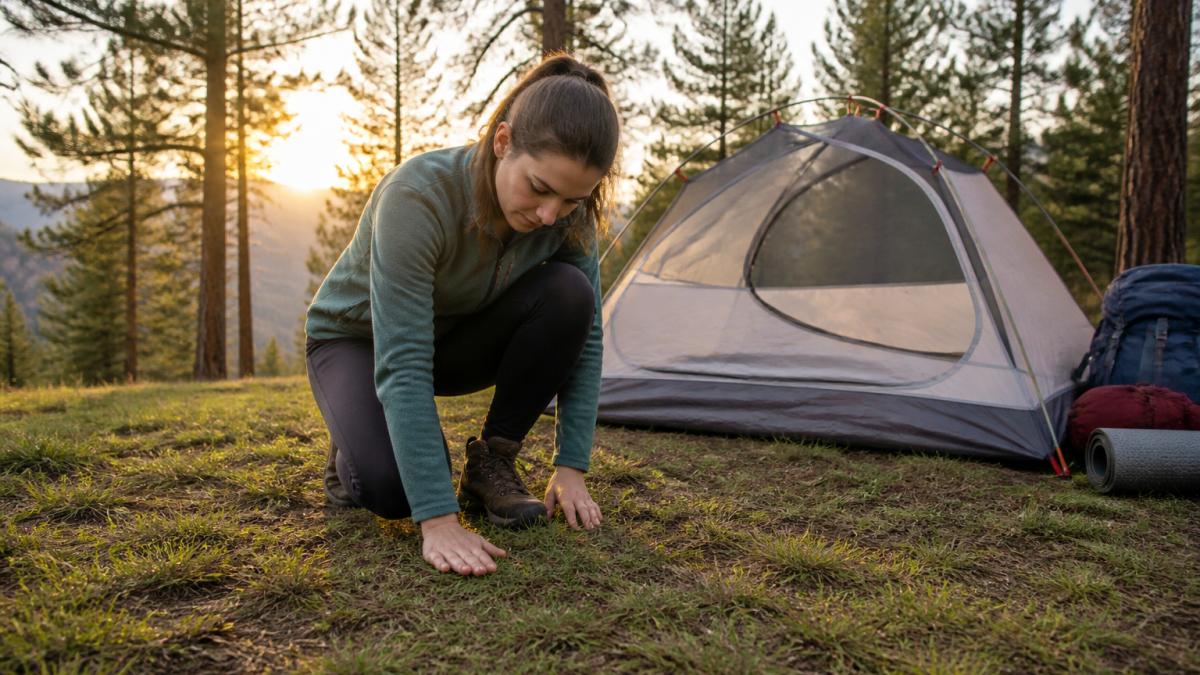
Find Level Ground and Check for Drainage
Lie down on the spot before you pitch anything. If you feel yourself sliding toward one corner, so will your sleeping bag at 2 a.m.
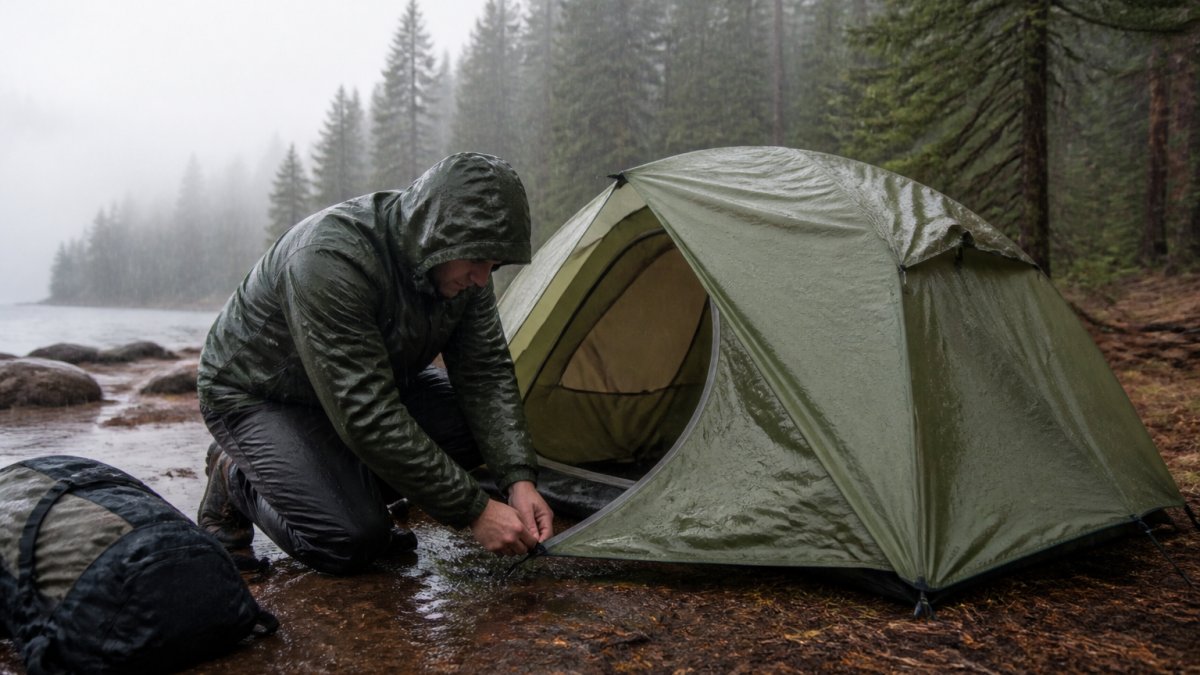
Look for ground that sits slightly higher than the area around it. A small rise sheds rain. A dip collects it. Avoid the bottom of a slope, the low point of a clearing, and anywhere with cracked mud or matted grass, which are both signs that water pools there.
Look Up: Dead Branches and Widowmakers
Stand in the middle of your chosen spot and look straight up. A dead branch still attached to a tree is called a widowmaker, and it can drop without warning.
- Check every tree within about 30 feet of your tent
- Avoid trees with bare, broken, or hanging limbs
- Skip spots under dead or leaning trees entirely
- Look for loose rocks on ledges above you
If the canopy above you is full of green, healthy branches, you are fine.
Choosing a Safe Campsite Location: Water, Weather, and Wildlife
A safe campsite location keeps you a short walk from water and a long way from where animals look for food. These two rules cover most of what goes wrong on a beginner trip.
Distance From Water and the 200-Foot Rule
Camp at least 200 feet from lakes, streams, and rivers. That is roughly 70 adult paces. The Leave No Trace outdoor ethics guidance recommends this distance for good reasons.
- It keeps your scent and food away from wildlife corridors
- It protects fragile shoreline plants
- It puts you above flash flood zones
- It reduces condensation on your tent
Water carries sound and scent. Camping close to it invites animals right into your site.
Food Storage and Wildlife Precautions
Store all food, trash, and scented items away from your tent. Never eat inside your sleeping area.
Use a locked vehicle, a bear canister, or a hung bag at least 200 feet from your tent and 12 feet off the ground. In developed campgrounds, use the metal food lockers most sites provide. Even a granola bar wrapper in your tent can draw a raccoon or a bear.
Check with the land manager before you go. Some areas require hard-sided storage, and some ban hanging food altogether. The National Park Service food storage regulations list these rules by park.
The Best Campsite for Beginners: Frontcountry, Established Sites, and Campground Loops
The best campsite for beginners is almost always a frontcountry site in a developed campground. These sites come with a parking spot, a picnic table, a fire ring, and a bathroom within walking distance. You get a real taste of camping without the survival test.
Established sites have one big advantage: someone already checked the ground. The tent pad is flat, the drainage is known, and the trees around it have been cleared of hazards.
Look for campground loops with these features:
| Feature | Why It Matters | Where to Find It |
|---|---|---|
| Flat tent pad | No sliding, no puddles | Most state park sites |
| Bathroom nearby | Easier first night | Loop near the entrance |
| Food locker | Keeps animals out | Designated bear country sites |
| Shade trees | Cooler mornings | Sites with mature canopy |
| Short walk to water | Easy access, safe distance | Sites near but not on the shore |
We suggest starting with a state park or national forest campground. Book a site on the edge of the loop, not in the middle. You get more space and fewer neighbors.
2-Person Easy Setup Rainproof Tent →
Your First-Night Campsite Checklist: What to Verify Before You Unpack
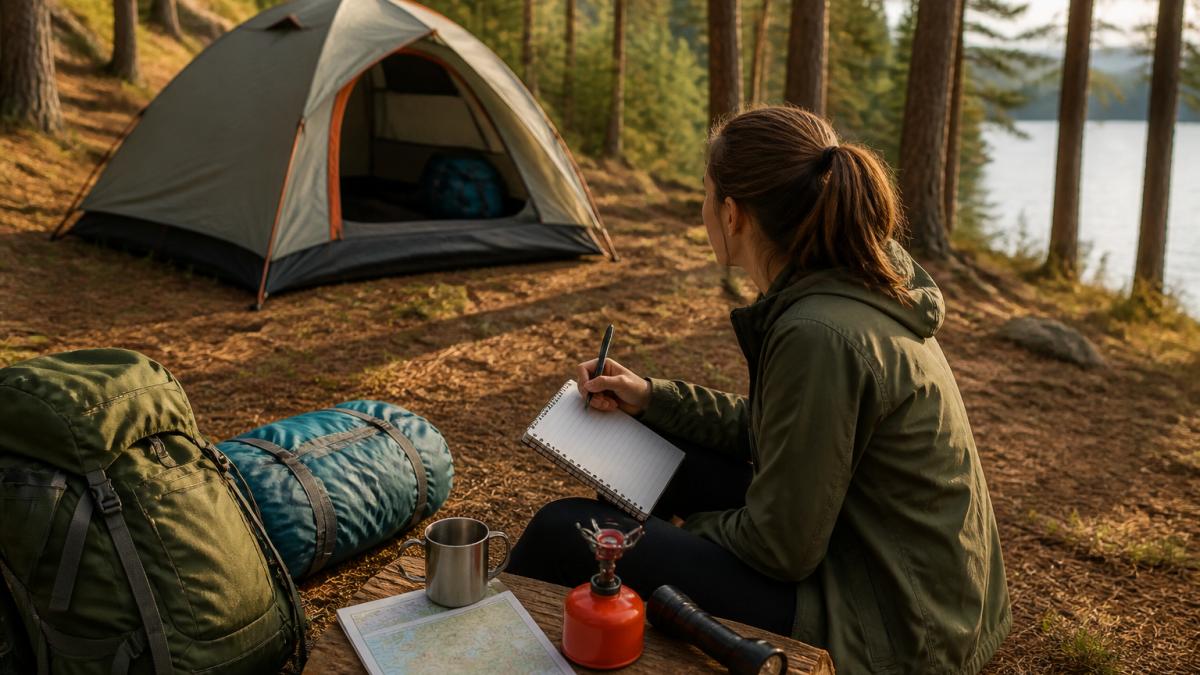
Run through this campsite checklist before you set up. It takes ten minutes and saves hours of discomfort.
- Ground is level in all directions
- No low spots or cracked mud nearby
- No dead branches overhead within 30 feet
- At least 200 feet from any water
- Food storage plan in place
- Tent door faces away from the fire ring
- Site is above the surrounding ground
- Bathroom and water source located
- Fire ring cleared of overhanging branches
- Escape route to the car is clear
Work top to bottom. If any box stays unchecked, walk the loop and pick another site.
Common Beginner Mistakes When Choosing a Campsite
Most first-trip problems trace back to three mistakes. Each one is easy to avoid once you know to look for it.
Pitching on the low ground. Water always finds the lowest point. Camp on a slight rise instead.
Camping under the prettiest tree. Dead limbs are hard to spot in dim light. Look up carefully, and when in doubt, move.
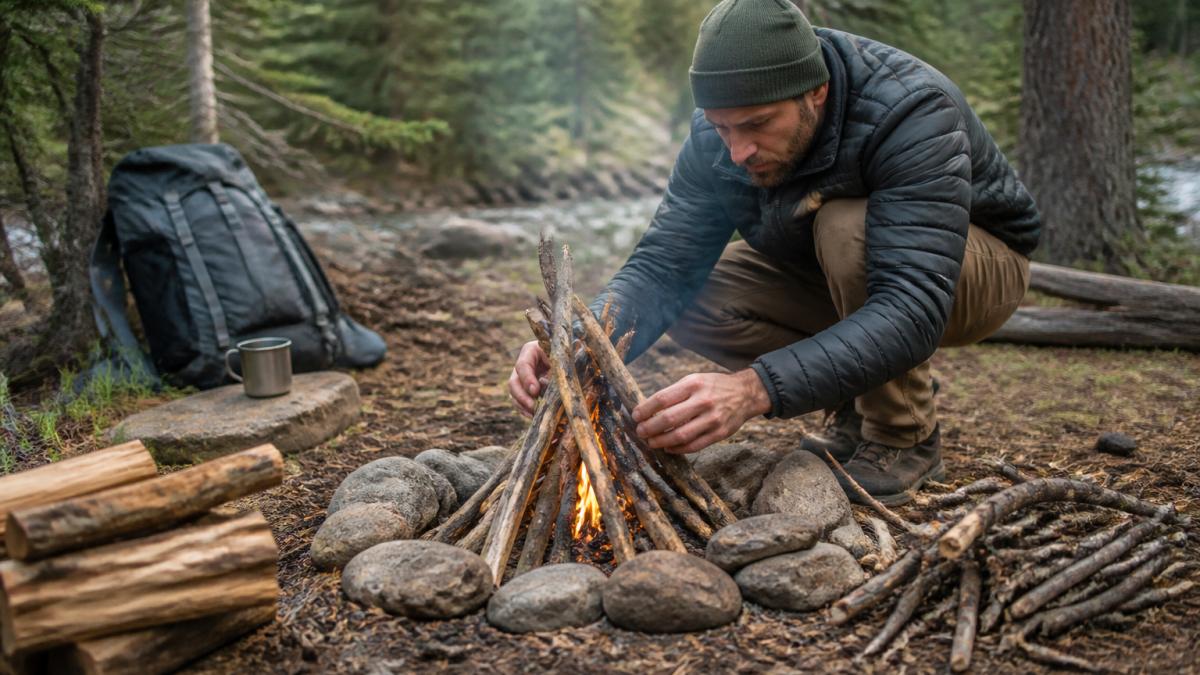
Setting up too close to the fire ring. Embers pop and drift. Keep your tent at least 10 feet from any fire, and check the wind direction before you pitch.
A fourth mistake shows up often: waiting until dark to choose a spot. Arrive early. You will see hazards, compare sites, and set up without a flashlight in your teeth.
Gear That Makes Any Campsite Easier
The right gear turns a stressful first night into an easy one. You do not need much, but a few items make a real difference.
A freestanding tent is the biggest upgrade for beginners. It holds its shape without stakes, so you can shift it if the ground turns out to be wrong. Our 2-Person Easy Setup Rainproof Tent uses a dome cross-pole design that goes up fast, even on a first attempt. The rainproof fabric and mesh upper panel handle both wet weather and condensation.

For families, the Umbrauto 4 Person Ultralight Camping Tent offers a 94" x 94" footprint with a 60" peak height. At 4 lbs, it is light enough to carry but roomy enough for a weekend basecamp.

Two more items earn their place in the pack:
- A rechargeable lantern, like the Fenix CL26R PRO, gives you 650 lumens and up to 408 hours of runtime
- An unscented repellent, such as our Picaridin Super Bundle, keeps bugs off for up to 12 hours without a lingering smell
At GreatAdventureSupply, we stock gear built for real conditions.

Conclusion: Practice Makes Picking Easier
Choosing a campsite feels like a lot to remember on your first trip. By your third, you will run the checks without thinking. Start with a developed campground, arrive early, and trust the checklist over the view.
If you want gear that makes those first nights easier, GreatAdventureSupply has you covered. Every item is picked for comfort and reliability in real outdoor conditions, and it all ships from one place.
Get started with GreatAdventureSupply and build a camp kit that lets you enjoy the trip instead of fighting it.
Frequently Asked Questions
How do beginners choose a campsite?
Start with an established site in a designated campground rather than dispersed land. Look for a flat, cleared tent pad, check that the ground drains away from your tent, and confirm you are at least 200 feet from any water source. Walk the site before unpacking. For a first trip, a campsite for beginners is usually a frontcountry site with a picnic table, fire ring, and vault toilet nearby.
What should you look for when choosing a campsite?
Check four things: level ground, drainage, overhead hazards, and distance from water and trails. A good site has a flat tent pad, no dead branches above, and no signs of past flooding like debris lines or cracked mud. Avoid low spots where rain pools. If you use a campsite checklist, add these items so you verify them before you set up rather than after dark.
Should you camp near or far from the bathroom?
Aim for a middle distance, roughly 100 to 200 feet from the bathroom. Close enough for a nighttime walk, far enough to avoid foot traffic, lights, and odors. Sites directly beside a bathhouse get steady noise from flush toilets and doors. Sites at the far end of the loop mean a longer walk in the dark. Bring a rechargeable lantern like the Fenix CL26R PRO for those trips.
What should you avoid when selecting a campsite?
Skip sites under dead trees or large branches, in dry creek beds, at the bottom of a slope, and on exposed ridgelines during storm season. Avoid the single site closest to a trailhead or water spigot if you want quiet. Never camp within 200 feet of a lake or stream unless a designated site exists there. Standing water and compacted ground also signal poor drainage.