 how-to
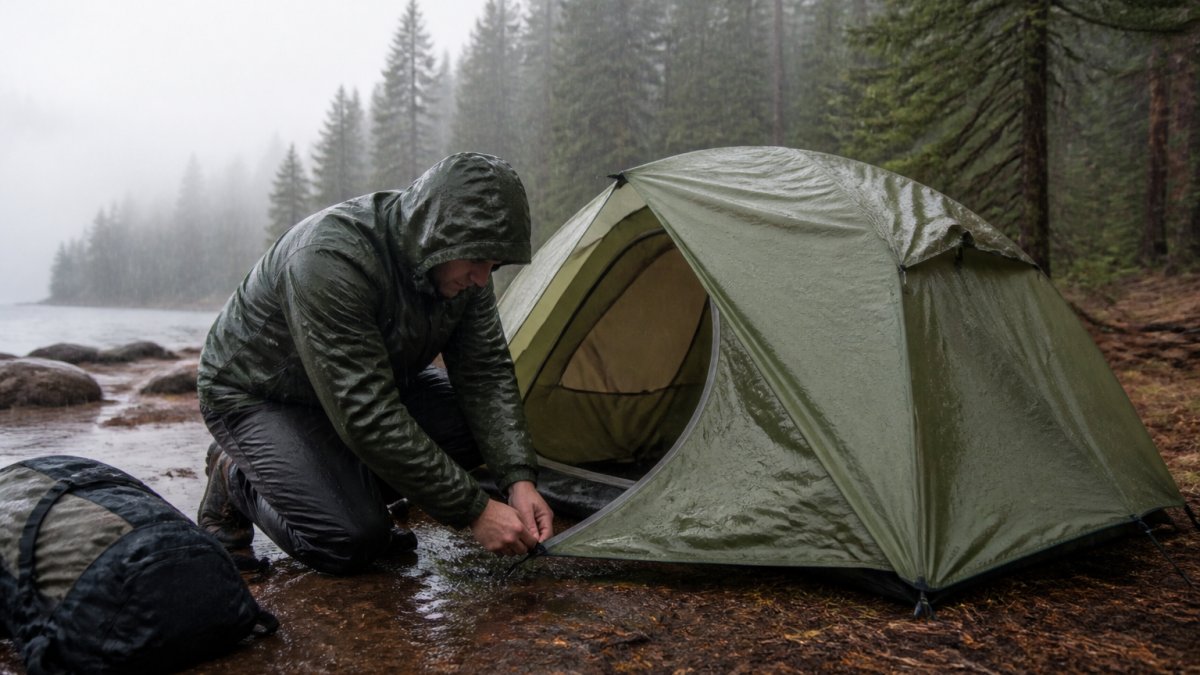
How to Set Up a Tent in the Rain: A Step-by-Step Guide
Table of Contents
- Choose the Right Campsite Before You Unpack
- Gear to Have Ready Before You Set Up a Tent in the Rain
- Step-by-Step: How to Set Up a Tent in the Rain
- Tent Footprint vs Tarp: Which Goes Under Your Tent?
- How to Waterproof a Tent: Seam Sealing and DWR Care
- Camping in the Rain Tips: Managing Condensation, Gear, and Comfort
- Conclusion
- Frequently Asked Questions
Last Updated: October 1, 2026
Choose the Right Campsite Before You Unpack
Rain turns a bad campsite into a flooded one. So the most important step in how to set up a tent in the rain happens before you touch your tent bag: pick ground that sheds water instead of holding it.
Look for high, level ground.
Here's what to check:
- Elevation: Camp on a small rise, never in a dip.
- Drainage: Loose, sandy, or gravelly soil drains fast. Packed clay holds water.
- Overhead: Look up. Dead branches fall in storms.
- Distance from water: Stay back from lakes and streams that can rise overnight.
Gear to Have Ready Before You Set Up a Tent in the Rain
The best way to keep your tent dry is to never open it in the rain without a plan. Lay out everything you need before you leave the car or trailhead. Once you're fumbling in a downpour, it's too late.
Your wet-weather kit should include:
- A ground tarp or footprint
- A rain jacket you can work in
- Dry bags for your sleeping bag and clothes
- Extra stakes and guy lines
- A small towel or sponge
The Poncho Rain Fly Tarp: Your First Line of Defense
A dual-purpose tarp earns its place in any pack. The Poncho Rain Fly Tarp works as a poncho while you hike and a shelter when you stop. It's waterproof, lightweight, and packs down small.


Rain Jackets That Keep You Dry While You Work
You'll be kneeling, reaching, and staking in the rain. A jacket that soaks through makes a miserable job worse. Look for taped seams and a hood you can cinch tight.
Step-by-Step: How to Set Up a Tent in the Rain
Pitch in the wrong order and your tent interior gets soaked before the rainfly is on. The fix is simple: keep the inside dry by working from the outside in. But the exact sequence depends on your tent's architecture, and that's the part most guides skip. Here's how to do it for both major designs.
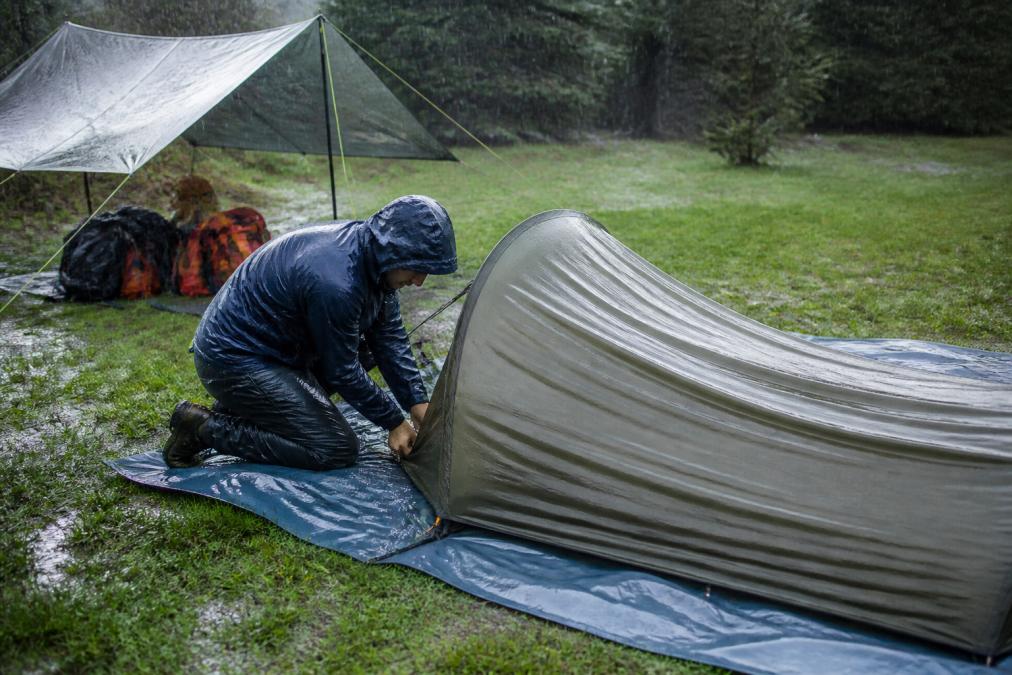
Step 1: Lay Your Footprint or Ground Tarp
Start by covering the ground. A footprint or tarp goes under the tent to block moisture and protect the floor from rocks and roots.
Step 2: Know Your Tent Architecture Before You Pitch
This is the move most people miss, and it's where the setup order diverges. Tents fall into two structural families, and each one pitches differently in rain.
Step 3: Pitch the Rainfly First (or As Fast As Possible)
On many freestanding tents, you can clip the rainfly to the poles before the inner body goes up. The fly becomes a roof while you work.
If your tent doesn't allow that, here's the workaround:
- Lay the tent body flat and attach the poles.
- Raise the frame, then immediately drape the rainfly over it.
- Only then crawl in to clip the inner walls.
Step 4: Stake Out Guy Lines and Manage Wind
Wind drives rain sideways, straight through a loose fly. Stake the corners first, then pull out every guy line you have. Angle stakes away from the tent at about a 45-degree angle for a stronger hold.
Tent Footprint vs Tarp: Which Goes Under Your Tent?
A footprint is a custom-cut ground cloth made for your exact tent, while a tarp is a general-purpose sheet you cut to size. Both protect your floor. The choice comes down to weight, fit, and cost.
| Option | Best For | Weight | Cost |
|---|---|---|---|
| Custom footprint | Backpackers who want exact fit | Light | Higher |
| Basic tarp | Car campers and budget setups | Heavier | Lower |
| Poncho rain fly tarp | Hikers who want dual use | Light | Low |
How to Waterproof a Tent: Seam Sealing and DWR Care
Factory waterproofing fades with use. If water beads up on your fly today but soaks in next season, the coating has worn off. You can restore it.
Two things keep a tent dry:
- Taped seams: These are heat-sealed strips over the stitching. Check them each season for peeling.
- DWR finish: This is the durable water repellent coating that makes rain bead and roll off.
Camping in the Rain Tips: Managing Condensation, Gear, and Comfort
Staying dry is half the battle. Staying comfortable is the other half, and it's the part most guides skip. A dry tent you hate sleeping in still ruins the trip.
Ventilation and Condensation Control
Condensation is moisture from your breath and body that collects on the inside of the fly. On a cold, rainy night, it can soak your sleeping bag even though no rain got in.
Fight it by keeping air moving:
- Crack the vents at the top of the fly.
- Leave a small gap at the door if the rain isn't blowing sideways.
- Sleep with your face away from the wall.
- Use a breathable tent design when you can.
Post-Rain Mold Prevention: The 24-Hour Window
This is the step almost no guide covers in detail, and it's the one that decides whether your tent survives the season. Mildew doesn't need standing water to grow, it needs damp fabric and warmth. A tent packed wet in the morning can start developing mildew within 24 to 48 hours. Once mildew sets in, it stains the fabric, weakens the waterproof coating, and leaves a smell that never fully leaves.
The moment the rain stops:
- Shake the fly and tent body to knock off standing water. Don't wipe the fly with a cloth, you'll just smear water into the coating.
- Wipe down the interior floor with a dry microfiber cloth. The floor is where most condensation pools.
- If you have sun or wind, drape the fly over a line or a bush for 15 to 30 minutes before packing. Even partial drying buys you time.
Back home or at the trailhead:
- Set the tent up fully, fly on, doors open, vents open, in a shaded, breezy spot. Direct sun degrades the coating over time, so shade plus airflow is better than sun.
- Let it dry inside and out. Flip the fly inside out if you can, so the coated side gets air too.
- Don't pack it away until every surface feels dry to the touch, including the corners, the pole sleeves, and the stuff sack.
- Store it loose in a cool, dry place. Never leave a tent compressed in its stuff sack for long-term storage, trapped moisture and creases are where mildew starts.
If you find mildew:
- Wash the affected area with a mild soap and warm water. Skip bleach and detergent, both damage the coating.
- Rinse thoroughly and dry completely before storing.
- Reapply DWR to the fly afterward, since mildew and washing both strip the finish.
Keeping Dry Clothes Separate From Wet Gear
Morale matters on a rainy trip, and nothing tanks it faster than climbing into a damp sleeping bag in damp clothes. Build a simple two-zone system inside the tent:
- Dry zone: your sleeping bag, dry clothes, and anything you'll wear at night. Keep it on one side, ideally on top of a dry bag or your pack.
- Wet zone: rain jackets, boots, and the fly-side of the tent. Boots go in the vestibule or under the fly edge, never inside the sleeping area.
- Transition layer: a small dry bag or stuff sack for the clothes you peel off. Wet layers go straight in, so they don't touch the dry zone.
Conclusion
Setting up camp in a downpour tests your gear and your patience at the same time. The right tent helps, but the right order and the right layers matter just as much.
Frequently Asked Questions
Should I put a tarp under my tent if it's raining?
Yes, a ground tarp or footprint under your tent adds a critical layer of protection against water wicking up through the floor. Make sure the tarp is slightly smaller than your tent floor so it doesn't extend past the edges and collect pooling water. If you're using a poncho rain fly tarp, it can double as a ground cloth in a pinch, but a dedicated footprint fits better and packs smaller.
How do I keep the inside of my tent dry while setting it up in the rain?
Pitch the rainfly first so the inner tent body stays covered during assembly. Keep your gear in dry bags or under a tarp shelter until the tent is fully set up. Wipe down any moisture that gets inside immediately with a microfiber cloth, and avoid opening the tent door more than necessary. Once inside, crack the vents to let humid air escape without letting rain in.
Can tents withstand heavy rain?
Most quality tents can handle heavy rain if they have a hydrostatic head rating of at least 1,500mm and taped seams. The rainfly and bathtub floor do most of the work, but you'll need to stake out guy lines properly and avoid touching the walls from inside, which can break surface tension and let water seep through. A tent with a full-coverage rainfly and good ventilation handles storms far better than a minimal one.
Is it better to set up a tent in the rain or wait?
Set up immediately. Waiting rarely helps because rain can last hours, and you'll get colder and wetter standing around. Pitching fast with a rainfly-first approach keeps the interior dry. If lightning is nearby, wait in a vehicle or a safe shelter until the storm passes, but for ordinary rain, setting up right away is the best way to stay warm and dry.