 listicle
Best Backpacking Stove Windscreens for Windy Conditions
Table of Contents
- Why Stove Windscreens Matter for Backpacking
- Camp Stove Windscreen Materials and Durability
- Canister Stove Windscreen Safety: What You Need to Know
- Folding Aluminum Stove Windscreen Options
- Backpacking Stove for Windy Conditions: Performance and Setup
- Windscreen Alternatives and When to Skip Them
- Frequently Asked Questions
Last Updated: October 8, 2026
Why Stove Windscreens Matter for Backpacking
A stove windscreen is a protective barrier that shields your camp stove flame from wind. For backpackers and campers, it can mean the difference between boiling water in minutes and watching fuel burn away uselessly in gusty conditions.
Wind is one of the biggest efficiency killers in backcountry cooking. Even a modest breeze pulls heat away from your pot, forcing you to burn more fuel and wait longer for meals. A quality windscreen redirects airflow around your burner, concentrating heat and cutting fuel consumption.
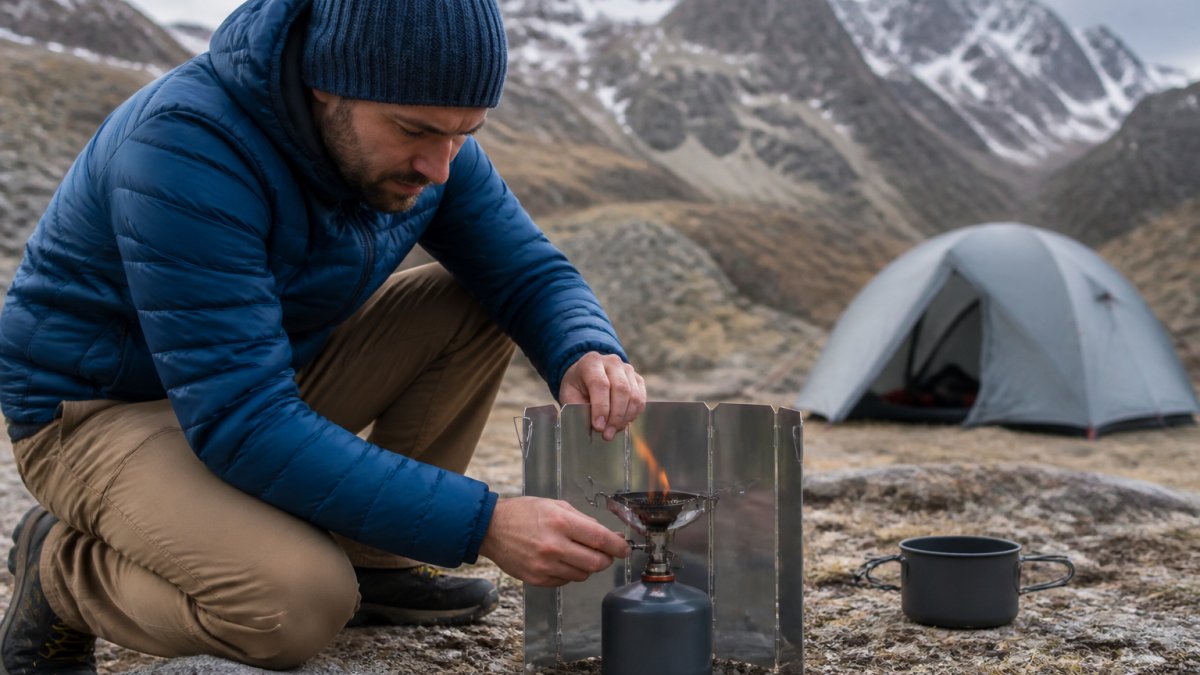
The best backpacking stove windscreens solve this without adding significant weight or bulk. Most foldable designs weigh under 6 ounces and pack down smaller than a water bottle, worth it for ultralight backpackers, essential for car campers and group expeditions.

Below, we cover materials, safety, and the best options today.
Camp Stove Windscreen Materials and Durability
Stove windscreen materials fall into a few categories, each with tradeoffs between weight, durability, and heat resistance.
Aluminum alloy is the most common choice for backpacking windscreens: lightweight, heat-conductive, and compact-folding. It resists corrosion and temperature swings, and most foldable aluminum windscreens last years.
Stainless steel windscreens are heavier but more durable under extreme heat. They resist warping, tolerate closer proximity to flames, and clean more easily after soot buildup.

High-carbon steel combines some benefits of both. It's tougher than aluminum, lighter than stainless steel, and resists rust well. High-carbon steel windscreens are less common but appear in some premium designs.
Durability comes down to use case: car campers and base-camp users can afford heavier materials, while backpackers prioritize aluminum. Either way, look for reinforced seams and panels that stay flat under heat.
Canister Stove Windscreen Safety: What You Need to Know
A windscreen that works well on a liquid-fuel stove can be genuinely dangerous on a canister stove. The difference is the fuel container.
The core hazard: heating the canister. A canister stove's fuel is a pressurized blend of propane and butane that boils off at a controlled rate. If a windscreen reflects burner heat back onto the canister, internal pressure rises, the stove feeds more fuel, the flame grows, and the canister gets hotter still.
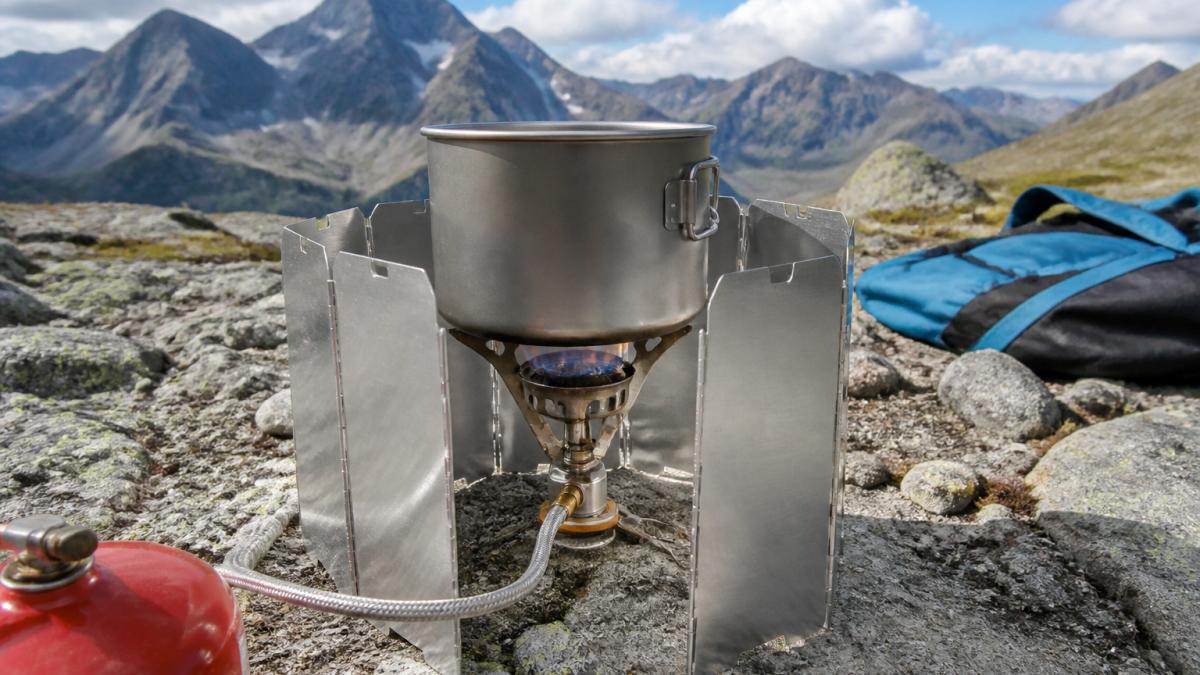
Clearance guidance. Keep the canister outside the screen and leave several inches of clearance between it and any panel that could reflect heat toward it. If your screen forces the canister inside the enclosure, it's a poor match for a canister stove.
Ventilation and carbon monoxide. Any fuel-burning stove produces carbon monoxide, and incomplete combustion produces more. A screen that fully encloses the burner starves the flame of oxygen, killing efficiency and raising CO output. Leave the top and at least one side open so air can move through.
Manufacturer guidance is the tiebreaker. Stove makers publish clearance and enclosure limits, and those instructions override any general advice, including this article. If a manufacturer says not to use a windscreen with a given stove, or specifies a minimum clearance, follow it. Treat warnings against closed-environment use and reminders to shut the stove off before sleep as hard rules.
Practical safe-use checklist:
- Keep the fuel canister outside the screened area and away from reflected heat.
- Leave the top and at least one side of the screen open for airflow.
- Never operate a screened stove in a tent, vestibule, vehicle, or other enclosure.
- Shut the stove off before you sleep, and never leave a lit stove unattended.
- If the canister feels hot to the touch, shut the stove off and let it cool before continuing.
- Follow the stove manufacturer's clearance and windscreen instructions over any general guidance.
When a screen is the wrong tool. In a fully exposed, high-wind site, the safer move is often to relocate, use natural shelter like a rock or log, or switch to a stove design that tolerates wind without an added enclosure.
Folding Aluminum Stove Windscreen Options
Folding aluminum windscreens dominate the backpacking market because they balance weight, packability, and performance.
A typical folding aluminum stove windscreen has 4-6 segmented panels connected by hinges or a flexible backing. Unfolded, they form a partial or complete barrier around your burner; folded, they compress into a flat rectangle that fits a backpack side pocket.
The best designs feature:
- Lightweight aluminum alloy construction
- Segmented panels that allow you to configure the windscreen for different wind directions
- Stable legs or feet that keep the windscreen upright without requiring stakes
- Easy-to-clean surfaces that don't retain soot or residue
Folding aluminum windscreens work with both canister and liquid-fuel stoves, and fit most burner types and pot sizes. Setup takes under a minute: unfold, position around your stove, and adjust panels.
The Gas Backpacking Stove at GreatAdventureSupply ($12.00) pairs well with a folding aluminum windscreen. Its foldable design and compact footprint suit backpackers, and a simple aluminum windscreen amplifies its efficiency in windy conditions.
13000W Portable Windproof Camping Stove Five-head Gas Cooking Burner with Piezo →
For groups or car camping, larger folding aluminum windscreens with 5-6 panels offer more complete wind protection and accommodate larger cookware. Solo backpackers often prefer 3-4 panel designs that save weight while still providing meaningful wind reduction.
Backpacking Stove for Windy Conditions: Performance and Setup
Most windscreen articles claim a screen speeds up boiling and saves fuel without saying how they measured it. Here's a repeatable field method so you can judge a windscreen on your own stove instead of trusting a windproof label.
A simple, repeatable test you can run at home. Pick a calm day and a windy day with similar air temperature, then run the same protocol both times:
- Use the same pot, the same starting water volume (1 liter is the common benchmark), and the same starting water temperature (fill from the same tap or source).
- Record the ambient air temperature and, if you have one, the wind speed with a handheld anemometer at stove height, not at head height.
- Light the stove, open the valve to the same setting each run, and start a stopwatch.
- Stop the timer at a rolling boil, then shut the stove off and weigh the canister to see how much fuel you burned.
- Repeat each configuration at least twice and average the results, because a single run is noisy.
What the numbers tend to look like. Across canister stoves in the 2-3 kW class, an unprotected burner in a steady 10-15 mph wind takes noticeably longer to boil and burns more fuel than the same burner with a properly positioned screen.
Why pot diameter changes everything. A wide pot (1.5-2 liters, roughly 7-8 inches across) catches more wind and radiates more heat from its exposed sides, so it benefits more from a screen than a narrow 600 ml mug.
Setup strategy matters more than the screen itself. Position panels so wind strikes a solid face, not the open gap: angle the screen in a crosswind, place the solid face upwind in a headwind, and leave a gap downwind so combustion gases escape rather than pooling around the burner. Re-aim the screen every time the wind shifts.
Remote-canister vs. upright-canister layouts. On an upright canister stove, burner and fuel canister share a small footprint, so the screen must protect the flame without boxing in the canister.
Integrated systems as a partial substitute. Some integrated pot-and-burner systems use a heat-exchanger ring on the pot base to capture heat that would otherwise escape, reducing how much a separate screen has to do. They don't replace a screen in strong wind, but they narrow the gap.
Windscreen Alternatives and When to Skip Them
Not every backpacker needs a dedicated stove windscreen. Understanding the alternatives helps you decide what's right for your trips.
Integrated stove designs like the Bio Stove Cooking Kit ($45.00) from GreatAdventureSupply use wood or biomass fuel, which resists wind better than gas burners, and the design itself provides some wind protection.
Liquid-fuel stoves (white gas or kerosene) often generate hotter, more stable flames than canister stoves, making them less susceptible to wind. If you already carry one, you may not need a windscreen in moderate conditions, though they're heavier and need more maintenance.
Larger canister stoves with multiple burners, like the Outdoor Mini Portable Carabiner Stainless Steel 3.5KW stove ($96.56), provide better stability and heat output that resists wind disruption. These suit car camping and base camps where weight isn't critical.
Cooking strategy is another alternative. Some backpackers accept longer cooking times in wind and plan meals accordingly; if your trip allows extra time, skip the windscreen and save the weight. Cold meals, energy bars, and no-cook options eliminate the need entirely.
The Bio Fuel Stove ($24.00) offers another alternative: a wood-burning stove that requires no fuel cartridges and minimal wind protection. In forested campsites where dead wood is abundant, this works well. In alpine or desert environments, it's not viable.
When to skip a windscreen:
- You're using a liquid-fuel stove with a stable flame
- You're camping in sheltered locations (forests, valleys)
- Your trip involves mostly cold meals or no-cook food
- You're using a wood-burning stove in a forested area
- Weight savings are more important than cooking speed
When a windscreen is essential:
- You're camping above treeline or in exposed areas
- You're using a canister stove in windy conditions
- Fuel weight is already high and you need efficiency
- You're cooking for a group and speed matters
- Your trips involve high-altitude or desert camping
The best backpacking stove windscreen for windy conditions depends on your stove type, the environments you frequent, and how much weight you'll carry. Pair it with a reliable stove like the Gas Backpacking Stove or Integrated Heat Collection Stove System from GreatAdventureSupply for dependable outdoor cooking in nearly any weather.

Frequently Asked Questions
What is a stove windscreen and how does it help when backpacking?
A stove windscreen is a barrier that wraps around your camp stove to block wind and protect the flame. When backpacking in windy conditions, windscreens reduce fuel consumption by keeping heat concentrated around your pot, speed up boil times, and stabilize the flame. They're especially useful above treeline or in exposed campsites where wind can waste fuel and make cooking difficult.
Are folding aluminum stove windscreens safe to use?
Folding aluminum windscreens are safe when used correctly. The key is maintaining proper airflow so carbon monoxide doesn't accumulate, never fully enclose your stove. Most designs leave gaps or use segmented panels to allow combustion air to circulate. Always use windscreens outdoors or in well-ventilated areas, never in tents or enclosed spaces. Check that the windscreen doesn't touch your pot or fuel canister directly, as aluminum conducts heat.
Do backpacking stove windscreens improve fuel efficiency?
Yes, windscreens measurably improve fuel efficiency by reducing heat loss and directing flames toward your cookware. This matters on multi-day trips where fuel weight is critical. The efficiency gain is most pronounced in moderate to strong winds; in calm conditions, the benefit is minimal.
Can you use a windscreen with a canister stove?
Yes, you can use a windscreen with a canister stove, but with caution. Never allow the windscreen to trap heat directly around the fuel canister itself, as this risks pressure buildup and canister failure. Safe designs position the windscreen around the pot and burner while leaving the canister exposed to ambient air. Some canister stoves, like the 13000W Portable Windproof Camping Stove, have built-in windproof features and may not need a separate windscreen.
How do you choose the right size stove windscreen?
Match the windscreen size to your pot diameter and stove footprint. Measure your cookware's base diameter and select a windscreen that extends 1-2 inches above the rim for effective wind blocking without restricting airflow. Weight and packed size matter for backpacking. Ensure the windscreen fits inside your pack and doesn't interfere with your specific stove's fuel connections or ignition system.