 listicle
Best Camping Spots for First Time Campers: 2026 Guide
Table of Contents
- How to Choose a Campsite for First Timers
- Top 5 Best Camping Spots for First Time Campers
- Essential Camping Checklist for Beginners
- How to Set Up Your Tent and Campsite
- Beginner Camping Tips and Tricks for a Smooth Trip
- Meal Planning and Camp Cooking Basics
- Camping Safety Tips and Wildlife Awareness
- Budget-Friendly Gear Rentals and Post-Trip Maintenance
- Frequently Asked Questions
Last Updated: September 30, 2026
How to Choose a Campsite for First Timers
The best camping spots for first time campers share three traits: a reservable site, potable water nearby, and a short walk from your car to your tent. Everything else is preference. This guide from GreatAdventureSupply covers how to pick a site, what to pack, and how to set up camp without stress.
Choosing a campsite for first timers comes down to matching the site to your comfort level.
Evaluating Amenities and Facilities
Amenities determine how much gear you bring. A site with hookups and a bathhouse lets you pack lighter; a primitive site demands more planning for water, waste, and shelter.
Start by checking what the campground actually provides:
- Potable water spigots or a fill station
- Restrooms: flush toilets, vault toilets, or none
- Showers and dishwashing stations
- Picnic tables and a fire pit with a grill grate
- Electrical hookups or full hookups for RVs
- Trash collection and a dump station
Understanding Reservation Systems and Check-In Times
Most state park and national park campgrounds take reservations through a central booking system, and popular sites fill months ahead. Check-in is typically early afternoon, checkout the next morning. Arriving after dark makes setup harder than it needs to be.
Top 5 Best Camping Spots for First Time Campers
The best camping spots for first time campers fall into five categories, ranked from most supported to most independent. Match the category to your experience, not a specific park name.
1. Developed Campgrounds with Full Hookups
Developed campgrounds with hookups are the easiest entry point: a reserved pad, electrical and water connections, often sewer, and bathhouses with hot showers a short walk away.
2. State Park Camping Areas
State park camping areas sit between full-hookup resorts and rough primitive sites. Most offer potable water, restrooms, and a camp host, but amenities vary by park, so read the listing carefully.
3. National Park Campgrounds
National park campgrounds deliver scenery developed sites elsewhere can't match. Some are first-come, first-served, others take reservations, and amenities range from full services to vault toilets only.
4. Beginner-Friendly Primitive Camping Sites
Primitive camping means no hookups, often no potable water, and sometimes no restrooms. It's a step up in independence and a good test of your gear and planning.
5. Dispersed Camping on Public Lands
Dispersed camping on public lands is free and unstructured: pick a spot on designated land, set up, and leave no trace. No amenities, no reservations, no camp host.
| Camping Spot Type | Amenities | Reservation | Best For |
|---|---|---|---|
| Developed with hookups | Full hookups, showers | Required | Families, first night |
| State park | Water, restrooms, host | Usually required | Balanced first trip |
| National park | Varies, often limited | Mixed | Scenery seekers |
| Primitive | Minimal, no hookups | Sometimes | Testing your gear |
| Dispersed | None | None | Experienced campers |
Essential Camping Checklist for Beginners
A camping checklist for beginners should cover shelter, sleep, water, food, light, and safety. Pack for the weather forecast, not for the season. A warm afternoon can turn into a cold night fast.
- Tent with stakes, guy lines, and a ground cloth or tarp
- Sleeping bag rated for the expected low temperature
- Sleeping pad and pillow for insulation and comfort
- Headlamp plus a lantern for the campsite
- Camp stove, fuel, and cookware
- Potable water or a filter and storage containers
- Cooler or insulated backpack for food
- First aid kit and any personal medication
- Fire starter and local firewood
- Layered clothing and moisture-wicking base layers
- Rain jacket and a spare pair of dry socks
- Trash bags for pack-out and leave no trace
How to Set Up Your Tent and Campsite
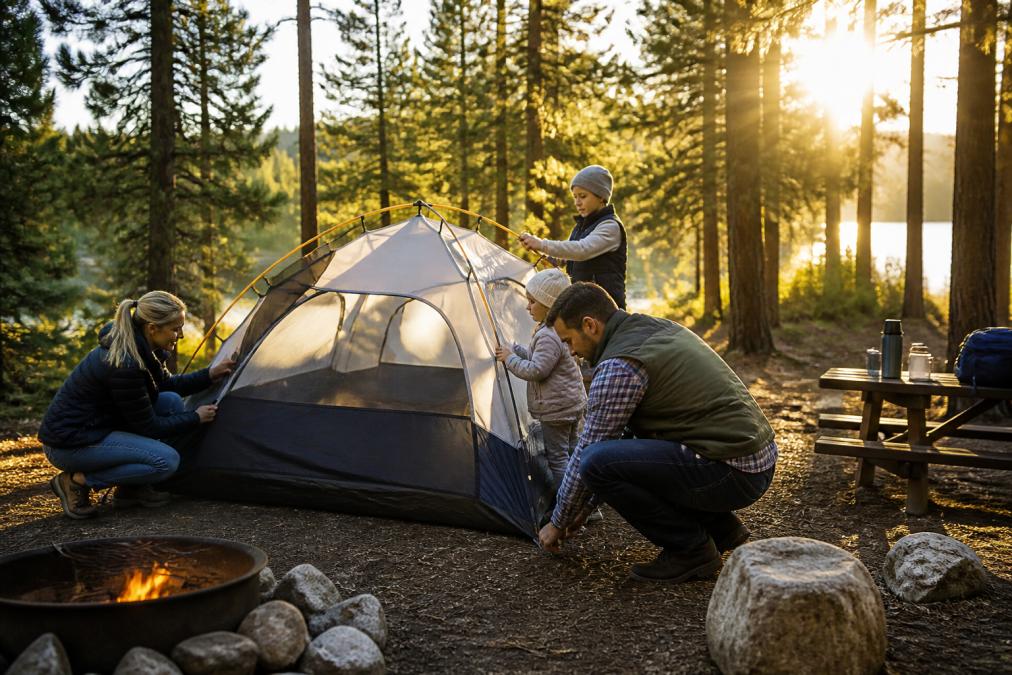
Pitching a tent takes about 15 minutes once you've done it twice. Pick a level spot, clear rocks and sticks, and orient the door away from the wind. Practice at home first so you're not learning in the dark.

Follow these steps for a clean setup:
2-Person Easy Setup Rainproof Tent →
- Choose a level, cleared spot away from dead branches overhead
- Lay down a ground cloth slightly smaller than the tent floor
- Assemble the poles and thread them through the tent sleeves or clips
- Raise the frame and stake the corners at a slight outward angle
- Attach the rainfly and stake out the guy lines
- Set up your sleep system inside: pad, then bag, then pillow
Beginner Camping Tips and Tricks for a Smooth Trip
Beginner camping tips and tricks mostly come down to preparation and light. Arrive before dark, set up in daylight, and know where your headlamp is before you need it.
A few habits separate a smooth trip from a rough one:
- Do a backyard test run with all your gear before the real trip
- Check the weather forecast the morning you leave and again on arrival
- Set up your sleep system before it gets dark
- Keep a headlamp and a lantern within arm's reach of your sleeping bag
- Store food and scented items away from your tent, especially in bear country
- Learn the campground host's location on day one
Meal Planning and Camp Cooking Basics
Meal planning for camping means fewer ingredients, simpler recipes, and one reliable heat source. Plan one-pot or one-pan meals and prep what you can at home.
A simple approach for a two-night trip:
- Night one: one-pot chili or pasta, prepped at home and reheated
- Breakfast: oatmeal, instant coffee, and fruit
- Lunch: no-cook sandwiches, wraps, or trail mix
- Night two: foil-packet vegetables and protein over the fire
- Snacks: nuts, dried fruit, and granola bars
Camping Safety Tips and Wildlife Awareness
Camping safety starts with three habits: store food properly, know the wildlife in your area, and carry a first aid kit. Most incidents are preventable with basic planning.
Other safety basics:
- Tell someone your itinerary and expected return time
- Carry a first aid kit sized for your group
- Know how to treat minor cuts, burns, and insect stings
- Check fire restrictions before lighting any fire
- Keep a headlamp and whistle on you at all times
- Respect wildlife: observe from a distance, never feed animals
Budget-Friendly Gear Rentals and Post-Trip Maintenance
Renting gear before buying is the smartest move for a first trip: test what you actually need, then buy only what you'll use again. Many outdoor retailers and university recreation programs rent tents, sleeping bags, and stoves by the weekend.
Once you own gear, a few habits after every trip extend its life:
- Dry your tent completely before storing it to prevent mildew
- Clean and re-lubricate tent zippers
- Wipe down cookware and check nonstick coatings
- Store sleeping bags loosely, never compressed
- Check first aid kit supplies and replace anything used
- Inspect stakes, guy lines, and poles for bends or cracks
Frequently Asked Questions
What is the 3-3-3 rule for camping?
The 3-3-3 rule suggests arriving at your campsite by 3 PM, setting up camp within 3 hours of arrival, and being asleep by 3 AM. For first-time campers, this framework prevents setting up in the dark and ensures you have daylight to troubleshoot tent issues. It also builds in time for exploring before sunset.
What amenities should first-time campers look for?
Prioritize potable water, flush toilets or vault toilets, fire rings, picnic tables, and trash collection. Developed campgrounds with these amenities reduce stress for beginners. Check if the site offers electrical hookups, showers, and a campground host on-site. State parks often provide more amenities than national parks, making them ideal for first-time campers.
How do I choose a beginner-friendly campsite?
Look for developed campgrounds with flat, cleared tent pads, nearby restrooms, and potable water. Avoid primitive camping or dispersed camping until you have a few trips under your belt. Check reservation systems for site photos and reviews. Sites near the campground entrance or host site offer added security and easy access to help.
What should I pack in my camping checklist for beginners?
Bring a tent with rainfly, sleeping bag rated for the forecast, sleeping pad, headlamp, first aid kit, fire starter, camp stove, cookware, cooler, weather-appropriate layers, and a tarp. Include a camping pillow for comfort and a portable lantern for nighttime visibility. Pack more water than you think you need and check the weather forecast before leaving.
What are the best beginner camping tips and tricks?
Arrive before dark, practice pitching your tent at home first, and set up your sleep system before cooking. Use a ground cloth under your tent and stake guy lines for stability. Keep food in sealed containers or a bear canister if in bear country. Follow leave no trace principles and check quiet hours at your campground.
Your first camping trip doesn't need perfect gear or a remote wilderness site. It needs a reservable spot, working light, a dry tent, and a plan for food and water. GreatAdventureSupply stocks the essentials that make that first night easy: rainproof tents with beginner-friendly setup, rechargeable lanterns with long runtimes, insulated sleep systems, and first aid kits sized for real trips. Get started with GreatAdventureSupply and build a kit that makes every trip safer and more enjoyable.