 listicle
Essential Camping First Aid Kit Items: 2026 Checklist
Table of Contents
- Essential Camping First Aid Kit Items: A Priority Checklist
- Camping First Aid Kit Checklist: The Core Supplies
- What to Pack in a Camping First Aid Kit for Your Group
- Backpacking First Aid Kit: Sizing by Trip Duration and Remoteness
- First Aid Kit for Hiking and Camping: Storage and Maintenance
- Wilderness Evacuation Decisions: When to Treat and When to Go
- Conclusion: Build Your Kit Before You Leave
- Frequently Asked Questions
Last Updated: October 6, 2026
Essential Camping First Aid Kit Items: A Priority Checklist
A camping first aid kit is a packed collection of wound care supplies, tools, and medications chosen to treat injuries and illness when professional help is hours away. At GreatAdventureSupply, we build ours around a simple rule: sort supplies by how fast a problem can turn serious, not by how often you expect to use them. That means bleeding control comes before blister care, every time.

The exact essential camping first aid kit items you carry should shift with trip length, group size, and how far you'll be from a trailhead. Below, we break the kit into three priority tiers, then show how to size it for a weekend car camp versus a multi-day backcountry push.
Tier 1: Life-Threatening and Bleeding Control
Tier 1 items address severe bleeding and trauma, the emergencies where minutes matter. Start with a tourniquet, a compression bandage, an ABD pad, nitrile gloves, and a CPR face mask. Add a trauma dressing and a burn dressing if your kit doesn't already include them.
A common mistake is burying these at the bottom of the bag. Keep gloves and the tourniquet in an outside pocket you can reach without unpacking.
Tier 2: Wounds, Blisters, and Minor Injuries
Tier 2 covers the injuries you'll actually treat on most trips: cuts, scrapes, and hot spots. Sterile gauze pads in a few sizes, adhesive bandages, knuckle and fingertip bandages, medical tape, conforming bandages, and antiseptic wipes form the core.
Moleskin and blister care supplies belong here too. So do tweezers for splinter removal and a small pair of scissors. These are the items you'll restock most often, so buy them in bulk and refill after every trip.
Tier 3: Comfort, Illness, and Personal Needs
Tier 3 handles the slow problems: pain, allergic reactions, stomach trouble, and personal medical needs. Pack pain relievers, an antihistamine, and an anti-diarrheal medication, each in its original labeled packaging.
This tier is also where your group's specifics live. Anyone with a prescription medication, a known allergy, or a chronic condition needs their supply labeled and stored where the whole group knows to find it. Menstrual pads double as emergency wound dressings, and a small bar of soap or hand sanitizer supports basic sanitation.
Camping First Aid Kit Checklist: The Core Supplies
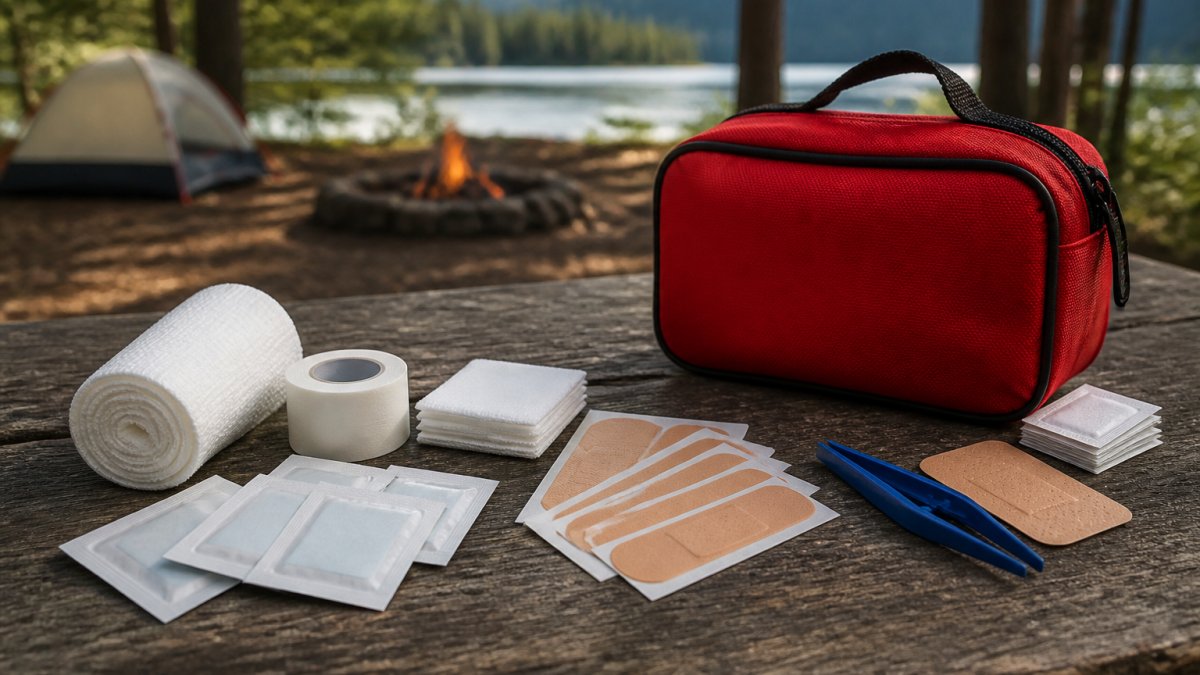
Use this camping first aid kit checklist as your baseline, then adjust quantities for your group. A solo weekend camper needs less than a family of five on a five-day trip.
| Supply Category | Items to Pack | Restock Frequency |
|---|---|---|
| Wound care | Sterile gauze pads, adhesive bandages, medical tape | After every trip |
| Cleaning | Antiseptic wipes, alcohol pads, soap | Check monthly |
| Tools | Tweezers, scissors, safety pins | Inspect yearly |
| Medications | Pain relievers, antihistamine, anti-diarrheal | Check expiration dates |
| Comfort | Blister care, sting relief, emergency blanket | After every trip |
Wound Care: Sterile Gauze Pads, Adhesive Bandages, and Tape
Wound care is the heart of any kit. Carry sterile gauze pads in 2x2, 3x3, and 4x4 sizes, a roll of medical tape, and conforming bandages for wrapping sprains. Adhesive bandages in standard, knuckle, and fingertip shapes cover the small stuff.
What most guides miss is quantity. A group of four on a wet, muddy trip will burn through bandages fast. Pack double what you think you need, and keep a roller bandage for compression if a sprain swells.
Tools and Medications: Tweezers, Splinter Removal, and Pain Relievers
Tweezers handle splinter removal, tick checks, and debris in a wound. A small pair of scissors cuts tape and gauze cleanly. Safety pins secure slings and repairs.
For medications, keep pain relievers, an antihistamine for insect bites and allergic reactions, and an anti-diarrheal medication. If anyone in your group carries a prescription, note the dosage and store it with the kit.
What to Pack in a Camping First Aid Kit for Your Group
Knowing what to pack in a camping first aid kit for a group means scaling quantities to people, trip length, and risk, not just tossing in extra bandages.

Baseline quantities per person, per trip:
- Nitrile gloves: 2 pairs per person (one to treat, one spare)
- Adhesive bandages: 10-15 assorted sizes per person
- Sterile gauze pads (2x2, 3x3, 4x4): 4-6 of each size per group
- Medical tape: 1 roll per 2 people
- Antiseptic wipes: 5-8 per person
- Pain reliever doses: 4-6 per person
- Antihistamine doses: 2-4 per person
For groups of four or more, add a second tourniquet, a second compression bandage, and extra gauze for larger wounds.
The intake card is the item most kits forget. Before you leave, ask every camper three questions and write the answers on a card stored inside the kit:
- Do you carry a prescription medication, and where is it kept?
- Do you have any drug or insect-sting allergies?
- Do you have a chronic condition (asthma, diabetes, heart condition) that changes how we treat you?
That card is often the most valuable thing in the bag. In an emergency, a responder can act on a written allergy or condition in seconds, far faster than asking a panicked group.
Personal medications and dosing. Prescriptions belong in their original labeled packaging, stored where the whole group knows to find them. Do not consolidate pills into a shared bag.
Our First Aid Kit (151 pieces) covers most of the core checklist in one compact case, with gauze pads, adhesive bandages, medical tape, antiseptic wipes, tweezers, and a CPR face mask already sorted, a solid base to build a group kit around.
Backpacking First Aid Kit: Sizing by Trip Duration and Remoteness
A backpacking first aid kit is sized by weight and distance, not by how many supplies fit. For a one-night trip, a pared-down kit under a pound works. For a week in the backcountry, you'll carry more wound care and more medication.
Remote trips change the math. The farther you are from a road, the more you need to treat and stabilize rather than wait. Add a splint, extra compression tape, and warmth supplies like an emergency blanket and extra layers.
If you bring a dog, a Pet First Aid Kit for Dogs & Cats covers tick removal, wound care, and a vet-reviewed guide for injuries on the trail.
First Aid Kit for Hiking and Camping: Storage and Maintenance
A first aid kit for hiking and camping only works if it is intact, dry, and findable when you open it. Most guides say "check it regularly" and stop there. Here is a repeatable system that actually holds up.
Storage: control moisture, heat, and access.
- Use a waterproof bag or hard case. A dry bag with a roll-top closure keeps water out during river crossings and rain.
- Keep it out of direct sun and away from the stove or fire. Heat degrades adhesives, melts ointments, and shortens the life of medications.
- Store it in the same place every trip, top of the pack or an outside pocket, so anyone in the group can find it without unpacking.
The two-part audit. Run a quick check before every trip and a full audit twice a year:
Pre-trip check (2 minutes):
- Confirm the kit is present and the closure is sealed.
- Check that gloves, tourniquet, and trauma dressing are still in the outside pocket.
- Glance at expiration dates on medications and antiseptic wipes.
Full audit (twice a year):
- Empty the kit and inspect every item for damage or leakage.
- Replace anything expired. Medications, antiseptic wipes, and antibiotic ointment are the usual offenders.
- Restock what you used since the last audit.
- Confirm batteries in the flashlight still work, and replace them if not.
- Re-seal the kit and note the audit date on a card inside.
Expiration management. Most over-the-counter medications lose potency over time rather than becoming dangerous, but an expired pain reliever may not work when you need it. Antiseptic wipes dry out, and adhesive bandages lose their stick. A simple rule: write the earliest expiration date among your medications on the outside of the kit, and replace the whole medication pouch when that date passes.
A kit you haven't opened in two years is a kit you can't trust. Moisture, heat, and time quietly degrade supplies even when the bag looks fine. The audit is what turns a bag of gear into a kit you can rely on.
Wilderness Evacuation Decisions: When to Treat and When to Go
Wilderness evacuation decisions come down to one question: can you safely manage this injury where you are? Treat on site for minor cuts, blisters, and mild sprains. Evacuate for uncontrolled bleeding, suspected fractures, head injuries, or signs of hypothermia.
When in doubt, go. A delayed evacuation in remote terrain turns a manageable injury into a serious one. Carry a communication device, know your exit routes, and set a turnaround time before you leave camp.
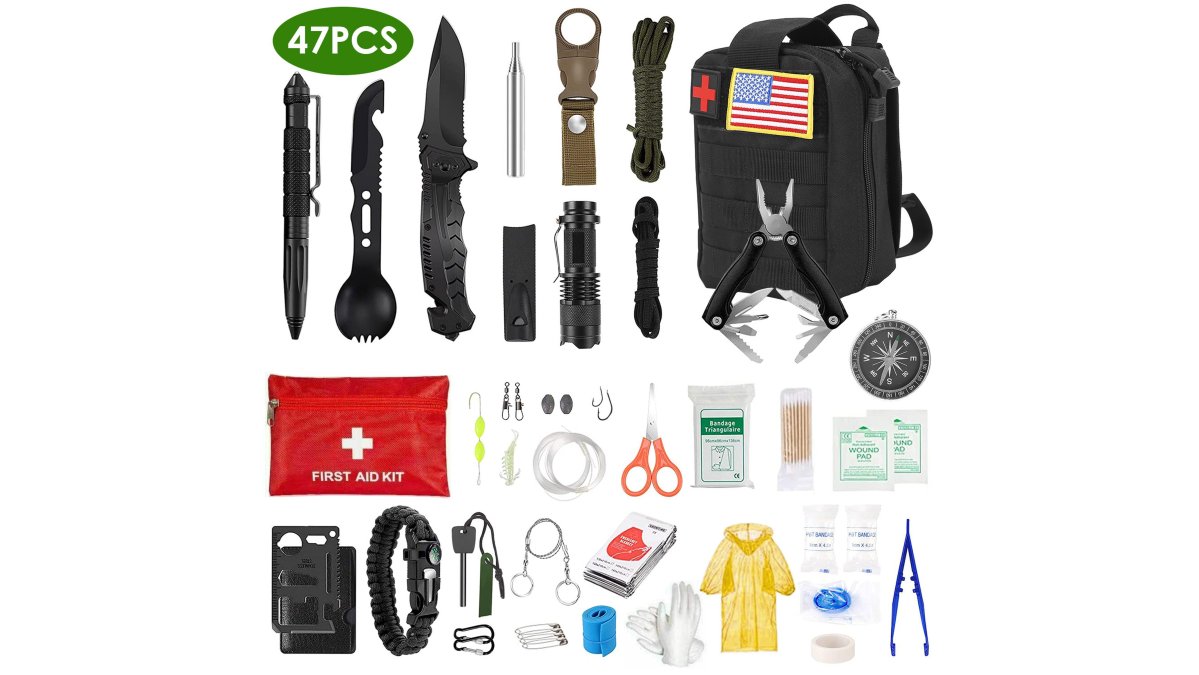
Our 47Pcs Emergency Survival Kit pairs first aid supplies with a flashlight, compass, and emergency blanket for trips where you need more than bandages.

Conclusion: Build Your Kit Before You Leave
The hardest part of first aid isn't the supplies, it's the moment you need them and realize something's missing. Build and audit your kit before you leave, not on the trail. GreatAdventureSupply stocks first aid kits, survival kits, and pet kits built for real conditions, with multifunctional, portable designs that fit in a pack or a glove box. Add to cart and head out prepared.
Frequently Asked Questions
What are the 10 essential items in a camping first aid kit?
At minimum, pack sterile gauze pads, adhesive bandages in several sizes, medical tape, an elastic roller bandage, antiseptic wipes, nitrile gloves, tweezers, blister care such as moleskin, pain relievers, and any personal medications. Add a CPR face mask and a trauma dressing if you camp in remote areas. These ten cover cuts, scrapes, sprains, splinters, blisters, and the most common camping injuries.
How do I choose a first aid kit for a camping trip?
Match the kit to trip length, group size, and how far you are from help. A day hike needs a small pouch with bandages, antiseptic wipes, and tweezers. A multi-day backpacking trip needs more gauze, a roller bandage, blister care, and medications. A ready-made kit such as the 151-piece First Aid Kit covers most family camping needs, then you add personal medications and trip-specific supplies.
How should I pack and store a camping first aid kit?
Keep supplies in a waterproof, organized case so you can find items fast. Group by category: wound care, tools, medications, and personal items. Store the kit in an outside pocket of your pack or near the top for quick access. Check it before every trip, replace used items, and rotate medications before they expire. Heat and moisture damage supplies, so store the kit out of direct sun and never leave it in a hot vehicle for long periods.
What first-aid supplies should I bring for a multi-day camping trip?
For multi-day trips, increase quantities of gauze pads, adhesive bandages, and medical tape, and add a second roller bandage. Include blister care, sting relief, antihistamine, anti-diarrheal medication, and a splint or triangular bandage for sprains. Add extra gloves, a CPR face mask, and a way to clean wounds with water and soap. If you are hours from a trailhead, include a trauma dressing and know your evacuation plan before you leave.
How often should I replace items in my camping first aid kit?
Check the kit before every trip and replace anything used, opened, or damaged. Replace medications by their expiration date, and swap out antiseptic wipes and sterile gauze if packaging is torn or wet. Adhesive bandages lose stickiness over time, so rotate them yearly. Nitrile gloves degrade with heat, so store them out of direct sun. A quick pre-trip audit keeps the kit ready when you need it.
American Red Cross first aid guidance
National Park Service wilderness safety resources
CDC emergency preparedness information