 listicle
Saltwater Fishing Reels for Surf Fishing: 2026 Guide
Table of Contents
- Quick Comparison: Top Saltwater Fishing Reels for Surf Fishing
- What Makes a Surf Fishing Reel Worth Buying
- Best Saltwater Fishing Reels for Surf Fishing
- Surf Fishing Reel Size Guide: Matching Reel to Rod and Conditions
- Spinning vs Conventional Reels for Surf Fishing
- How to Maintain Saltwater Fishing Reels After Every Trip
- Common Surf Reel Failures and How to Troubleshoot Them
- Frequently Asked Questions
Last Updated: September 10, 2026
Quick Comparison: Top Saltwater Fishing Reels for Surf Fishing
The best saltwater fishing reels for surf fishing balance corrosion resistance, drag pressure, and line capacity against your actual conditions. This GreatAdventureSupply guide covers four reels, from a $27.64 budget option to a premium fly reel, plus maintenance and sizing rules that keep them working.
Here's the short version before the detail:
| Reel | Price | Gear Ratio | Best For |
|---|---|---|---|
| SeaKnight AXE | $100.84 | 6.2:1 | All-around surf and inshore |
| Denali Fission GEN-2 | $99.99 | Not listed | Mid-range value |
| Metal Spool Reel (1000-7000) | $27.64 | 5.2:1 | First-timers, backup reel |
| Old Mariner Inshore Series 610 | $640.00 | Not applicable | Premium fly anglers |
Below, we'll show what separates a durable reel from one that may not last as long.

What Makes a Surf Fishing Reel Worth Buying
Corrosion resistance and sealed drag systems decide whether a surf reel lasts. Gear ratio, bearing count, and handle shape are secondary to keeping saltwater out of the internals.
Surf fishing is the harshest environment a spinning reel will ever see. Sand gets into everything. Salt spray coats the body on every cast. A reel that performs flawlessly in a lake can fail in two trips on the beach.

Corrosion Resistance and Sealed Drag Systems
Sealed drag systems keep saltwater away from the drag washers, where most surf reel failures begin (sciencedirect.com). An unsealed drag absorbs moisture, the washers corrode or swell, and your drag locks up or goes slack mid-fight.
Look for reels that specify sealed bearings and anti-corrosion coatings rather than generic "saltwater ready" marketing. The SeaKnight AXE, for example, uses 11 anti-corrosive ball bearings and an anti-salt coating on the body and internal components.
Gear Ratio, Line Capacity, and Casting Distance
Gear ratio determines how many times the spool rotates per turn of the handle. A 6.2:1 ratio retrieves line faster than a 5.2:1, which matters when working a lure through current or picking up slack before a fish spits the hook.
Heavier line creates more friction through the guides and off the spool, so 30-pound braid won't cast as far as 20-pound monofilament (PubMed). Match capacity to the fish you're targeting, not the spool's maximum.
Best Saltwater Fishing Reels for Surf Fishing
Four reels cover the realistic range of surf anglers, from first-timer to fly fisherman chasing redfish on the flats.
SeaKnight AXE: Best All-Around Surf Reel
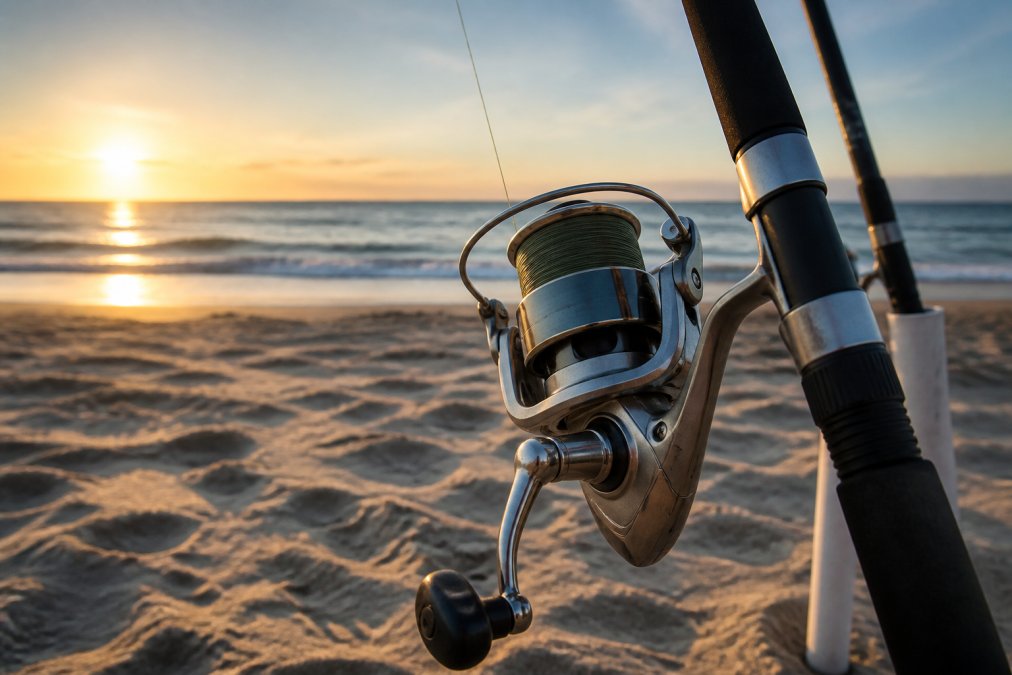
The SeaKnight AXE Saltwater Spinning Fishing Reel is our top pick for most surf anglers at $100.84. The 6.2:1 gear ratio gives fast line pickup, and the full metal body resists the flex cheaper plastic-bodied reels develop after a season of heavy use.
The 11-bearing system includes an instant anti-reverse bearing, so there's no handle slop when you set the hook. Available in 2000H, 3000H, and 4000H sizes, with max drag from 6 kg to 9 kg on the 4000H, the sensible choice for surf work.
Denali Fission GEN-2: Best Mid-Range Pick
At $99.99, the Fission GEN-2 Spinning Reel handles freshwater and saltwater trips without buying two setups. It's built for boat, shore, river, and lake fishing, with an ergonomic body that stays comfortable through a long session.
The tradeoff: it doesn't publish the aggressive corrosion specs the SeaKnight does. If your surf trips are occasional, that's a fair trade; if you're on the beach every weekend, spend the extra dollar on the AXE.
Budget Metal Spool Reel: Best Under $30
Not everyone needs triple digits for a first surf reel. The 1000-7000 Metal Spool Spinning Reel costs $27.64 and still delivers an 8 kg max drag, a CNC metal handle, and a high-strength body. Its 5.2:1 gear ratio is slower than the SeaKnight's, which is forgiving for beginners learning to work a lure.
Old Mariner Inshore Series 610: Best Premium Fly Reel
Fly anglers fishing the surf for redfish, trout, and snook want light weight, a smooth sealed drag, and low maintenance. The Old Mariner Inshore Series 610 at $640.00 is built for exactly that.

It carries a fully sealed internal drag adjustable from 0 to 20 pounds, a low startup inertia spool for delicate presentations, and all-aluminum internals with 7075 aluminum screws. At 8.0 ounces it is lightweight, holds 165 yards of 30-pound Dacron, and comes with a lifetime limited warranty.
Surf Fishing Reel Size Guide: Matching Reel to Rod and Conditions
Match reel size to your rod's line rating first, then to the fish you expect. Too large a reel makes the rod tip-heavy and costs casting distance; too small a reel runs out of line on a long run.
| Reel Size | Line Capacity (approx.) | Best For | Pairs With |
|---|---|---|---|
| 2000-3000 | 150-175 m of 0.30mm | Light surf, whiting, small blues | 7-8 ft rods |
| 4000-5000 | 165-200 m of 0.35mm | General surf, stripers, redfish | 9-10 ft rods |
| 6000-7000 | 200-240 m of 0.40mm | Heavy surf, big fish, long casts | 10-12 ft rods |
The Reel-to-Rod Balance Test Most Guides Skip
Mount the reel, hold the rod at the grip, and check where it balances: it should sit slightly forward of the reel seat. If the tip droops, the reel is too heavy; if the butt feels light and the tip floats, the reel is too small.
A practical rule: reel weight should land between roughly 10 and 14 ounces for a 9- to 10-foot surf rod rated for 1-3 oz lures (takemefishing.org). Go heavier and you'll fight the tip all day; go lighter and the rod won't load on the cast. If the rod feels tip-heavy, add a butt cap weight rather than buying a new reel.
How Spool Geometry Affects Casting Distance
A long-cast surf spool uses a taller, shallower arbor so line peels off in larger coils with less friction against the lip. A deep spool packed with heavy braid forces tighter coils, scrubbing speed off the cast and shortening distance.
That's why the same reel can cast 20 to 30 yards farther with 20-pound braid than 30-pound braid, the lighter line sits closer to the spool lip and releases with less drag. If you need more line for a long run, step up a reel size rather than overfilling a smaller spool.
Retrieve-Per-Turn Math
Gear ratio alone doesn't tell you how fast a reel picks up line, retrieve-per-turn does. Multiply gear ratio by spool circumference: a 6.2:1 reel with a 3.5-inch spool picks up about 21.7 inches per turn; a 5.2:1 reel with the same spool picks up about 18.2 inches. That gap adds up over a long retrieve and matters when working a lure through current or picking up slack before a fish spits the hook.
Line Capacity vs. Casting Distance Physics
Heavier line creates more friction through the guides and off the spool, so 30-pound braid won't cast as far as 20-pound monofilament. The trade-off is abrasion resistance: 30-pound braid survives rocks and shell beds that shred 20-pound mono. On open sand beaches, drop to lighter line for distance; on jetties or bridges, keep the heavier line and accept the shorter cast.
A common pattern is to fill the spool to within about 1/16 inch of the lip. Underfilling costs distance because the line has to climb out of the spool; overfilling causes wind knots and line slap on the cast.
Spinning vs Conventional Reels for Surf Fishing
Spinning reels win for most surf anglers because they cast lighter lures farther with less backlash risk. Conventional reels offer more cranking power and smoother drag, but demand thumb control that takes months to learn.
Why Spinning Reels Dominate the Beach
Spinning reels handle the beach's wind and awkward casting angles better. Line falls off a fixed spool with almost no resistance, so you can cast into a headwind without the bird's nest that plagues conventional reels, and the bail and line roller let you fish light lures, 1/2 oz and under, that a conventional reel struggles to load.
For bait fishing with heavy sinkers at distance, conventional reels have the edge: their level-wind and star drag handle heavy loads more efficiently, and the spool spins on bearings, so a 6-oz sinker plus bait launches with less effort than on a spinning reel.
Drag System Differences That Matter in the Surf
Spinning reels use a drag stack at the top of the spool, easy to adjust mid-fight, but the washers sit close to the spool lip where salt spray and sand reach them first. A sealed drag, like the one on the Old Mariner Inshore Series 610, isolates the washers behind a gasket and is the biggest reliability upgrade for surf spinning.
Conventional reels use a star or lever drag on the side plate. Star drags are simple and reliable but require reaching past the handle to adjust; lever drags give repeatable, marked settings, which is why they're common for big drum and shark. Neither layout is inherently more corrosion-resistant, sealing is what matters.
Casting Distance and Control
A conventional reel with a level-wind and tuned spool can outcast a spinning reel of the same size, but only in trained hands. The trade-off is control: a spinning reel forgives a sloppy cast, while a conventional reel punishes it with a backlash that can cost 20 minutes of picking.
If you're new to surf fishing, start with spinning. If you're chasing big drum or shark from the sand and already comfortable with a conventional reel, that's the tool. A middle path is a baitrunner-style spinning reel, which lets a fish take line on a light secondary drag before you flip to the main drag, useful when soaking bait without holding the rod.
When Each Wins
| Scenario | Better Choice | Why |
|---|---|---|
| Casting 1/2 oz lures into wind | Spinning | No backlash, lighter payloads |
| Soaking 6 oz + bait at distance | Conventional | Spool inertia carries heavy payloads |
| Night fishing with cold hands | Spinning | Easier to manage with gloves |
| Chasing big drum or shark | Conventional | Lever drag and cranking power |
| Mixed light and heavy trips | Spinning | One reel covers more ground |
How to Maintain Saltwater Fishing Reels After Every Trip
Rinse your reel with fresh water after every trip, dry it fully, and re-lubricate the drag and bearings monthly during the season. Skipping this is the most common reason surf reels fail early.
The routine that keeps a reel alive:
- Rinse the exterior with low-pressure fresh water (never a hard spray into the drag)
- Back off the drag knob completely before storage
- Wipe down the body and spool with a dry cloth
- Check the line for abrasion and cut back any rough sections
- Apply a drop of reel oil to the handle knob and bail pivot every few trips
- Re-grease the drag washers and main gear at the start of each season
- Store the reel loosely covered, not sealed in a case where moisture can't escape
Common Surf Reel Failures and How to Troubleshoot Them
Most surf reel failures trace back to saltwater intrusion, sand in the bail mechanism, or a drag left tightened in storage. Each has a distinct symptom and fix.
| Symptom | Likely Cause | Fix |
|---|---|---|
| Grinding when retrieving | Sand or salt in the main gear | Disassemble, clean, re-grease |
| Drag jerks or slips | Corroded or compressed washers | Replace drag washers |
| Bail won't snap closed | Sand in the bail spring | Flush with fresh water, work the bail |
| Line twists badly on retrieve | Worn line roller bearing | Replace the roller bearing |
| Handle wobbles | Loose handle nut or worn bushing | Tighten or replace the bushing |
If a reel grinds after a beach session, don't keep fishing it, every turn of the handle pushes abrasive grit deeper into the gears, turning a ten-minute clean into a full rebuild.
Surf fishing can be demanding on gear. GreatAdventureSupply stocks reels selected for real coastal conditions, including the SeaKnight AXE with its anti-corrosion bearings and full metal body, the Denali Fission GEN-2 for anglers splitting time between fresh and salt water, and the Old Mariner Inshore Series 610 for fly fishermen who want a sealed drag and a lifetime warranty. Browse the collection and add to cart to find reliable gear for your next trip.
Frequently Asked Questions
What size reel is best for surf fishing?
For most surf fishing along open beaches, a 5000 to 8000 size spinning reel handles the job. A 6000 size balances well with a 10 to 12 foot rod and holds enough 30 lb braided line for long casts. If you target bigger species like striped bass or red drum, step up to an 8000. Smaller 4000 reels work for lighter inshore surf setups. Match reel size to your rod's line rating and the fish you expect.
Is a 6000 or 8000 reel better for surf fishing?
A 6000 reel suits most surf anglers fishing 10 to 11 foot rods with 20 to 30 lb braid. It keeps the setup light enough to cast repeatedly without fatigue. An 8000 reel holds more line and delivers higher drag pressure, which helps when big fish run. Choose 8000 if you fish heavy current, target large species, or need extra line capacity for long-distance casting. Most anglers start with a 6000 and move up only when needed.
How do you maintain a saltwater fishing reel after surf fishing?
Rinse the reel with fresh water after every trip, but use a light spray rather than a hard stream to avoid pushing sand and salt inside. Dry it with a soft cloth, then check the drag knob and handle for grit. Every few trips, add a drop of reel oil to the handle knob and line roller. Once a season, open the reel, clean old grease, and reapply a thin layer of marine-grade grease. This routine prevents saltwater intrusion and keeps the drag smooth.
What is the difference between a spinning and conventional reel for surf fishing?
Spinning reels hang below the rod and cast lighter baits with less backlash, making them easier for beginners. Conventional reels sit on top and offer more cranking power and line capacity for heavy sinkers and big fish, but they require thumb control to prevent birds nests. Most surf anglers start with spinning gear. Switch to conventional when you need to cast heavy payloads long distances or fight larger species from the beach.
What are the best saltwater surf reels for beginners?
Beginners should look for a sealed spinning reel in the 4000 to 6000 size with a smooth drag and corrosion-resistant bearings. The Denali Fission GEN-2 at $99.99 offers dependable performance for freshwater and saltwater without a steep learning curve. The budget metal spool reel at $27.64 gives you a low-cost entry point to practice casting and reading surf conditions. Both pair well with a 9 to 10 foot medium-heavy rod and 20 lb braid.