 how-to
How Do You Clean and Maintain a Fishing Reel?
Quick Summary
To clean and maintain a fishing reel, rinse it with fresh water after each trip, especially saltwater, then wipe it dry and check for grit. Lightly lubricate moving parts with reel-specific oil or grease, and service it deeper once or twice a year. This routine helps prevent corrosion and keeps your fishing reel running smoothly.
- Back off the drag completely before rinsing so water is less likely to enter the drag washers.
- Dry the reel thoroughly, since trapped moisture is a common cause of rust.
- Use lubricant made for fishing reels, applying only one drop per point.
- Clean the reel deeply once or twice a year, and rinse and dry it after every saltwater trip.
Table of Contents
- Why Fishing Reel Cleaning and Maintenance Matter
- Fishing Reel Cleaning Supplies You Need
- How to Clean a Fishing Reel After Saltwater Use
- Cleaning Spinning Reels Versus Baitcasting Reels
- How to Lubricate a Fishing Reel Without Overdoing It
- Building a Fishing Reel Maintenance Schedule
- Start Your Reel Care Routine Before Your Next Trip
- Frequently Asked Questions
Why Fishing Reel Cleaning and Maintenance Matter
Last Updated: October 29, 2026
Learning how to clean and maintain fishing reels is one of the simplest ways to make your gear last longer.
Think of cleaning as preventive care. Sand, mud, and fish slime work into the spool, gears, and bearings, grinding against moving parts every time you cast.
- Smooth operation: Clean gears and bearings turn freely, so casts and retrieves feel effortless.
- Reliable drag: A clean drag system releases line predictably when a fish pulls hard.
- Corrosion resistance: Rinsing off salt and grit slows rust and pitting on metal parts.
Most anglers don't need special skills, just patience and the right supplies. The sections below cover the tools and a simple schedule.
Fishing Reel Cleaning Supplies You Need
You don't need a full workshop to maintain a fishing reel. Most supplies are inexpensive and easy to find. Gather these first:
- Soft cloth or microfiber towel: Wipes the reel body and removes surface dirt without scratching.
- Soft-bristle brush: An old toothbrush works well for getting grit out of small crevices.
- Fresh water: A bowl or gentle hose stream rinses away salt and sand.
Keep supplies together in a small tackle box or bag so post-trip cleaning takes minutes.
Avoid harsh solvents, abrasive pads, and household cleaners, which can strip lubricant or damage seals.
How to Clean a Fishing Reel After Saltwater Use
Saltwater is hard on reels: salt crystals form inside the spool and gears and speed up corrosion. If your reel is worn out, you can browse a corrosion-resistant full-metal saltwater reel built for this kind of use.

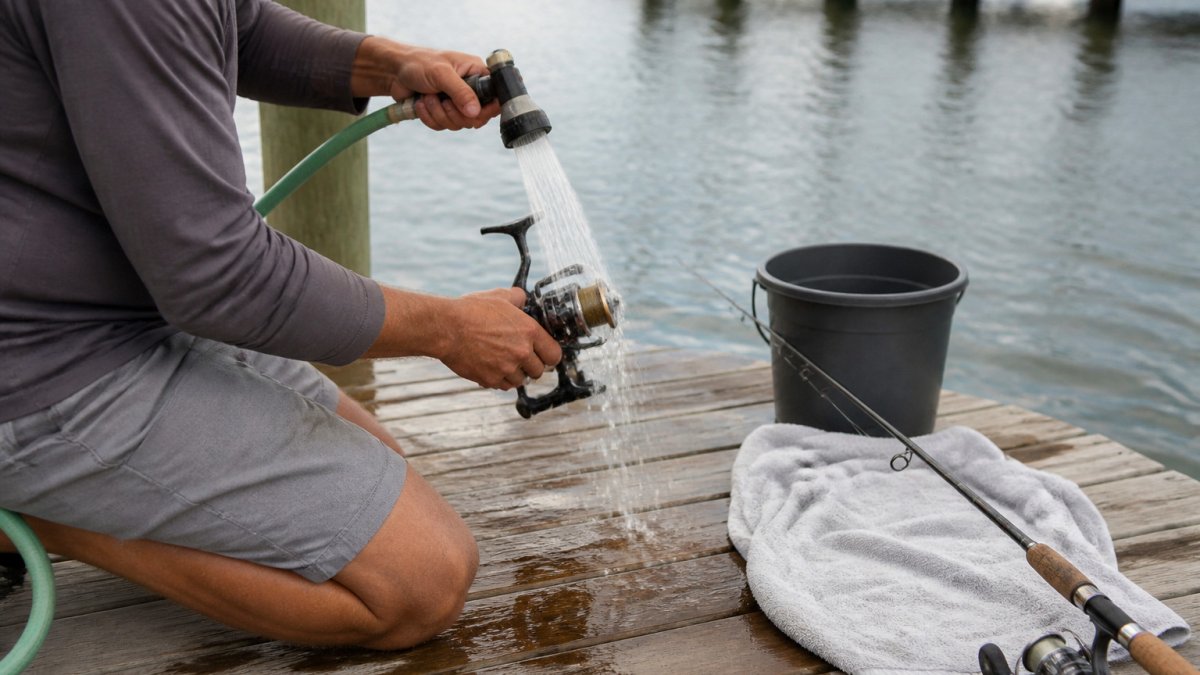
- Loosen the drag first. Back it off completely so water is less likely to get pushed into the drag washers.
- Rinse with fresh water. Use a gentle spray from a hose or a bowl of fresh water. Avoid high-pressure sprayers, which can force water past the seals.
- Tighten the drag before rinsing if needed. Some anglers set the drag lightly so the spool stays protected while rinsing, then loosen it again afterward.
- Wipe the reel down. Use a soft cloth to remove salt residue from the body, handle, and bail.
- Dry thoroughly. Air-dry in a shaded spot or blot with a towel. Trapped moisture is a common cause of rust.
- Check for grit. Turn the handle and listen for scratching or roughness; if you hear it, the reel may need a deeper cleaning.
Watch out: Never spray fresh water directly into the line roller or the spool's bearing areas with a strong jet. That can push water into places that stay damp for days.
Rinsing is quick, but drying is just as important. A reel that goes into a bag while still wet is far more likely to corrode.
Cleaning Spinning Reels Versus Baitcasting Reels
Spinning and baitcasting reels share the same enemies, salt, grit, and dried lubricant, but the parts that fail first differ. If you're unsure which type you own, compare with a baitcasting reel option. Treating them the same is how anglers push water past seals or flush grit into a gear train. The procedures below separate the two types and call out the parts you should not rinse or lubricate.
Spinning Reel Cleaning Procedure
- Back off the drag completely. Turn the drag knob counterclockwise until it stops. This relieves pressure on the drag washers and reduces the chance that rinse water gets forced into the drag stack.
- Rinse the exterior with a gentle spray. Hold the reel so the spool faces down and the handle points up, letting water run off rather than pool. Keep the spray low-pressure, a shower setting, not a jet.
- Do not spray directly into the line roller, bail spring, or the body seam behind the rotor. These are the three places water enters and stays. Wipe them with a damp cloth instead.
- Clean the line roller and bail area with a soft brush. Sand and salt collect under the bail and around the line roller; a toothbrush with a little fresh water lifts it out. Dry with a microfiber towel.
- Wipe the spool and drag knob. Remove salt film from the spool lip and the drag knob threads. Do not dunk the spool in water.
- Dry fully before storage. Air-dry in shade with the drag still loose, then tighten the drag only when you next fish.
Parts on a spinning reel to avoid rinsing directly: the line roller bearing, the bail spring housing, the anti-reverse bearing (one-way clutch), and the body seam where the rotor meets the housing.
Parts on a spinning reel to avoid lubricating: the drag washers (unless the manufacturer specifies a drag grease), the bail spring, and the anti-reverse bearing. Oil in the anti-reverse bearing can make it slip; grease on drag washers can make the drag sticky or uneven.
Baitcasting Reel Cleaning Procedure
- Loosen the drag and remove the spool. On most baitcasters, pressing the thumb bar and lifting the side plate gives access to the spool. Set the spool aside on a clean towel.
- Rinse the frame and side plates only. Use a damp cloth or a very light spray on the exterior. Do not spray into the spool opening, the brake housing, or the gear case.
- Clean the spool and braking system dry. Use a dry soft brush or a cotton swab to remove grit from the spool shaft and the brake pins or centrifugal brake ring. Do not apply water or oil to the brake system, oil attracts grit and changes braking performance.
- Wipe the level wind and line guide. Salt and grit collect on the level wind pawl and the line guide; a cotton swab with a drop of reel oil on the pawl keeps it moving freely.
- Check the gear case for roughness. Turn the handle with the spool out. If you feel grinding, the reel needs a deeper service, do not try to flush the gear case with water.
- Dry fully, then reinstall the spool. Reassemble only when the frame and side plates are dry.
Parts on a baitcasting reel to avoid rinsing directly: the spool bearings, the brake housing, the gear case, and the clutch/thumb bar mechanism. Water in the spool bearings is the most common cause of a baitcaster that sounds rough on the cast.
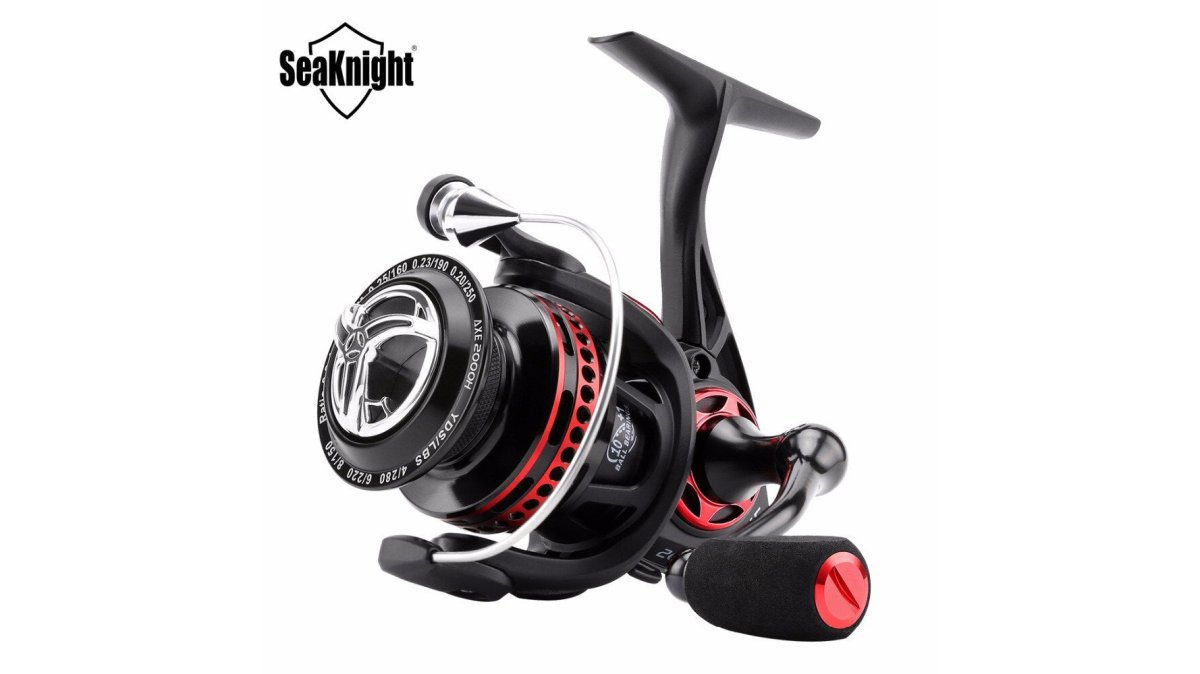
SeaKnight AXE Saltwater Spinning Fishing Reel 6.2:1 11BB 2000H 3000H 4000H Full →
Parts on a baitcasting reel to avoid lubricating: the brake pins or brake ring (keep dry), the drag washers (unless specified), and the level wind pawl threads beyond a single drop of oil.
Quick Reference: Where Each Reel Type Fails First
| Reel Type | Rinse Directly? | Lubricate? | Most Common Neglect Failure |
|---|---|---|---|
| Spinning, line roller | No, wipe only | One drop of oil on the roller bearing | Grit in the line roller, rough retrieve |
| Spinning, bail spring | No | No | Bail fails to snap closed |
| Spinning, anti-reverse bearing | No | No | Reel turns backward under load |
| Baitcasting, spool bearings | No | One drop of oil per bearing | Rough, noisy cast |
| Baitcasting, brake system | No | No | Erratic braking, backlash |
| Baitcasting, gear case | No | Grease on gears only during deep service | Grinding on the retrieve |
Knowing your reel type tells you where to spend cleaning time and where to keep your hands off. When a reel suddenly feels rough, the problem is usually in the area that matches its design, the line roller on a spinner, the spool bearings on a baitcaster.
How to Lubricate a Fishing Reel Without Overdoing It
Lubrication is where well-meaning anglers do the most damage. Too little oil and bearings wear; too much and the reel attracts grit, gums up, and casts worse. The fix is understanding what oil and grease do, where each belongs, and how little you need.
Oil Versus Grease: What Each Does
- Reel oil is low-viscosity and designed to penetrate tight clearances, spool bearings, line roller bearings, handle knobs, and level wind pawls. It flows into the bearing race and coats surfaces without adding drag. Oil is for high-speed, low-load points.
- Reel grease is high-viscosity and stays put under pressure, main gear teeth, pinion gears, and drag washers where the manufacturer specifies it. Grease is for low-speed, high-load points where oil would be squeezed out.
Grease on a spool bearing makes the reel cast sluggishly; oil on main gears lets the teeth run dry under load. Match the lubricant to the part.
Where to Apply Oil
Apply one drop per point, no more:
- Spool bearings (both sides on a baitcaster; the spool shaft bearing on a spinning reel)
- Line roller bearing on a spinning reel
- Handle knob where it rotates
Where to Apply Grease
- Main gear and pinion gear teeth, a thin film, applied with a small brush or swab, only during a deeper service when the reel is opened
- Drag washers, only if the manufacturer specifies a drag grease; many drag systems are designed to run dry
- Gear case internals, a light coating during seasonal service, not a packed cavity
How Over-Lubrication Harms Performance
Excess oil does three things: it migrates. Oil on a spool bearing creeps onto the brake system, changing braking feel and causing backlash. Oil on drag washers makes the drag grab and release unevenly. And oil on the exterior attracts sand and dust, which work into the same bearings you were trying to protect.
Excess grease is just as bad: a packed gear case increases rotational resistance, makes the retrieve feel stiff, and traps grit against the gear teeth.
A Simple Lubrication Routine
- After each saltwater trip: one drop of oil on the line roller (spinning) or level wind pawl (baitcasting). Nothing else.
- Monthly during the season: one drop per spool bearing, one drop on the handle knob.
- Once or twice a year (deep service): clean old grease from gear teeth, apply a thin film of fresh grease, oil the bearings, and wipe all excess.
Consult your reel's manual before disassembling anything. Many modern reels can be serviced without full disassembly, which is safest for beginners. When in doubt, less lubricant applied more often beats a heavy annual application.
Building a Fishing Reel Maintenance Schedule
A simple schedule keeps maintenance from slipping. How often you clean depends on how and where you fish.
- After every trip: Rinse (if saltwater), wipe down, and dry. Check the line for wear.
- Monthly during the season: Inspect for grit, check the drag, and lightly lubricate moving parts.
- Once or twice a year: Perform a deeper cleaning. Check the bearings, replace worn parts, and service the drag.
Saltwater anglers should move up the schedule: if you fish saltwater weekly, rinse and dry every time and consider a thorough service each season.
Track maintenance in a notebook or phone note, recording the date and what you did, so you can see when a reel is due for service. Before you set drag checks into your routine, read about how drag systems work and how to choose one.
Start Your Reel Care Routine Before Your Next Trip
The best time to start caring for your reels is now. Gather your supplies, set a simple after-trip routine, and build a maintenance schedule you can stick to. A few minutes after each outing protects your gear and keeps it performing when a fish hits.
If your current reel is worn out or you're shopping for one that holds up to saltwater, browse the fishing reels at GreatAdventureSupply.
Frequently Asked Questions
What is the best thing to clean fishing reels with?
Use a soft cloth, warm fresh water, and a mild soap for the outside of the reel body. Avoid harsh solvents and high-pressure sprays that can push water past the seals. For the inside, a small amount of isopropyl alcohol can remove old grease and grime from parts before you relubricate them. Always dry the reel fully afterward so moisture does not sit on the metal, and keep cleaning products away from the drag washers, which can be damaged by solvents.
Can you use WD-40 on a fishing reel?
WD-40 works well as a cleaner and water displacer, but it is not a lasting lubricant for reel gears and bearings. Many anglers use it to flush moisture off the outside of a reel after saltwater trips. For moving parts, use a reel-specific lubricant applied in small amounts. Wipe off any excess, because too much oil or spray can attract dirt and gum up the mechanism over time.
How often should you clean and lubricate a fishing reel?
Rinse and wipe down your reel after every saltwater trip, even if you did not use it heavily. For freshwater use, a light cleaning every few trips is usually enough, with a full cleaning and lubrication once or twice a season. Reels used often or in sandy, muddy, or salty conditions need more frequent attention. Check the drag and line condition at the same time, since these affect how the reel performs.