 listicle
Essential Survival Gear for Beginners: 10 Must-Have Items
Table of Contents
- Essential Survival Gear for Beginners: What You Really Need
- Water Purification: Your First Priority
- Fire Starting Methods and Tinder
- Cutting Tools and Fixed-Blade Knives
- Shelter Building and Insulation
- First Aid and Trauma Kits
- Navigation, Signaling, and Communication Gear
- How to Build a Bug Out Bag for Beginners
Last Updated: August 6, 2026
Essential Survival Gear for Beginners: What You Really Need
Most first-time preppers make the same mistake: they buy everything at once and end up with a closet full of gear they'll never use. The reality is simpler. Essential survival gear for beginners comes down to a focused set of tools that address your most critical needs in order: water, fire, shelter, first aid, navigation, and communication. This guide from GreatAdventureSupply breaks down exactly what matters and why, so you can build a kit that actually works instead of a collection of expensive dead weight.
The 10 essentials framework has guided wilderness travelers for decades, and it remains the best starting point for anyone building their first survival kit. But here's what most guides miss: beginners don't need expert-grade gear. You need reliable, durable tools that solve real problems without overwhelming complexity. That's the difference between a survival kit that sits in your closet and one you'll actually grab when you need it.
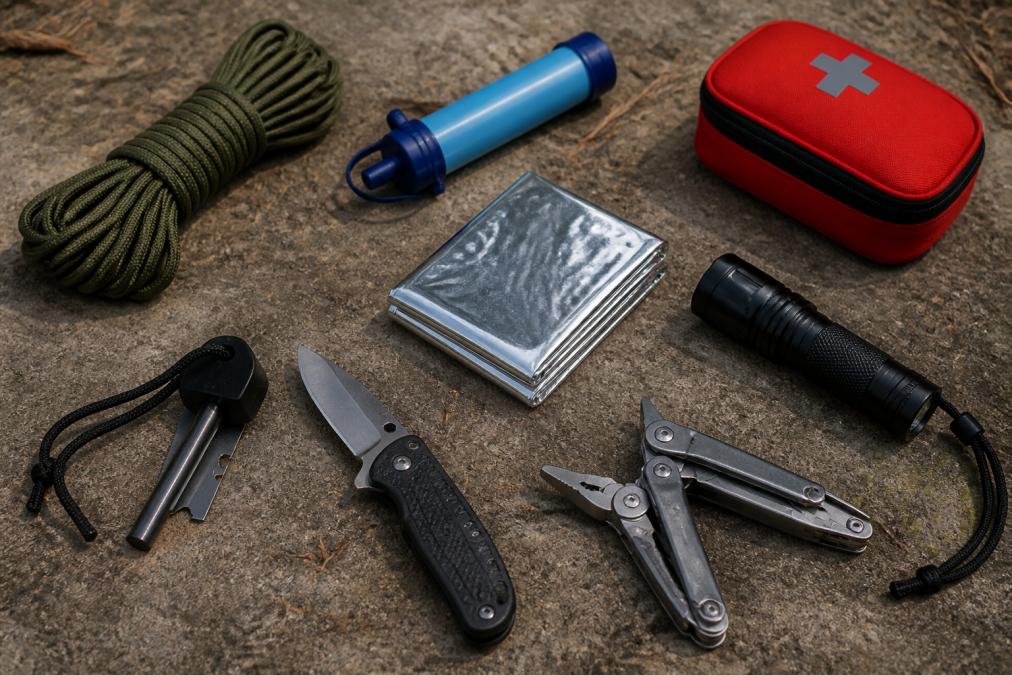
Below, we'll walk through each essential category and show you exactly what to prioritize, what to skip, and how to build a functional kit without breaking the bank.
Water Purification: Your First Priority
Water is your most urgent survival need. You can survive weeks without food, but only days without clean water. The LifeStraw Personal Water Filter removes 99.999999% of waterborne bacteria including E. coli and salmonella, plus 99.999% of protozoa like Giardia and Cryptosporidium. It filters up to 1,000 gallons of contaminated water and meets US EPA drinking water standards, making it the single most important item in any beginner's survival kit.
What makes this filter stand out for beginners is simplicity. There's no assembly, no chemicals, no iodine aftertaste. You fill it, you drink through it, and it works. The ultralight design weighs only 1.6 ounces, so there's no excuse not to carry it. One common mistake is assuming you only need water purification if you're in the wilderness. Urban survival scenarios, flooded areas, contaminated municipal water, make a portable filter equally valuable.
The filter's 1,000-gallon capacity means one unit covers a single person for roughly 3 years of normal drinking. For a family bug out bag, you'd want multiple units or a larger gravity-fed system, but for personal emergency preparedness, the LifeStraw is the proven standard.
Fire Starting Methods and Tinder
Fire serves multiple survival purposes: warmth, water purification, signaling, and morale. Most beginners rely on matches or lighters, but those fail in wet conditions. UST WetFire Tinder cubes are guaranteed to light in windy or wet conditions and burn for up to 5 minutes per cube. A 12-pack provides reliable fire-starting backup that won't fail when you need it most.
What separates quality tinder from cheap alternatives is burn time and weather resistance. WetFire cubes are individually packaged to maintain freshness, have a 5-year shelf life, and require only a spark or flame source, not a specific lighter or striker. You can ignite them with a match, a lighter, or even a ferro rod.
A ferro rod is your backup fire-starting tool. Unlike lighters, which can fail or run out of fuel, a ferro rod generates sparks reliably in any weather condition. Pair your WetFire cubes with a ferro rod and you've covered the two most critical fire-starting scenarios: wet conditions and gear failure.
The combination of reliable tinder and a ferro rod costs minimal weight and space but dramatically increases your odds of starting a fire when conditions are difficult.
Cutting Tools and Fixed-Blade Knives
A knife is arguably the most versatile tool in survival. It processes wood for shelter and fire, prepares food, creates other tools, and handles countless tasks. The CRKT M16-01KZ Tanto Knife features a 3.13-inch 8Cr13MoV stainless steel blade with a spear point design, glass-reinforced nylon handle, and a liner lock mechanism with LAWKS safety lock for secure deployment.
Here's where beginners often go wrong: they choose folding knives for portability. Folding knives are convenient for everyday carry, but they're mechanically weaker than fixed-blade knives for heavy-duty survival work. The CRKT M16-01KZ is a folding design, which means it's compact and carry-friendly, but the liner lock and safety mechanism make it more durable than typical folders for survival tasks.
For true survival work, a fixed-blade knife is superior. It won't fold under pressure, won't jam, and won't fail when you're batoning wood or processing shelter materials. But if you're building a beginner's kit focused on portability, the CRKT M16-01KZ offers a practical compromise: it's strong enough for real work, compact enough to carry, and reliable enough to trust.
The reversible pocket clip and flipper opener mean you can deploy the blade quickly with one hand, which matters in emergency scenarios where you need speed and efficiency.
Shelter Building and Insulation
Hypothermia kills faster than hunger or thirst. In cold or wet conditions, a thermal blanket becomes your most critical survival tool after water. Emergency Mylar Thermal Blankets reflect up to 90% of body heat and provide a waterproof, windproof barrier in a package that weighs under 2 ounces and costs minimal money.
The 84" x 52" size provides full-body coverage, and the reflective surface serves a dual purpose: it retains your heat while making you visible to rescuers. These blankets are consumable, they tear easily if mishandled, but they're so inexpensive that carrying multiple units makes sense.
What most guides miss about thermal blankets is their versatility beyond personal warmth. You can use them as emergency shelters, ground insulation, signal flags, or water collection surfaces. A single blanket in your kit costs almost nothing but addresses multiple survival scenarios.
For longer-term shelter, you need cordage. Paracord Planet 550 Paracord offers 550 pounds of tensile strength in a lightweight package. Type III paracord is the standard for survival kits because it balances strength with weight and packability. A 25-foot length takes minimal space but provides enough cordage to lash a shelter frame, secure gear, or create traps.
The inner strands of paracord can be separated for finer tasks like fishing line or emergency sutures, making it far more versatile than its weight suggests.
First Aid and Trauma Kits
Injuries in survival situations escalate quickly without proper treatment. An American Red Cross Family First Aid Kit provides essential supplies for treating cuts, scrapes, burns, sprains, and minor wounds. It includes assorted adhesive bandages, sterile gauze pads, medical tape, antiseptic wipes, and basic over-the-counter medications.
The distinction between a basic first aid kit and a trauma kit matters. A basic kit handles minor injuries. A trauma kit adds supplies for serious bleeding: tourniquets, hemostatic gauze, pressure bandages, and trauma shears. For beginners, start with a comprehensive family first aid kit and upgrade to a trauma-focused kit once you've trained in basic first aid.
Common mistake: buying a kit and never checking it. First aid supplies expire. Medications lose potency. Bandages dry out. Schedule a quarterly review of your kit, check expiration dates, replace used items, and ensure everything is still accessible and organized.
A well-stocked first aid kit takes minimal space and weight but prevents minor injuries from becoming life-threatening emergencies.
Navigation, Signaling, and Communication Gear
When you're lost or in distress, the ability to navigate and signal for rescue becomes critical. Navigation requires a topographic map and compass. Signaling requires a mirror or whistle. Communication requires a two-way radio or personal locator beacon.
For beginners, start with a compass and a map of your planned area. Learn to read topographic maps and take a basic navigation course. A compass costs under $20 and weighs almost nothing. The knowledge to use it is invaluable.
A signaling mirror is one of the most underrated survival tools. It can be seen from miles away in daylight and costs less than a dollar. A whistle is equally simple and effective, three short blasts is the universal distress signal, and a whistle carries farther than your voice.
The Midland X-TALKER T10 Walkie Talkie provides two-way communication with up to a 20-mile range in optimal conditions. For family camping trips or group expeditions, these radios keep everyone connected in areas with limited cell service. The NOAA Weather Alert feature warns of severe weather, and the eVOX hands-free operation allows communication without fumbling with buttons.
Pair navigation and signaling tools with a headlamp for visibility in low light. The Streamlight ProTac 2L-X delivers 500 lumens with multiple lighting modes, waterproof construction, and multi-fuel capability. It handles 1-meter submersion and 2-meter drops, making it reliable in harsh conditions.
How to Build a Bug Out Bag for Beginners
A bug out bag is a pre-packed emergency kit designed for rapid evacuation. The goal is to grab one bag and leave, knowing you have essentials for 72 hours of survival. Building a beginner's bug out bag means prioritizing weight, accessibility, and functionality.
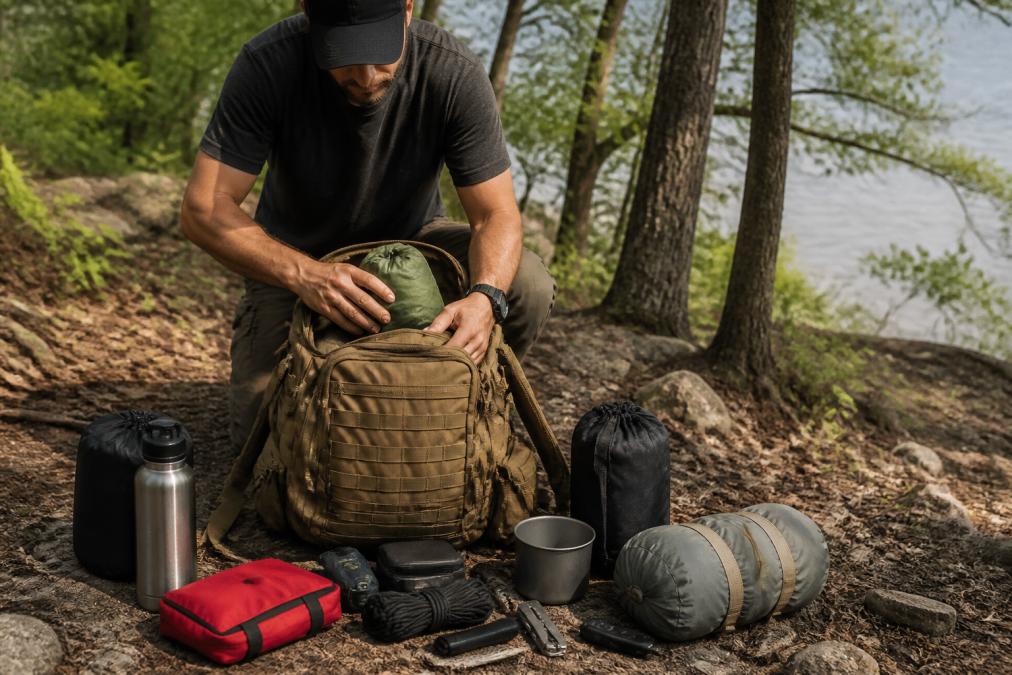
Start with a 30-40 liter backpack. This size balances capacity with portability, large enough for essentials, small enough to carry for extended periods. Organize your gear into categories: water and purification, fire, shelter, first aid, navigation, and tools.
Step 1: Water and Purification (1-2 pounds) Pack your LifeStraw filter, a collapsible water container, and water purification tablets as backup. This is your first priority because dehydration incapacitates you faster than hunger.
Step 2: Fire Starting (under 1 pound) Include a ferro rod, WetFire tinder cubes, waterproof matches, and a lighter. Redundancy matters, if one method fails, you have backups.
Step 3: Shelter and Insulation (2-3 pounds) Pack 2-3 thermal blankets, 25-50 feet of paracord, and a lightweight tarp or emergency bivvy. This addresses your most immediate survival need in cold or wet conditions.
Step 4: First Aid (1-2 pounds) Include your first aid kit plus any personal medications. Check expiration dates before packing.
Step 5: Navigation and Signaling (under 1 pound) Add a topographic map, compass, signaling mirror, whistle, and headlamp with extra batteries.
Step 6: Cutting Tools (1-2 pounds) Pack your knife, a multi-tool, and a small sharpening stone. These tools multiply the functionality of everything else in your kit.
Step 7: Food and Miscellaneous (2-3 pounds) Include calorie-dense emergency rations, a mess kit, and personal items like medications or glasses.
| Category | Item | Weight | Purpose |
|---|---|---|---|
| Water | LifeStraw filter | 1.6 oz | Purify contaminated water |
| Fire | Ferro rod + WetFire | 2-3 oz | Reliable fire starting |
| Shelter | Thermal blankets + paracord | 2-3 oz | Prevent hypothermia |
| First Aid | First aid kit | 1-2 lbs | Treat injuries |
| Navigation | Map + compass | 2-3 oz | Determine location |
| Tools | Knife + multi-tool | 1-2 lbs | Process materials |
| Signaling | Mirror + whistle | under 1 oz | Call for rescue |
The total weight of a beginner's bug out bag should be 15-25 pounds. Test your bag by wearing it for a day hike. If it's uncomfortable, you've overloaded it or packed inefficiently. Adjust before you need it in a real emergency.
GreatAdventureSupply offers curated collections of each essential category, which simplifies the shopping process. Rather than hunting across multiple retailers, you can find proven gear selected for reliability and real-world performance in one place.
Building essential survival gear for beginners doesn't require expensive equipment or extensive training. Focus on water purification, fire starting, shelter, first aid, and navigation. These five categories address your most critical survival needs. Start with the gear outlined above, practice using each tool, and upgrade based on your specific environment and activities. The best survival kit is the one you carry and know how to use. GreatAdventureSupply makes that process easier by offering reliable, durable gear selected for beginners and experienced adventurers alike. Browse our survival gear collections and add what you need to your kit today.
Frequently Asked Questions
What should be in a basic survival kit for beginners?
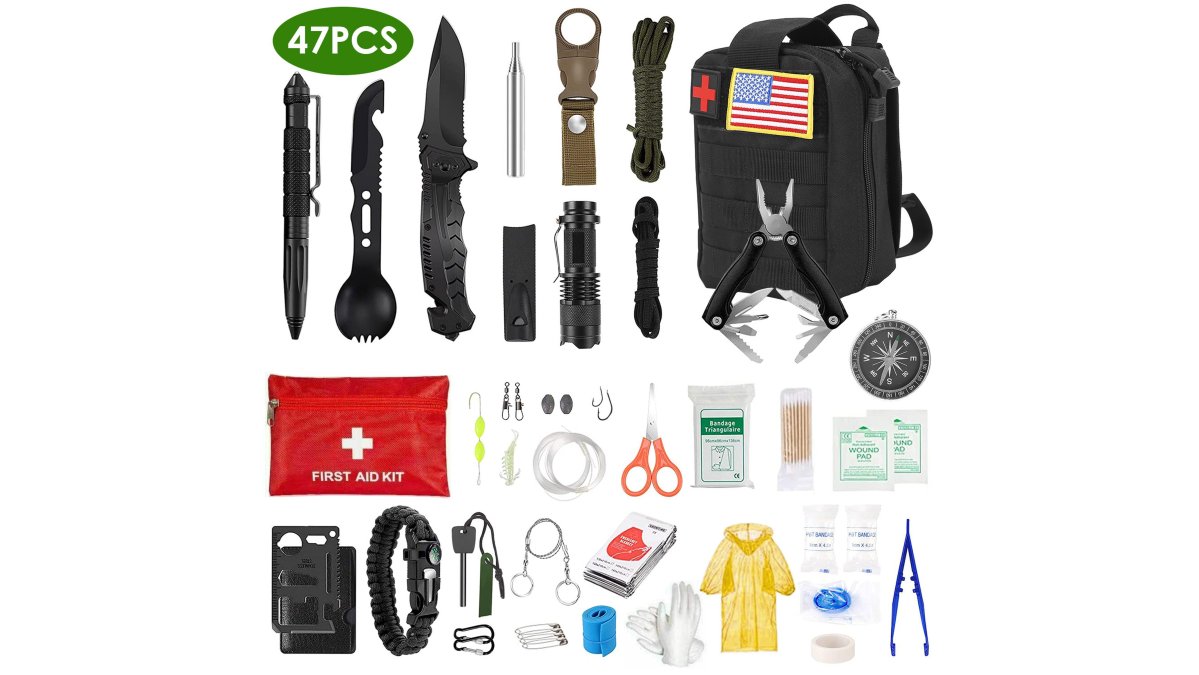
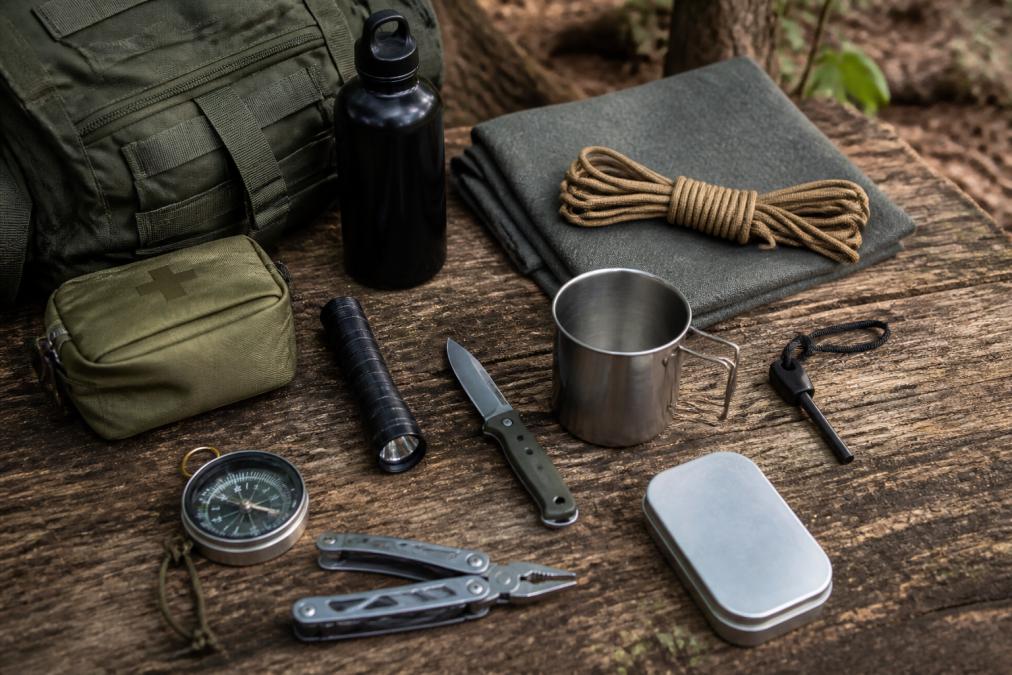
A basic survival kit should include water purification (like a water filter straw), fire-starting supplies (tinder and a lighter or ferro rod), a fixed-blade knife or multi-tool, a thermal blanket, a first aid kit, a flashlight, paracord, and a signaling device. These items address the core survival needs: hydration, warmth, shelter, injury treatment, and rescue signaling. Start with these essentials before adding specialized gear based on your climate or trip duration.
What is the most important survival gear to have?
Water purification ranks first because dehydration kills faster than hunger or cold. A portable water filter removes bacteria, parasites, and microplastics from contaminated sources, making it safe to drink. After water, fire-starting ability is critical for warmth, signaling, and morale. Then shelter (a thermal blanket or tarp), navigation tools, and first aid. The priority shifts based on your environment, but water and fire always come first.
How do you build a survival kit on a budget?
Start with low-cost, high-impact items: thermal blankets cost under $1 each, tinder cubes run $10 for a 12-pack, and paracord starts at $2 per 10 feet. Buy a basic multi-tool instead of separate knives, and use a standard first aid kit from a drugstore rather than a premium tactical version. Prioritize items that serve multiple purposes, paracord can secure shelter, create snares, or serve as fishing line. Build gradually rather than buying everything at once.
How much survival gear does a beginner actually need?
For a day trip or weekend camping, a compact kit weighing 5-10 pounds is enough: water filter, fire starter, knife, thermal blanket, flashlight, first aid basics, and paracord. For multi-day backcountry trips, aim for 15-25 pounds depending on climate. Don't carry redundant items, one good multi-tool replaces several single-purpose tools. Focus on quality and reliability over quantity. Test your gear on short trips before relying on it for serious expeditions.
What gear works best for different climates?
Cold climates require insulating thermal blankets, base layers, and a reliable fire-starting method. Hot, dry environments demand extra water purification capacity and sun protection. Wet climates need waterproof gear, quick-dry materials, and fire starters that work in damp conditions like WetFire tinder. Mountainous terrain requires navigation tools and signaling mirrors. Always customize your kit to your region and season, a thermal blanket is essential in winter but optional in summer.
This article was written using GrandRanker