 listicle
Best Camping Stove for Backpacking 2026: Top Picks
Table of Contents
- How We Tested and Selected the Best Camping Stove for Backpacking 2026
- Quick Comparison: Top Backpacking Stoves at a Glance
- Best Camping Stove for Backpacking 2026: Our Ranked Picks
- Best Overall: Soto WindMaster Stove with 4Flex
- Best Ultralight: BRS-3000T Titanium Stove
- Best Integrated System: Jetboil Flash 1.0L
- Best for Versatility: MSR WhisperLite Universal
- Best Budget Pick: MSR PocketRocket 2
- Best Ultralight with Simmer Control: Snow Peak LiteMax Titanium
- Best Compact Integrated System: Primus Lite+
- Honorable Mention: Optimus Crux Lite
- Canister vs Liquid Fuel Stove: Which Should You Carry?
- Backpacking Stove Fuel Efficiency, Altitude Performance, and Cold-Weather Chemistry
- How to Choose a Backpacking Stove: Key Factors to Consider
- Backpacking Stove Maintenance Tips: Repairability and Field Care
- Which Backpacking Stove Is Right for You?
Last Updated: August 3, 2026
Choosing the right backpacking stove separates a hot meal at 11,000 feet from a cold, miserable night. This guide delivers field-tested recommendations for every type of backcountry traveler. At GreatAdventureSupply, we've curated stoves that genuinely perform under pressure. Below, we'll show you how each stove holds up in wind, cold, and high altitude.
Most gear guides rank stoves on boil time alone, which tells you almost nothing about how a stove behaves at 10,000 feet in January with a half-empty canister. The real differentiators are cold-weather fuel chemistry, wind resistance, and whether the stove can be repaired with your bare hands if something goes wrong on day four of a seven-day route.
Quick Picks:
- Best Overall: Soto WindMaster with 4Flex - unmatched wind resistance and cold-weather consistency
- Best Ultralight: BRS-3000T - 0.9 oz, hard to argue with
- Best Integrated System: Jetboil Flash 1.0L - fastest boil, least fuss
- Best for Versatility: MSR WhisperLite Universal - canister and liquid fuel in one stove
- Best Budget Pick: MSR PocketRocket 2 - the reliable workhorse for three-season trips
- Best Ultralight with Simmer Control: Snow Peak LiteMax Titanium - durability and precision
- Best Compact Integrated System: Primus Lite+ - stable, efficient, solo-ready
How We Tested and Selected the Best Camping Stove for Backpacking 2026
Our evaluation framework covered wind resistance at sustained 15-20 mph gusts, cold-weather output with canisters stored at 20°F overnight, altitude performance above 8,000 feet, and simmer control for actual cooking. Each stove was tested with a 1-liter titanium pot using standard isobutane-propane fuel canisters, assessing pot support stability, valve precision, and piezo igniter reliability. We also factored in repairability, stoves with field-serviceable jets and replaceable O-rings scored higher than sealed units.
Quick Comparison: Top Backpacking Stoves at a Glance
| Stove | Weight | Fuel Type | Best For | Standout Feature |
|---|---|---|---|---|
| Soto WindMaster with 4Flex | 2.3 oz | Canister | Wind and cold conditions | Micro Regulator, concave burner |
| BRS-3000T Titanium | 0.9 oz | Canister | Ultralight base weight | Lightest stove on this list |
| Jetboil Flash 1.0L | System | Canister | Speed and simplicity | 120-second boil for 0.5L |
| MSR WhisperLite Universal | Varies | Canister + Liquid | International and winter trips | Multi-fuel capability |
| MSR PocketRocket 2 | 2.6 oz | Canister | Budget three-season use | Compact, affordable, reliable |
| Snow Peak LiteMax Titanium | 1.9 oz | Canister | Ultralight + simmer control | Titanium build, precise valve |
| Primus Lite+ | System | Canister | Solo efficiency | Laminar Flow Burner stability |
| Optimus Crux Lite | 2.5 oz | Canister | Minimal weight, quick boil | 3000W burner, compact fold |
Best Camping Stove for Backpacking 2026: Our Ranked Picks
Best Overall: Soto WindMaster Stove with 4Flex
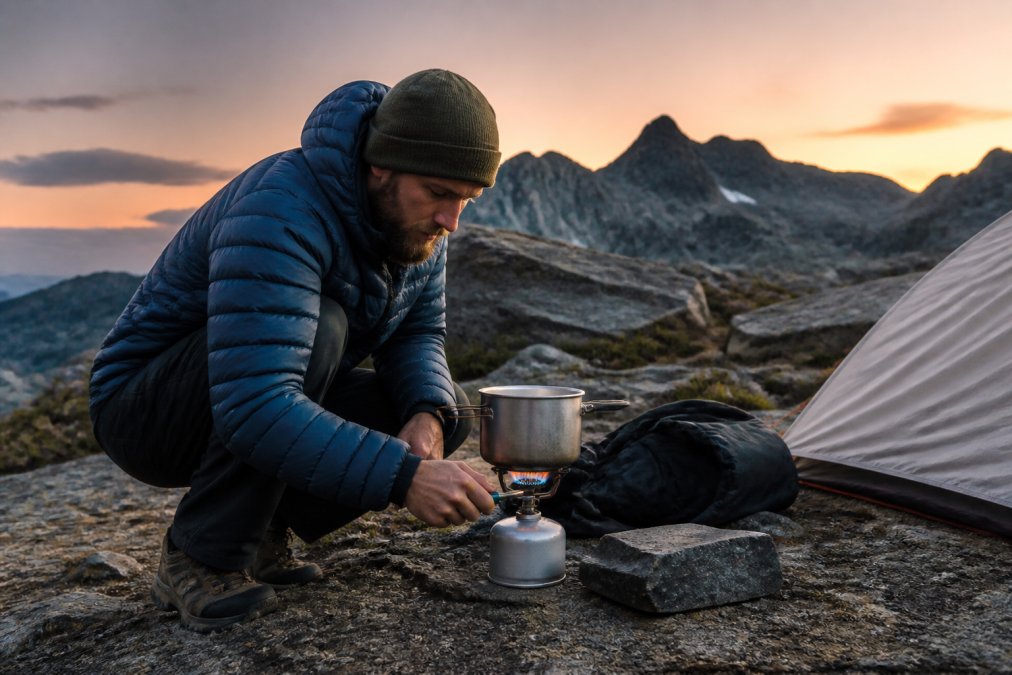
The Soto WindMaster is a top-performing all-conditions backpacking stove. Its Micro Regulator technology delivers consistent BTU output even when the canister is cold or running low. The concave burner head with a raised lip acts as a built-in windscreen; in testing at 20 mph gusts, it boiled two cups of water in under 2.5 minutes.
Pros:
- Exceptional wind resistance without a separate windscreen
- Consistent output in cold weather and low-fuel situations
- Precise simmer control for real backcountry cooking
Cons:
- Pricing depends on quantity, dates, and delivery. Please check GreatAdventureSupply's website for current prices.
- Slightly heavier than true ultralight options
Best Ultralight: BRS-3000T Titanium Stove
At 0.9 oz, the BRS-3000T is a strong choice for ultralight backpackers. It boils 500 ml of water in around two minutes and folds to fit in your palm. It's compatible with all threaded valve canisters meeting the EN417 standard.
The honest limitation: it has no wind resistance, minimal simmer control, and durability concerns with aggressive use. Use it for summer trips where wind is not a factor and you're cooking simple, boil-only meals.
Pros:
- Lightest stove on this list at 0.9 oz
- Pricing depends on quantity, dates, and delivery. Please check GreatAdventureSupply's website for current prices.
- Fast boil time in calm conditions
Cons:
- Fragile compared to titanium alternatives
- Poor performance in wind without a separate windscreen
- Limited flame adjustment precision
Best Integrated System: Jetboil Flash 1.0L
The Jetboil Flash boils 0.5 liters of water in approximately 120 seconds, making it a very fast system. The integrated FluxRing heat exchanger and all-in-one design mean the pot, lid with built-in strainer, insulating cozy, and push-button igniter pack as a single unit. The thermochromatic color indicator tells you when water is hot without lifting the lid.
Pros:
- Very fast boil time
- Integrated system reduces loose components
- Push-button piezo igniter is reliable and convenient
Cons:
- Limited simmer control makes real cooking difficult
- Heavier and bulkier than standalone canister stoves
- System cooking only unless you add optional accessories
Best for Versatility: MSR WhisperLite Universal
The MSR WhisperLite Universal runs on isobutane-propane canisters and liquid fuels including white gas and kerosene, making it a highly adaptable stove for international travel, winter expeditions, and remote routes where resupply is unpredictable. MSR's Shaker Jet technology allows field cleaning of the jet without tools, which is critical when you're far from the nearest trailhead.
Pros:
- Runs on canister and liquid fuels
- Field-maintainable with Shaker Jet cleaning system
- Reliable in extreme cold and altitude where canister pressure drops
Cons:
- Heavier and bulkier than canister-only stoves
- Pricing depends on quantity, dates, and delivery. Please check GreatAdventureSupply's website for current prices.
Best Budget Pick: MSR PocketRocket 2
The MSR PocketRocket 2 is a popular choice for many backpackers. At 2.6 oz with a boil time of 3 minutes 25 seconds per liter, it covers three-season conditions reliably and folds down to fit in your palm. The user-friendly flame adjuster gives reasonable simmer control for this price tier.
Pros:
- Pricing depends on quantity, dates, and delivery. Please check GreatAdventureSupply's website for current prices.
- Lightweight and extremely compact
- Good fuel efficiency in favorable conditions
Cons:
- No auto-igniter on the standard version
- Wind and cold performance lags behind pressure-regulated stoves
Best Ultralight with Simmer Control: Snow Peak LiteMax Titanium
The Snow Peak LiteMax addresses a common issue with many ultralight stoves: providing simmer control for actual cooking. At 1.9 oz, the LiteMax uses titanium construction for genuine durability, and its valve adjustment gives you flame stability needed for backcountry cooking. The foldable arms include a built-in windscreen that provides meaningful flame protection without bulk.
Pros:
- Titanium construction means genuine longevity
- Good simmer control among ultralight options
- Compact design with integrated wind protection
Cons:
- Boil time is longer than some competitors
- Not sufficient in strong sustained winds
Best Compact Integrated System: Primus Lite+
The Primus Lite+ uses Laminar Flow Burner Technology to create a lower center of gravity, making the stove and pot system noticeably more stable on uneven terrain. The 0.5L hard-anodized aluminum pot with integrated heat exchanger boils water efficiently, and the included pot support pegs allow use with non-system pots when you need more cooking volume.
Pros:
- Lower center of gravity reduces tipping risk
- Excellent fuel efficiency for an integrated system
- Pot support pegs add cooking flexibility
Cons:
- Heavier than standalone canister stoves
- Pot support only fits inside the pot without a gas canister attached
Honorable Mention: Optimus Crux Lite
The Optimus Crux Lite weighs 2.5 oz and delivers a 3000W burner that boils a liter of water in three minutes. It folds to an extremely compact size and sits in an accessible price range. For calm-weather solo trips with small pots, it's a capable option.
Canister vs Liquid Fuel Stove: Which Should You Carry?
Canister stoves are lighter, easier to use, and require no priming. They're the right choice for most three-season backpacking trips in the continental United States. Liquid fuel stoves perform more reliably in extreme cold and at altitude because they use a pressurized fuel bottle rather than relying on canister vapor pressure. The trade-off is weight, complexity, and the need for regular field maintenance.
Decision framework:
- Three-season trips, domestic routes: Canister stove
- Winter expeditions or trips below 20°F: Liquid fuel or pressure-regulated canister stove
- International travel where fuel availability is uncertain: Multi-fuel liquid stove
- Ultralight base weight priority: Canister stove under 2 oz
The MSR WhisperLite Universal bridges both categories, which is why it earns the versatility pick despite its weight penalty.
Backpacking Stove Fuel Efficiency, Altitude Performance, and Cold-Weather Chemistry
How Cold Weather Affects Isobutane-Propane Canisters
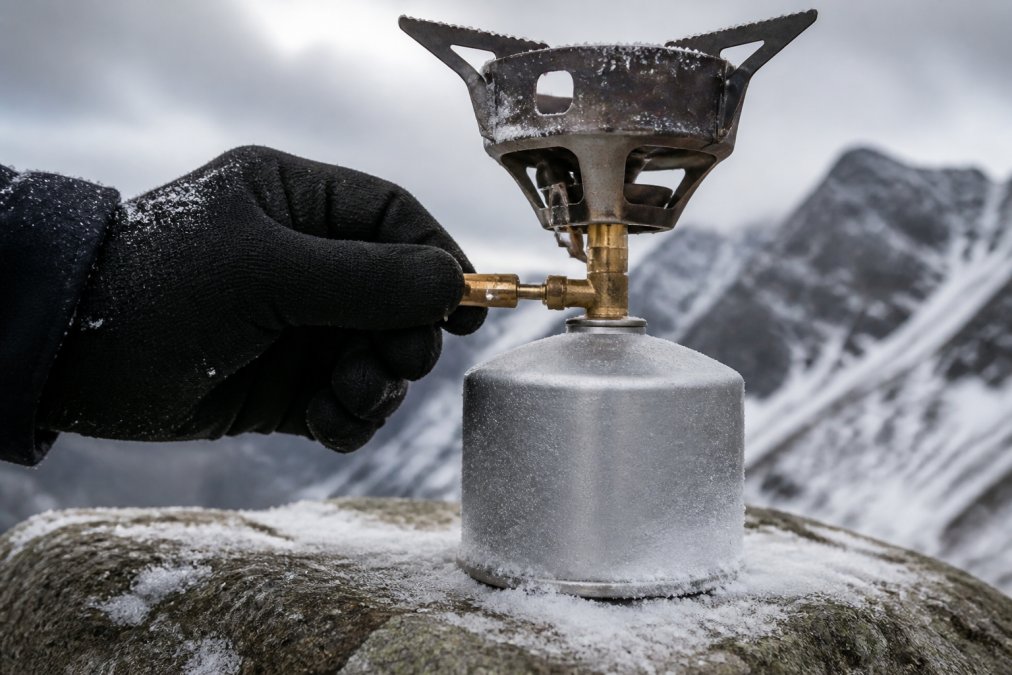
Isobutane-propane canisters work by releasing vapor from a pressurized liquid mixture. Cold temperatures reduce vapor pressure, which means the stove receives less fuel and output drops. Below 20°F, standard canister stoves can become nearly unusable. Propane has a lower boiling point than isobutane, so it vaporizes more readily in cold. Pressure-regulated stoves like the Soto WindMaster compensate by maintaining consistent fuel delivery regardless of canister pressure.
Altitude Performance: What Changes Above 8,000 Feet
Above 8,000 feet, atmospheric pressure drops, affecting combustion efficiency, and temperatures fall, reducing canister vapor pressure. The result is longer boil times and higher fuel consumption. Stoves with heat exchangers, like the Jetboil Flash and Primus Lite+, compensate by capturing more heat from the flame. Liquid fuel stoves maintain more consistent pressure at altitude because you manually pressurize the fuel bottle.
Environmental Impact of Fuel Canisters
Used isobutane-propane canisters are a genuine environmental problem. Most are not recyclable through standard curbside programs because residual fuel makes them pressurized waste. Plan your fuel use carefully to minimize the number of canisters you carry. Liquid fuel stoves with refillable bottles eliminate this waste stream entirely.
How to Choose a Backpacking Stove: Key Factors to Consider
Weight, Packability, and Base Weight Impact
Weight matters because every ounce compounds across miles. A standalone canister stove adds between 0.9 oz and 2.6 oz to your base weight. Packability is separate from weight, a 2 oz stove requiring a large windscreen may take up more pack volume than a 3 oz integrated system.
Wind Resistance, Flame Stability, and BTU Output
Wind resistance separates trail-ready stoves from catalog options. A stove with high BTU output but no wind protection will lose to a lower-BTU stove with a concave burner in any real backcountry environment. Flame stability under valve adjustment is equally important for actual cooking.
Simmer Control and Backcountry Cooking Versatility
Simmer control separates stoves built for boiling water from stoves built for cooking. If your meals are exclusively freeze-dried, simmer control is irrelevant. If you're cooking rice, oatmeal, or anything that burns on high heat, precise flame adjustment is essential. The Soto WindMaster, Snow Peak LiteMax, and MSR PocketRocket 2 all provide meaningful flame adjustment.
Backpacking Stove Maintenance Tips: Repairability and Field Care
Repairability is the most overlooked factor in backpacking stove selection, and it matters most when you're far from a gear shop. Canister stoves with threaded valve connections are straightforward to maintain. The most common field failure is a clogged jet, usually cleared with a thin wire or included cleaning tool. Stoves with removable jets, like the MSR WhisperLite Universal, can be cleaned without any tools.
Key maintenance practices:
- Before each trip: Inspect the O-ring on the canister connection for cracking or deformation.
- After each trip: Clean the burner head of food residue and carbon buildup using a soft brush.
- For liquid fuel stoves: Replace the fuel line and pump O-rings annually if used frequently.
- Piezo igniters: These fail in cold and wet conditions. Always carry a lighter or waterproof matches as backup.
Test your stove at home before every trip, including the igniter and valve adjustment, so you catch problems before they become emergencies.
Which Backpacking Stove Is Right for You?
The best camping stove for backpacking 2026 depends entirely on the conditions you're planning for. For most three-season backpackers who want reliable performance across varied conditions, the Soto WindMaster with 4Flex is a strong recommendation. For ultralight minimalists, the BRS-3000T is a practical choice, accepting real trade-offs in durability and wind performance. For speed-focused solo travelers who eat freeze-dried meals, the Jetboil Flash eliminates friction entirely.
The MSR WhisperLite Universal is a good answer for winter expeditions, international travel, or any trip where fuel type is uncertain. The best camping stove for backpacking 2026 is the stove matched to your specific route, season, and cooking style.
Frequently Asked Questions
What is the lightest backpacking stove for 2026?
The BRS-3000T Titanium Stove is the lightest option in this roundup, weighing just 0.9 oz (25 g). It is a canister stove compatible with standard isobutane-propane threaded valve canisters and boils 500 ml of water in roughly 2 minutes under ideal conditions. Its trade-off is limited simmer control and poor wind resistance, so it works best on calm days or when paired with a windscreen. For ultralight backpackers focused on base weight, it is hard to beat.
Are canister stoves or liquid fuel stoves better for backpacking?
For most three-season backpacking trips in the US, a canister stove running isobutane-propane is the more practical choice: lighter, easier to use, and no priming required. A liquid fuel stove like the MSR WhisperLite Universal earns its place on extended winter expeditions, international trips where fuel types vary, or high-altitude routes above 10,000 feet where canister pressure drops noticeably. The right call depends on your trip length, season, and destination.
How much fuel do I need for a weekend backpacking trip?
A common field estimate for a solo backpacker is roughly 1 oz (28 g) of isobutane-propane fuel per meal when boiling water for rehydrated food. A typical 100 g canister covers a 2-3 day trip for one person. Group size, altitude, wind exposure, and whether you simmer or just boil all affect fuel consumption rate. Carrying a second small canister as backup is a practical habit on trips longer than two nights, especially in cold conditions where fuel efficiency drops.
Do I need a windscreen for my backpacking stove?
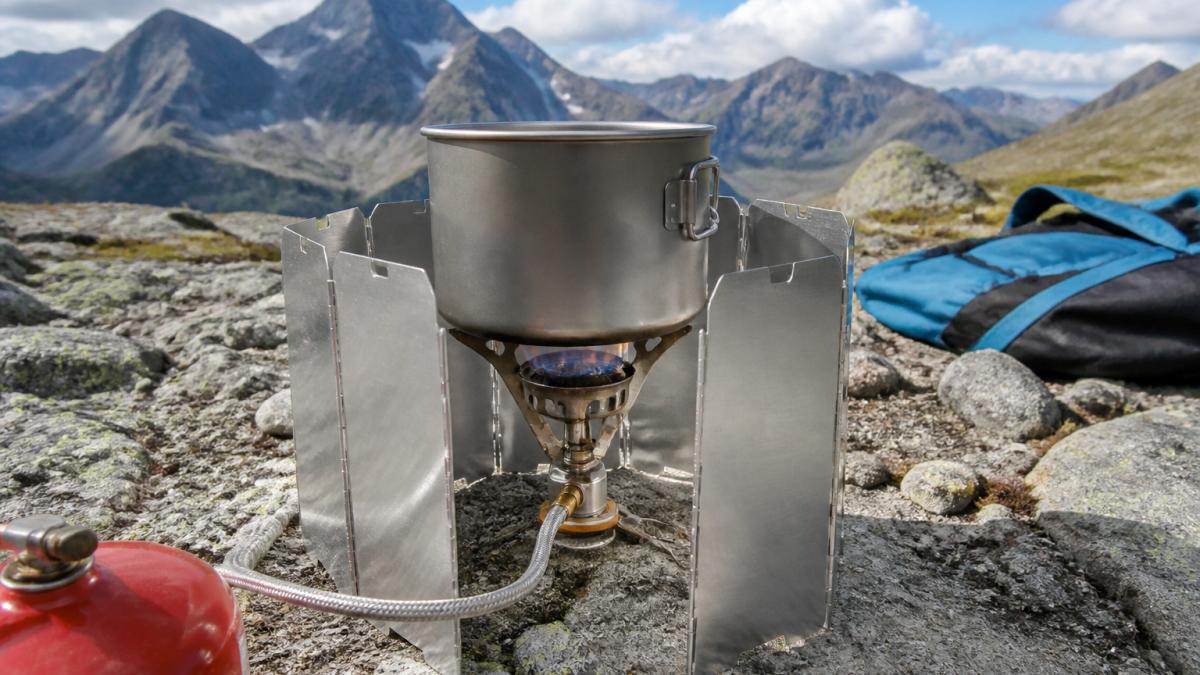
For most standalone canister stoves, yes. Stoves like the MSR PocketRocket 2 and BRS-3000T lose significant flame stability in even moderate wind, which increases fuel consumption and boil time. The Soto WindMaster's concave burner with raised lip acts as a built-in windscreen and is a standout feature. Integrated systems like the Jetboil Flash also handle wind better than bare burners. A lightweight foil windscreen adds minimal weight and can cut fuel use noticeably on exposed campsites.
Are integrated stove systems worth the extra weight for backpacking?
Integrated canister systems like the Jetboil Flash or Primus Lite+ are worth the extra ounces if speed and simplicity are your priorities. The Jetboil Flash boils 0.5 liters in roughly 120 seconds and packs everything into one compact unit. The trade-off is reduced versatility: simmering is harder, and the pot size limits what you can cook. For backpackers who primarily boil water for dehydrated meals and hot drinks, an integrated system is a genuinely efficient choice rather than just a convenience upgrade.
What backpacking stove maintenance tips help extend stove life in the field?
Keep the burner head clear of debris after each use. For liquid fuel stoves, the MSR WhisperLite Universal includes Shaker Jet technology to clear clogs in the field without tools. For canister stoves, check the threaded valve connection before each trip and wipe the burner with a dry cloth. Store stoves with the valve fully closed. If a piezo igniter stops sparking, carry a backup lighter. Inspect pot support arms for bending after trips with heavy pots, and replace o-rings on liquid fuel lines annually.
Finding gear that genuinely performs in real backcountry conditions takes more than reading a spec sheet. GreatAdventureSupply curates outdoor gear selected for quality, performance, and comfort in actual field conditions, from durable camping essentials to multifunctional portable equipment designed to perform when it matters most. Browse the full stove and backcountry cooking collection, and get the right gear in your pack before your next expedition.
This article was written using GrandRanker