 how-to
How to Purify Water on Multi-Day Hikes Step by Step
Table of Contents
- What You'll Need Before You Hit the Trail
- Step 1: Choose the Best Water Filter for Backpacking
- Step 2: How to Use Water Purification Tablets Correctly
- Step 3: Boiling Water for Hiking Safety
- Step 4: Find and Purify Water on Multi-Day Routes
- Step 5: Field Maintenance, Cold Weather, and Taste Fixes
- Common Mistakes That Lead to Waterborne Illness
- Frequently Asked Questions
Last Updated: September 11, 2026
What You'll Need Before You Hit the Trail
Knowing how to purify water on multi-day hikes step by step starts with assembling the right kit before you leave the trailhead. Backcountry water looks clean and tastes fine, yet it can carry Giardia, Cryptosporidium, bacteria, and viruses that cause waterborne illness days after you drink. Below, we'll walk through the exact gear and steps we recommend, from choosing a filter to fixing taste problems on day four.
Your core kit needs five things:
- A primary filter or purifier rated to at least 0.2 microns
- A backup chemical treatment (tablets or drops)
- A pre-filter or bandana for turbid, silty water
- A clean water container separate from your dirty one
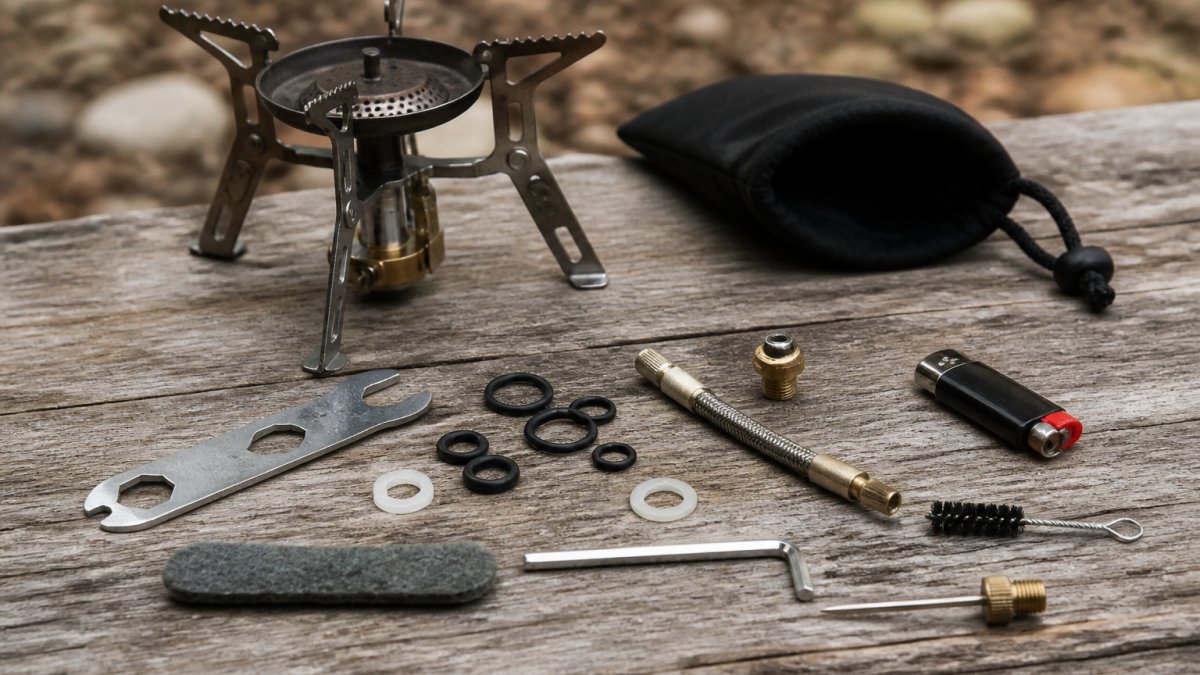
- A small repair kit for field maintenance
Get these right and the rest of the process is simple.
Step 1: Choose the Best Water Filter for Backpacking
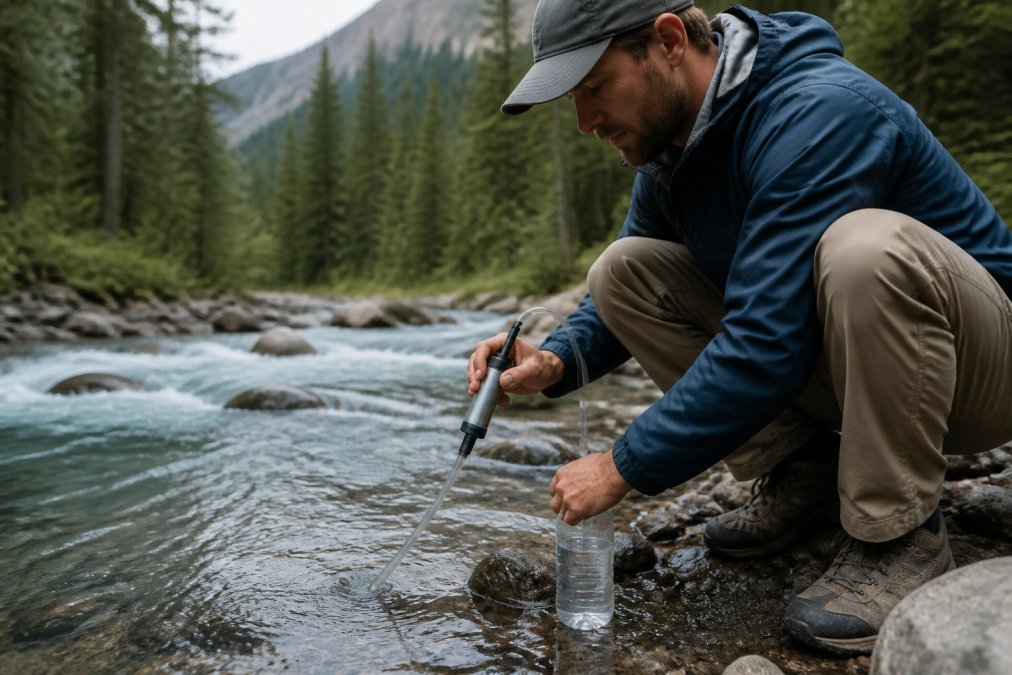
The best water filter for backpacking depends on your group size, water source, and how much weight you'll tolerate. A hollow fiber membrane filter physically traps protozoa and bacteria as you push or squeeze water through it, and it's the workhorse of most thru-hiker kits.
Squeeze, Gravity, and Pump Filters Compared
| Filter Type | Best For | Weight | Effort |
|---|---|---|---|
| Squeeze | Solo hikers, fast trips | Lightest | High hand effort |
| Gravity | Groups, camp use | Moderate | None once hung |
| Pump | Silty water, large groups | Heaviest | Steady pumping |
Squeeze filters shine for one or two people moving fast. Gravity systems win at camp when you're filtering for a group and want water ready while you set up shelter. Pump filters handle turbid water better because the pump force pushes through clogged media, but they add weight and moving parts that can fail.
GreatAdventureSupply stocks a portable pump water filter built around a double-membrane ceramic cartridge that removes bacteria and heavy metal ions from surface and groundwater. It filters roughly 0.3 liters per minute and handles up to 2,000 liters before the cartridge needs attention.

Step 2: How to Use Water Purification Tablets Correctly
Water purification tablets work by releasing a halogen, chlorine dioxide, iodine, or sodium dichloroisocyanurate (NaDCC), into the water, where it oxidizes cell walls and disrupts pathogen metabolism. The chemistry is simple; the failure point is almost always contact time and dosage discipline. Drop the tablet in, wait the full duration, and don't drink early because you're thirsty.
Contact Time and Dosage Basics
- Chlorine dioxide: effective against protozoa, bacteria, and viruses; typically needs 4 hours for full Cryptosporidium treatment in cold, cloudy water, and about 30 minutes for bacteria and viruses in clear, warm water
- Iodine: fast against bacteria and viruses, weaker against Cryptosporidium; not for pregnant women, people with thyroid conditions, or anyone with a known iodine allergy
- NaDCC: a chlorine-based tablet that behaves similarly to chlorine dioxide against bacteria and viruses but has weaker Cryptosporidium coverage at standard contact times
- Dosage: match tablets to water volume exactly; a half-treated liter is untreated water
Cold water slows the chemical reaction, so add contact time when the source is near freezing. A common field rule is to double the labeled wait time when water is below roughly 50°F (10°C), and to pre-warm the bottle against your body if you can. If you're unsure how to use water purification tablets on a specific product, read the label and follow it, not a general rule of thumb.
A Practical Contact-Time Reference
| Treatment | Bacteria & Viruses | Giardia | Cryptosporidium |
|---|---|---|---|
| Chlorine dioxide | ~30 min (clear, warm) | ~30 min | ~4 hours (cold, cloudy) |
| Iodine | ~30 min | ~30 min | Not reliable |
| NaDCC | ~30 min | ~30 min | Limited |
| Boiling | Rolling boil | Rolling boil | Rolling boil |
Treat the table as a planning tool, not a substitute for the label on your specific product. Manufacturers tune concentrations differently, and the numbers above reflect common label guidance rather than a universal standard.
Taste, Turbidity, and Chemical Limits
Two things degrade chemical treatment more than cold: turbidity and organic load. Halogens are consumed by the silt and dissolved organics in cloudy water before they finish killing pathogens, so pre-filter through a bandana, coffee filter, or dedicated pre-filter and let the water settle first. If the water is visibly brown or green, chemical treatment alone is a poor bet, filter or boil it.
Taste is the other complaint. Iodine leaves a flat, medicinal flavor that many hikers find hard to drink over several days. Chlorine dioxide is milder but still noticeable. Practical fixes:
- Add a pinch of electrolyte powder or a squeeze of citrus after the contact time is complete
- Pour the treated water between two bottles to aerate it
- Run treated water through a small activated-carbon filter if you carry one
- Chill the bottle overnight, cold masks flavor better than any additive
Redundancy: Treating Chemicals as Your Plan B
On a multi-day route, tablets are the backup that keeps you moving when a filter clogs or a membrane freezes and cracks. Two rules make that backup real rather than theoretical:
- Carry enough tablets for the full trip plus one extra day, not just a partial strip
- Store them in a dry, sealed bag, moisture degrades tablets and makes them crumble before they dissolve
- Rotate stock each season; older tablets lose potency even when they look fine
If your primary filter fails on day three of a five-day route, chemical treatment is what gets you to the trailhead. Treat it as a first-class part of the kit, not an afterthought.
Step 3: Boiling Water for Hiking Safety
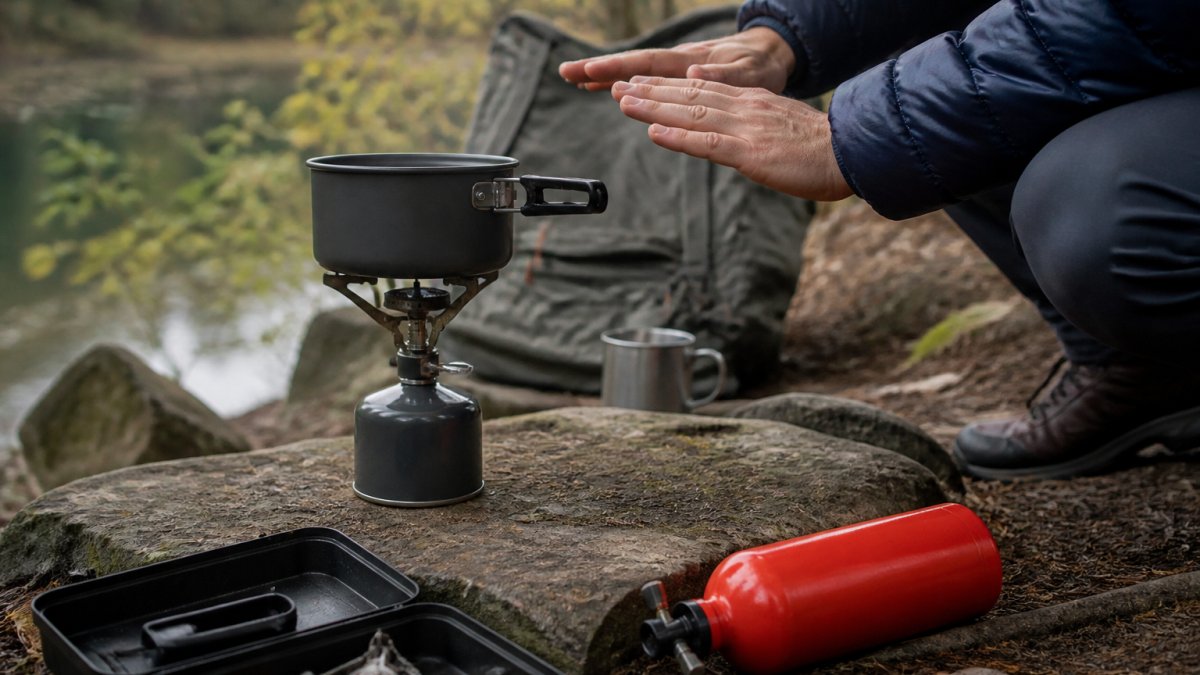
Boiling water for hiking safety is the most reliable method when you have fuel to spare. Bring water to a rolling boil, hold it there, and let it cool. The CDC notes that bringing water to a rolling boil is sufficient to kill pathogens, including Cryptosporidium and Giardia, without a long rolling boil afterward (CDC guidance on backcountry water treatment).
Boiling doesn't remove turbidity or chemical contaminants, so pre-filter silty water through a bandana first. It also costs fuel, which matters on a multi-day route where every ounce of canister weight counts. Boil when you're already cooking dinner and treat the rest chemically.
Step 4: Find and Purify Water on Multi-Day Routes
Sourcing strategy separates a smooth trip from a stressful one. Plan water stops around reliable sources like springs, fast-moving streams, and snowmelt, and skip stagnant pools and water near campsites or stock trails.
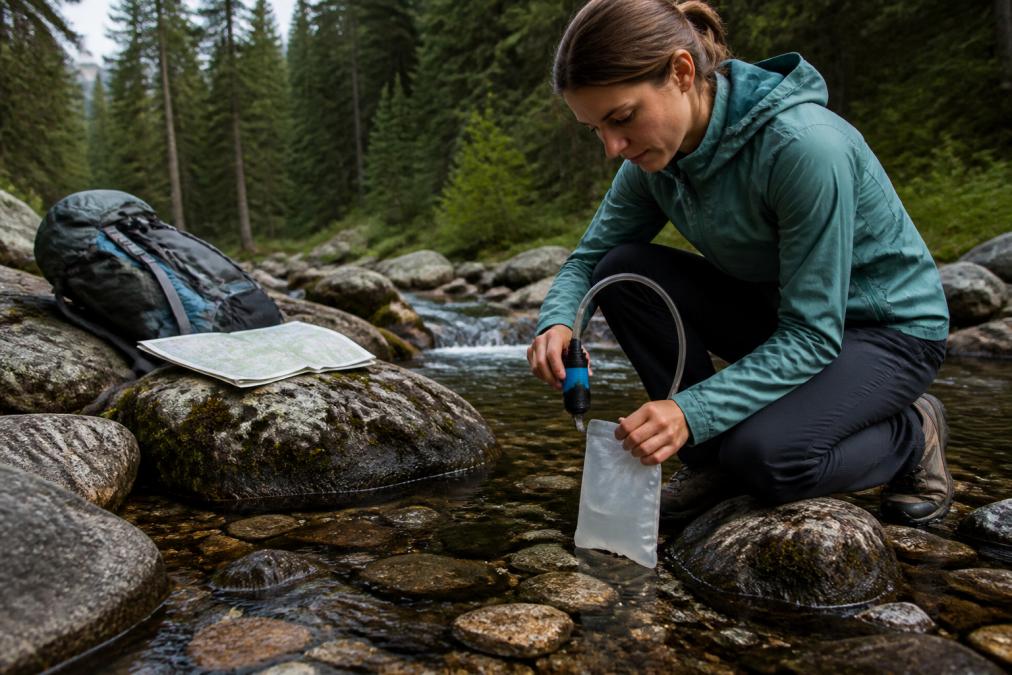
Sourcing Strategy and Redundancy Planning
- Map water sources before you leave and mark backups every few miles
- Carry two treatment methods: a filter as primary, chemicals as backup
- Store dirty and clean water in clearly separate containers
- Refill at every reliable source, even when your bottle is half full
Redundancy planning matters because filters clog and tablets run out. If your primary fails on day three of a five-day route, a backup chemical treatment keeps you moving. This is the part most guides skip, and it's the difference between finishing the route and bailing out.
Step 5: Field Maintenance, Cold Weather, and Taste Fixes
Field maintenance keeps your filter alive between resupplies, and cold weather is where most multi-day kits quietly fail. This is the section most guides skip, and it's the difference between finishing the route and bailing out at the first frozen membrane.
Daily and Weekly Maintenance Routine
Hollow fiber and ceramic cartridges clog from the inside out as they trap sediment. The fix is mechanical, not chemical:
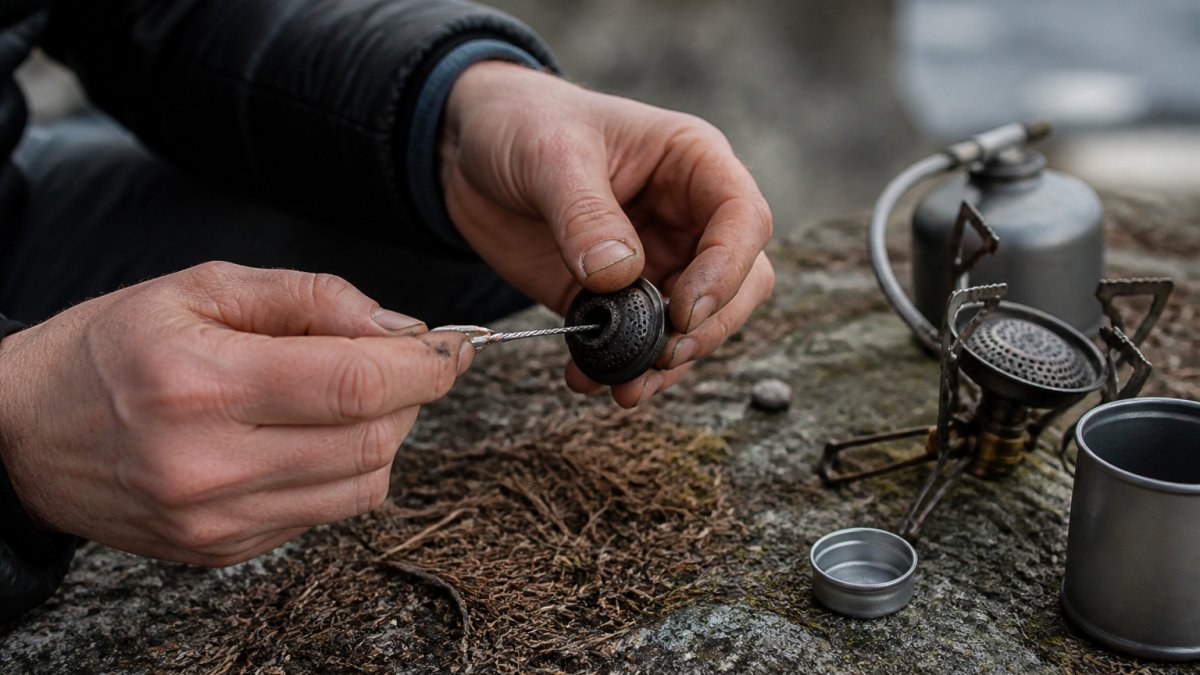
- After every use: backflush the cartridge with clean water. Most squeeze and gravity filters ship with a syringe or a built-in backflush port, use it, even when flow still feels fine
- Every few days: give the cartridge a longer backflush and, if the manufacturer allows it, a light agitation in clean water to dislodge packed silt
- Before storage: air-dry the cartridge fully. A wet filter stored in a stuff sack grows mold and biofilm that no amount of backflushing removes
- Never: run soap, bleach, or untreated water through the clean side of the system
A filter that has dropped to a trickle is not dead, it's clogged. Backflush first, then reassess. If flow doesn't recover, the cartridge is spent and your chemical backup takes over.
Cold Weather and Freezing: The Real Failure Mode
A wet hollow fiber membrane that freezes can crack, and a cracked membrane lets untreated water straight through while still feeling like it's working. This is the single most common cold-weather gear failure on shoulder-season and high-altitude multi-day hikes, and it's almost entirely preventable:
- Sleep with your filter. Put it in your sleeping bag, not your pack, on any night that could drop below freezing
- Carry it inside your jacket during the day when temperatures are near or below freezing
- Shake out standing water before bed so there's less liquid to expand inside the cartridge
- Never leave a wet filter in a pack pocket overnight in cold conditions
- If a filter does freeze, assume the membrane is compromised and switch to chemical treatment or boiling for the rest of the trip
Chemical treatments have their own cold-weather problem: the reaction slows dramatically near freezing. Extend contact time, pre-warm the bottle against your body, and start a new batch before you finish the one you're drinking. Boiling is unaffected by cold as long as you have fuel, which makes it the most reliable cold-weather method when you're already running a stove.
Taste Fixes That Actually Work
Iodine leaves a flat, medicinal flavor that many hikers find hard to drink over several days. Chlorine dioxide is milder but still noticeable. Practical fixes:
- Add a pinch of electrolyte powder or a squeeze of citrus after the contact time is complete
- Pour the treated water between two bottles to aerate it
- Run treated water through a small activated-carbon filter if you carry one
- Chill the bottle overnight, cold masks flavor better than any additive
Redundancy Protocol: When the Primary Fails
Redundancy planning matters because filters clog, membranes freeze, and tablets run out. A workable Plan B has three parts:
- Two independent methods. A filter as primary, chemicals as backup, never two of the same type, since a single failure mode (freezing, clogging) can take out both
- Enough chemical stock for the full trip plus one day. Partial strips run out on day four of a five-day route
- A decision rule. If flow drops below a usable rate and backflushing doesn't recover it, switch to chemicals immediately rather than rationing a dying filter
Common Mistakes That Lead to Waterborne Illness
Most waterborne illness on the trail traces back to a handful of avoidable errors rather than bad luck.
- Drinking untreated water because it "looks clean"
- Cross-contaminating clean bottles with dirty hands or caps
- Skipping contact time on chemical treatment
- Using a clogged filter at a fraction of its rated flow
- Storing a wet filter and letting bacteria grow inside
Trail hygiene ties directly into water safety. Wash your hands after bathroom breaks and before handling clean water containers. A filter that works perfectly still fails if you recontaminate the clean side.
The EPA's guidance on drinking water safety reinforces that treating water at the point of use is the practical safeguard when you're away from tested municipal supplies. For a broader look at how backcountry treatment fits into trip planning, the National Park Service backcountry water guidance is worth reading before your next trip.
Frequently Asked Questions
What is the best way to purify water while hiking?
A hollow fiber membrane filter is the fastest option for most hikers. It removes protozoa like cryptosporidium and giardia, plus bacteria, at 0.1 micron or smaller without chemicals. Pair it with purification tablets or boiling if viruses are a concern. A pump filter rated for 2,000 liters, such as the portable pump purifier at GreatAdventureSupply for $70.22, is a reliable option. Always follow the manufacturer's flow rate and backflushing schedule to keep it working.
How do I use water purification tablets on the trail?
Fill your bottle with the clearest water you can find, then add the tablet and wait the full contact time listed on the package, usually 30 minutes for chlorine dioxide and up to 4 hours in cold or cloudy water. Tablets work best when water is above 60°F and free of heavy sediment, so pre-filter with a bandana first. They are lightweight and a good backup, but they leave a slight taste and take longer than a filter.
Do I need to boil water if I use a filter?
Usually no. A filter with a 0.1 micron or smaller rating removes protozoa and bacteria, which cause most waterborne illness on U.S. trails. Boiling is the only method that kills viruses, so it matters in areas with human waste contamination. If you want one method that covers everything, bring a filter and a small stove. A rolling boil for one minute at any elevation is enough, and three minutes above 6,500 feet adds a safety margin.
How do I know if my water source is safe to drink?
You cannot tell by looking. Clear, fast-moving water can still carry giardia, cryptosporidium, and bacteria. Avoid sources near campsites, grazing areas, or heavy foot traffic, and never drink directly from a stream without treatment. Look for turbidity, which clogs filters and hides pathogens. Pre-filter cloudy water through a cloth, then treat it. Carry a backup method like tablets or a stove so a single gear failure does not force you to drink untreated water.
Waterborne illness can end a trip in a single afternoon, and the fix is almost always better planning rather than better luck. GreatAdventureSupply carries the gear that makes that planning easy: a double-membrane portable pump filter rated for 2,000 liters, a 2,030-lumen EDC flashlight for early-morning water runs, and survival kits that keep backup treatment close at hand. Build your kit before the trailhead, not on it. Add to Cart and head out prepared.