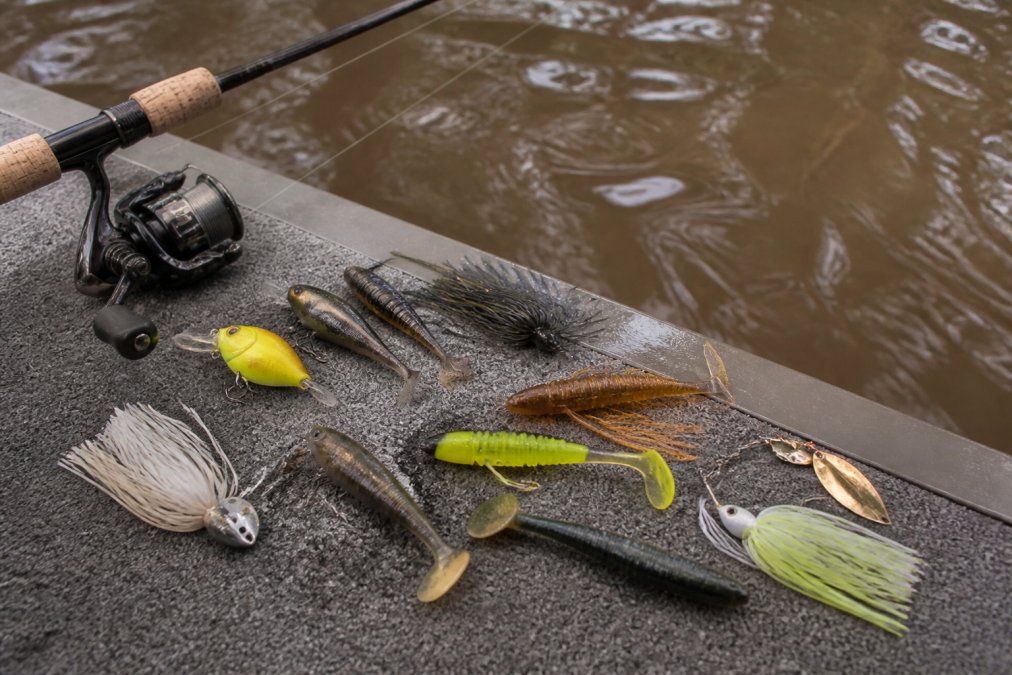
 listicle
Best Bass Fishing Lures for Muddy Water: 2026 Guide
Table of Contents
- Why Muddy Water Changes Everything for Bass Lures
- Best Lure Colors for Muddy Water
- High-Vibration Lures: Spinnerbaits and Bladed Jigs
- Flipping and Pitching Jigs in Heavy Cover
- Crankbaits, Topwater, and Subsurface Options for Low Visibility
- How to Fish Muddy Water for Bass: Retrieve Speed and Depth Control
- Scent, Trailers, and Line Selection for Stained Conditions
- Frequently Asked Questions
Last Updated: September 14, 2026
Why Muddy Water Changes Everything for Bass Lures
Muddy water is a low-visibility environment where bass rely on senses other than sight, so the best bass fishing lures for muddy water generate heavy vibration, displace water, and offer strong color contrast. At GreatAdventureSupply, we build our lure selection around one principle: when a bass can't see well, give it something it can feel and hear. Turbidity can cut a bass's visual range to just a few centimeters.
When visibility drops, the bass's lateral line, a sensory organ that detects pressure waves and movement, becomes the primary strike trigger. A lure that pushes water hard and rattles loudly gets noticed from farther away than one that looks realistic.
How Bass Use Their Lateral Line When Visibility Drops
The lateral line is a row of pressure-sensitive cells that lets bass detect the wake, vibration, and water displacement of prey without seeing it. In clear water, sight leads the strike. In muddy water, the lateral line takes over, which is why high-vibration lures outperform realistic, subtle ones.
A bass can register a vibrating blade or rattling crankbait from well outside its visual range, that's the entire game in dirty water: extend the strike zone beyond what the fish can see. Lures that move water via a spinning blade, wide wobble, or internal rattle chamber trigger a reaction strike, not a feeding strike.
Best Lure Colors for Muddy Water
The best lure colors for muddy water are high-contrast patterns that stand out against a brown, tannic backdrop: chartreuse, black and blue, and solid black. Bass may not see color the way humans do, but they detect contrast and silhouette, and these colors maximize both. The catch most guides skip: "muddy" is not one condition, a lightly stained creek arm and a chocolate-milk flood pool are two different color problems.
Why Contrast Beats Color in Low Visibility
Bass have rod and cone cells like most freshwater predators, but their color discrimination narrows sharply as light and clarity drop. What survives turbidity is luminance contrast, the brightness difference between your lure and the water, plus silhouette. That's why a solid black bait can out-fish a realistic shad pattern in heavy mud.
- Heavy mud (visibility under about 6 inches): go maximum contrast. Solid black, black and blue, or a black body with a chartreuse tail. Silhouette is doing the work.
- Stained (roughly 6 to 18 inches): chartreuse, firetiger, and black-and-blue all read well. This is the widest window, and where a bright blade or a gold flash element adds the most.
- Lightly stained (roughly 18 inches to 3 feet): you can start reintroducing natural colors, watermelon, green pumpkin, shad, but keep a dark back or a bright accent so the bait still separates from the background.
Bass fishing biology and sensory research overview explains how bass perceive contrast more than precise color, which is why bold patterns win in stained conditions.
Chartreuse, Black and Blue, and High-Contrast Patterns
Chartreuse and black-and-blue dominate muddy-water tackle boxes for good reason. Chartreuse reflects light and creates a visible flash; black and blue produces a strong silhouette bass can track against a murky background. Firetiger, a chartreuse-orange-black pattern, adds flash and contrast in one package.
A few practical rules:
- Pair a dark skirt with a bright blade or a dark body with a chartreuse tail to maximize contrast.
- Add a flash element, like a gold or painted blade, to catch light in low visibility.
- Avoid clear, natural, or translucent finishes; they vanish in turbidity.
- Match the skirt color to the trailer so the whole bait reads as one bold shape.
The Seasonal Color Shift Most Anglers Miss
Water temperature changes how aggressively bass feed, and that changes how much color matters. In cold, muddy water, late fall through early spring, or a winter rain event, bass metabolism is low and they're less willing to chase. A smaller, darker profile with subtle flash tends to out-produce a loud chartreuse bait. Black and blue, dark green pumpkin with black flake, and muted craw patterns are the cold-muddy picks.
In warm, muddy water, summer thunderstorms, runoff after heavy rain, bass are more active and willing to run down a bait. That's when chartreuse, firetiger, and bright chartreuse-and-white combos earn their reputation.
A simple rule: as it gets colder, get darker and smaller; as it gets warmer, get brighter and louder.
High-Vibration Lures: Spinnerbaits and Bladed Jigs
Spinnerbaits and bladed jigs are the top high-vibration choices for muddy water because their blades and heads displace water and create constant thump. A double Colorado blade setup generates maximum vibration at slow retrieve speeds.
A spinnerbait with two Colorado blades (round, cupped blades that thump hard) produces far more vibration than a willowleaf setup, which is built for speed and flash rather than low-speed thump, and muddy-water bass often want a slow, steady presentation. Our Pulse Fish Lures Double Colorado Pulse Blade is built exactly for this: a Pulse head design, SPRO swivels, sharp Mustad hooks, and quality blades, tournament-ready out of the pack.

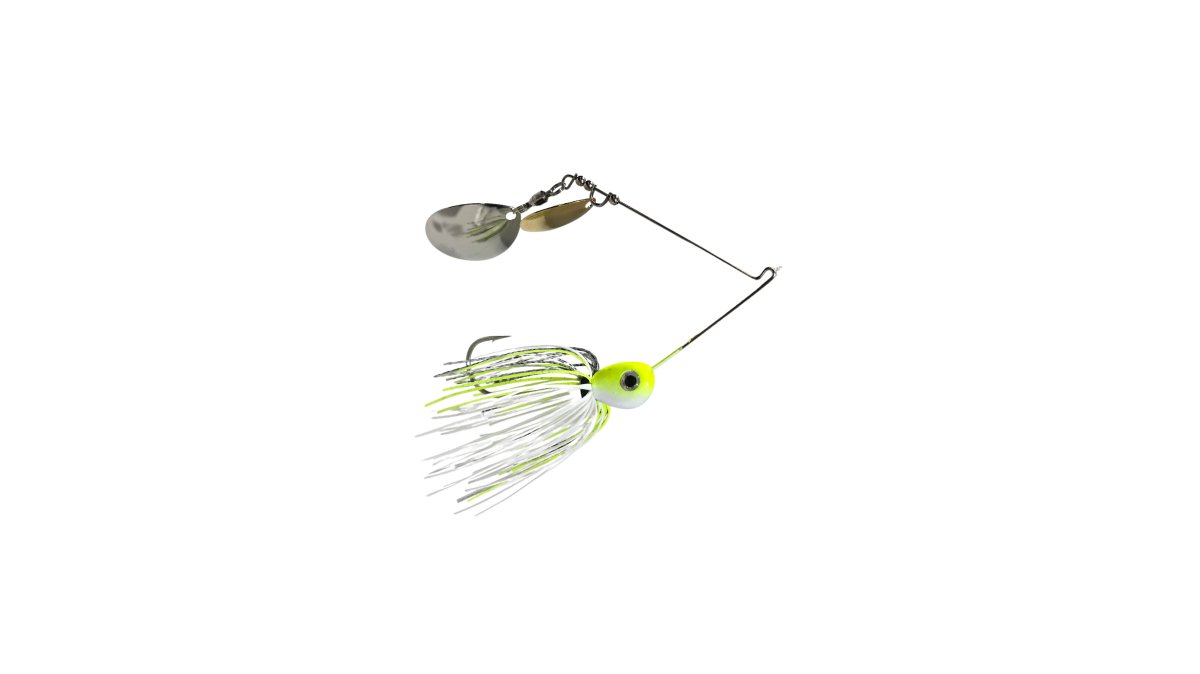
For low-light or night fishing in stained water, the Pulse Fish Lures Night Vibez Spinnerbaits use an R bend for added vibration and a number-6 gold blade in dark, fish-catching colors.
Flipping and Pitching Jigs in Heavy Cover
Flipping and pitching jigs win in muddy water because they put a compact, high-vibration target directly into heavy cover where bass hold, and a jig with a sound chip extends the strike zone beyond what a bass can see.
Flipping and pitching are short-range, accurate casting techniques that drop a bait quietly into thick cover: laydowns, brush, dock pilings, and grass edges. In muddy conditions bass tuck tight to cover, so precision placement beats long bombing casts. The Sweet Talker 1oz from Livingston Lures is a strong pick: a perfectly balanced 1-ounce jig with EBS Technology, a baitfish sound chip that lets fish detect the lure from outside visual range, effectively doubling the strike zone. The 2X strong VMC hooks hold up when you winch a fish out of the brush.

A few keys to fishing jigs in dirty water:
- Use a heavier jig (3/4 to 1 ounce) to feel the bottom and punch through cover.
- Add a bulky trailer with lots of action to increase water displacement.
- Slow down; let the jig sit and settle before you move it.
Crankbaits, Topwater, and Subsurface Options for Low Visibility
Squarebill crankbaits, rattling lipless baits, and topwater frogs round out a muddy-water arsenal by covering shallow cover, subsurface lanes, and the surface.
Squarebill crankbaits are the shallow-cover specialist: they deflect off wood and rock without snagging, and their wide wobble displaces water. Choose rattling models with a loud rattle chamber and hard-thumping action. The Mmlong 6.3cm Hard Frog Floating Minnow is a floating, rattling crankbait with steel balls inside that create sound and stabilize long casts, and its shallow diving depth (0 to about 1 meter) keeps it in the strike zone over shallow structure.

For deeper stained water, a slow-sinking jerkbait with a sound chip covers water fast. The Jerkmaster Deep Plus (Jerkmaster 121 DP) dives to 12 to 15 feet with a darting action and an internal weight-transfer system for long casts. Its EBS Smart Chip adds sound, exactly what you want when visibility is poor.
Topwater still has a place: a hollow-body frog or prop bait fished over shallow grass and slop triggers explosive reaction strikes, especially early and late. The surface disturbance is the attraction, not the look of the bait.
| Lure Type | Best Depth | Key Trigger | Best For |
|---|---|---|---|
| Double Colorado spinnerbait | 1-6 ft | Heavy vibration | Slow-rolled shallow cover |
| Flipping jig with sound chip | 0-15 ft | Sound + water displacement | Heavy cover, tight fish |
| Squarebill / rattling crankbait | 2-6 ft | Rattle + wide wobble | Deflecting off shallow wood |
| Slow-sinking jerkbait | 12-15 ft | Darting action + sound | Covering deep stained water |
| Topwater frog / prop | Surface | Surface disturbance | Shallow grass, low light |
How to Fish Muddy Water for Bass: Retrieve Speed and Depth Control
Slow your retrieve and control your depth. In muddy water, bass are less willing to chase, so a steady, slow presentation that keeps the lure in the strike zone longer produces more bites than a fast, erratic one. The part most guides leave out: "slow" is not a fixed number, it's a variable you set with water temperature, weather pattern, and where fish are holding.
Setting Retrieve Speed by Water Temperature
Retrieve speed is the variable most anglers get wrong. In clear water you can burn a bait and trigger reaction strikes; in dirty water a slow crawl keeps your lure in contact with the fish's lateral line longer. But the correct crawl speed depends on water temperature.
A working framework most experienced muddy-water anglers use:
- Cold muddy water (roughly under 50°F): fish it painfully slow. A spinnerbait crawled just fast enough to keep the blades turning, or a jig hopped and then allowed to sit for several seconds. Bass metabolism is low, and a fish that will not chase needs the bait to come to it.
- Cool muddy water (roughly 50-60°F): a slow, steady retrieve with occasional pauses. This is the classic muddy-water window where a double Colorado spinnerbait slow-rolled along cover shines.
- Warm muddy water (roughly 60-75°F): you can speed up to a moderate, steady retrieve and add a rip or a deflection off cover to trigger reaction strikes.
- Hot muddy water (roughly above 75°F): bass are active and will chase. A faster retrieve, a lipless bait ripped through grass, or a squarebill burned into a deflection all work. This is also when topwater gets its best window.
Depth control matters just as much as speed. Run your bait where the fish are holding, not where it's easiest to cast, if bass are tight to cover in 3 feet of water, a deep-diving bait does nothing. In cold muddy water, fish slide to the deepest available cover; in warm muddy water, they push shallow and tight to wood, rock, and vegetation.
Post-Frontal Muddy Water: The High-Level Play
A cold front that clears dirty water is one of the toughest, and most predictable, scenarios in bass fishing. After the front passes, skies clear, air temperature drops, and bass often pull tight to the heaviest cover and turn off. The muddy water that was firing fish before the front can go dead for a day or two.
The adjustment: downsize, slow down, and fish the thickest cover you can find. A smaller jig with a compact trailer, a finesse worm, or a lightly weighted soft plastic pitched into the densest brush or deepest grass edge will out-fish a big vibrating bait. Treat every piece of cover as if a fish is glued to it, because often one is.
A common pattern is a two-to-three-day recovery window: the first day after the front is slowest, the second improves, and by the third the fish reposition and feed again. Don't abandon muddy water just because a front moved through, adjust to it.
Pairing Retrieve and Depth with Sonar
Electronics and sonar integration matter here too. Side-imaging and down-imaging sonar help you find the depth and cover bass are using, so you can match your lure's running depth to the fish instead of guessing. If side-imaging shows fish suspended off a point in 12 feet of stained water, a slow-sinking jerkbait or deep-diving crankbait that runs at that depth will out-fish a shallow spinnerbait every time. If down-imaging shows fish buried in a brush pile in 4 feet, a flipping jig is the answer.
The anglers who consistently catch bass in muddy water aren't the ones with the most baits, they're the ones who read water temperature, weather pattern, and the sonar screen, then set retrieve speed and depth to match.
In-Fisherman guide to bass behavior in stained water covers how temperature and clarity interact to shift where bass position.
Scent, Trailers, and Line Selection for Stained Conditions
Scent, trailers, and line choice separate a good muddy-water day from a great one: a scent trail and bulky trailer extend the time a bass stays interested, while the right line keeps your lure running at the correct depth.
Scent products leave a chemical trail bass can follow, adding a sensory channel beyond vibration and sound. Trailers do double duty: they add action and water displacement, and a bulky trailer increases the lure's profile so it reads better in low visibility. For line, braid is the muddy-water favorite because it's sensitive (you feel soft bites and cover) and it floats, keeping a topwater or shallow bait riding high; a fluorocarbon leader adds abrasion resistance around cover. Braid is highly visible, so in very clear water you'd want a leader, but in muddy water that visibility doesn't matter.
Take Me Fishing beginner's guide to reading water clarity is a solid primer on how clarity and conditions shape lure choice.
Frequently Asked Questions
What is the best way to fish bass in muddy water?
Slow down and target shallow cover with high-vibration lures. Bass in muddy water rely on their lateral line to feel vibration rather than see the bait. Use a double Colorado blade spinnerbait like the Pulse Fish Lures Double Colorado Pulse Blade ($8.99) and retrieve it slowly so the blades thump continuously. Focus on laydowns, stumps, and rock piles where bass hold tight to structure in low visibility.
What color lure is best for bass in murky water?
Chartreuse, black and blue, and solid white or firetiger patterns work best for muddy water lures. These high-contrast colors stand out against the brownish tint. Dark colors like black and blue create a strong silhouette, while chartreuse reflects what little light penetrates the water. Avoid natural, translucent finishes that disappear in low visibility conditions.
Does vibration help bass find lures in muddy water?
Yes. Bass detect vibration through their lateral line, a sensory organ running along their sides. In muddy water where sight feeding is limited, vibration becomes the primary trigger. Lures with rattle chambers, Colorado blades, and wide-wobbling actions move more water and create a larger strike zone. The Livingston Sweet Talker 1oz jig ($14.99) uses EBS sound technology to extend detection range even further.
Will bass hit topwater in muddy water?
Bass will hit topwater in muddy water, but timing matters. Early morning and low-light periods produce the best results because bass move shallower to feed. Use a floating minnow or frog-style bait with rattles, like the Mmlong Hard Frog ($11.96), and fish it with a steady walk-the-dog cadence. The surface disturbance and internal rattles help bass locate the bait.
How deep should you fish in muddy water?
Start shallow, in 1 to 5 feet, and work deeper only if needed. Muddy water limits light penetration, so bass often move shallower and tighter to cover than in clear conditions. Flip jigs into heavy cover at the bank, then work spinnerbaits along shallow flats. If bass aren't responding shallow, move to 8 to 12 feet near drop-offs and creek channels.
Muddy water rewards preparation over luck, and the right lure selection turns a tough day into a productive one. GreatAdventureSupply stocks the high-vibration spinnerbaits, sound-chip jigs, and rattling crankbaits that perform when visibility drops, all curated for real conditions and backed by gear built to hold up trip after trip. Browse our fishing collection to find the lures that match your water, then get started with GreatAdventureSupply and fish stained water with confidence.