 comparison
Water Filter Straw Worth It for Long Hikes
Table of Contents
- The Verdict: When a Water Filter Straw Earns Its Place
- How Water Filter Straws Work
- Water Filter Straw vs Squeeze Filter: Which System Wins
- Real-World Limitations: What Straws Struggle With
- Best Backpacking Water Filter 2026: Pump Systems as an Alternative
- How to Clean a Water Filter Straw and Extend Its Life
- Conclusion
- Frequently Asked Questions
Last Updated: September 2, 2026
The Verdict: When a Water Filter Straw Earns Its Place
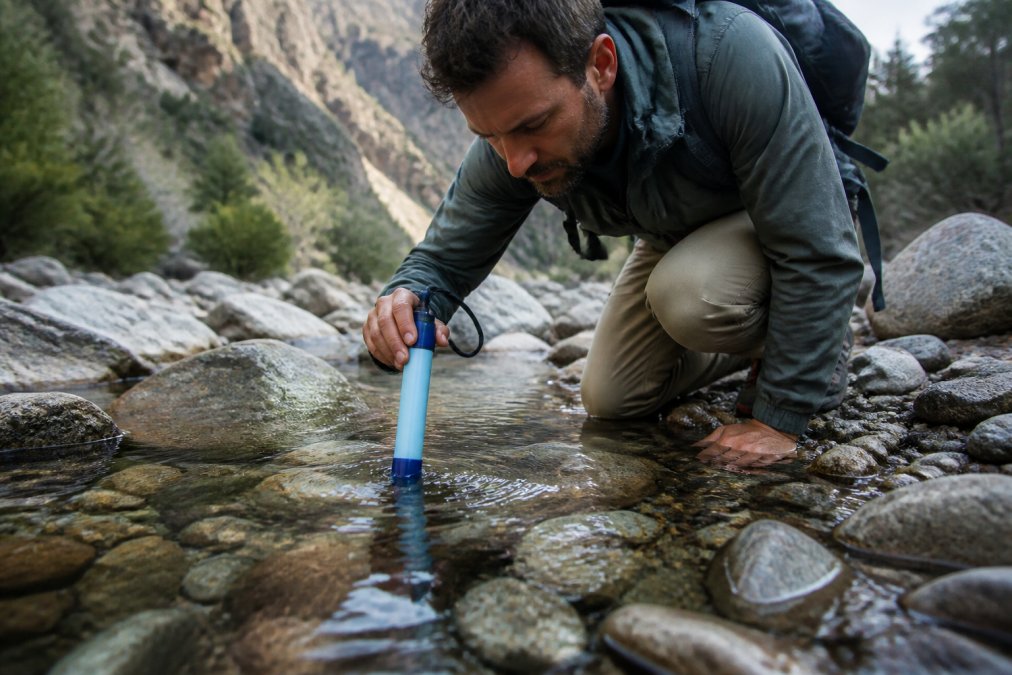
A water filter straw is worth it for long hikes only if your trip fits specific parameters: short, solo backcountry trips drawing water directly from reliable sources. Beyond a day or two, larger groups, or questionable water sources, the straw's limitations become apparent. This guide cuts through the noise and gives you the exact decision framework to determine whether a water filter straw belongs in your pack.
How Water Filter Straws Work
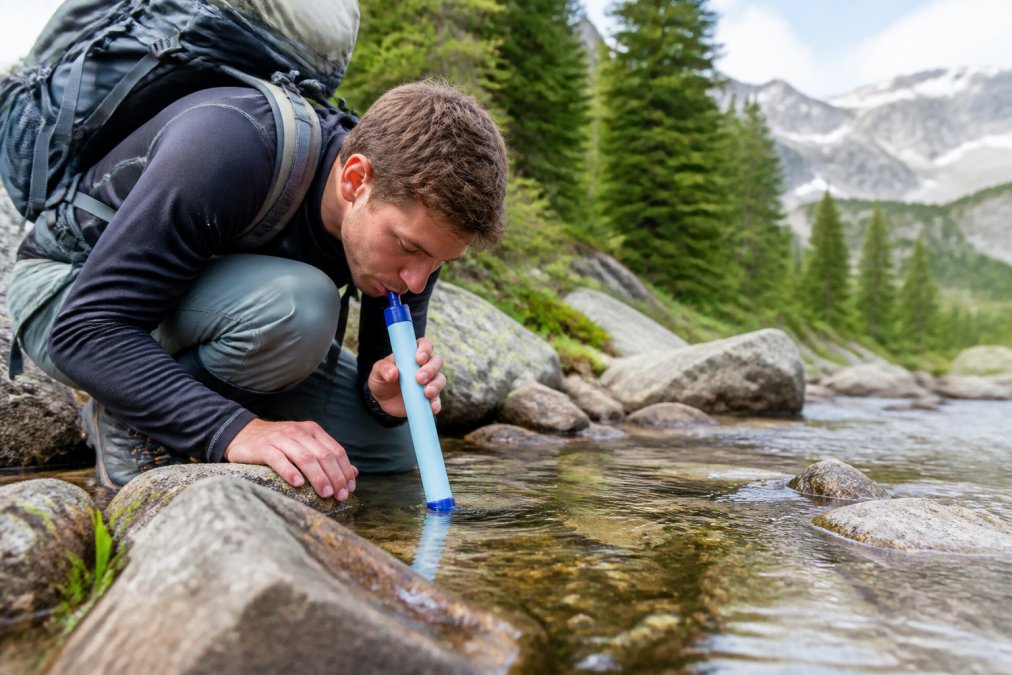
A water filter straw removes waterborne pathogens using a hollow-fiber membrane, a technology field-tested for decades. The hollow-fiber membrane has microscopic pores (typically 0.1 to 0.2 microns) that physically block bacteria, protozoa, and cysts while allowing water molecules through (peer-reviewed research).
Hollow-Fiber Membrane Filtration
The hollow-fiber membrane is a bundle of tiny synthetic tubes with walls perforated at the micron level. When you suck water through, negative pressure forces untreated water against these walls. The membrane traps particles larger than its pore size on the upstream side while clean water flows to your mouth.
This passive design requires no pump or electricity, but suction effort increases as the membrane clogs with sediment and biofilm. A fresh straw draws easily; a fouled one demands serious lung capacity. This is why backflushing becomes essential on longer trips.
Most straws rate their capacity at 600 to 2,000 liters before flow rate degrades (nsf.org). On a week-long solo trip using 7 to 14 liters, you're using less than 1% of capacity. On a 10-person group trip over two weeks, cumulative volume pushes toward saturation faster.
What Gets Removed (and What Doesn't)
The hollow-fiber membrane removes bacteria (E. coli, Salmonella), protozoa (Giardia, Cryptosporidium), and cysts. It does not remove viruses, dissolved chemicals, pesticides, or heavy metals. Turbid water clogs the membrane faster because the straw blocks both particles and pathogens. Clear water from pristine alpine streams is ideal; silty water from glacial melt is worst-case.
Water Filter Straw vs Squeeze Filter: Which System Wins
The squeeze filter is the straw's closest competitor. Both use hollow-fiber membranes, but a squeeze filter sits between your water source and hydration reservoir, while the straw is the filter itself.
Flow Rate and Suction Effort
A straw's flow rate depends on lung capacity. A fresh straw delivers 0.5 to 1 liter per minute with minimal effort; after 200 liters, it might drop to 0.2 liters per minute and require serious suction (peer-reviewed research). A squeeze filter decouples physical effort from flow rate, you control pressure by how hard you squeeze. A clogged squeeze filter still flows faster than a clogged straw because you apply external force.
For groups, the straw becomes a bottleneck. Each person takes turns drawing water directly. A squeeze filter lets you pre-filter water into shared containers, which is faster.
Weight and Packability
A water filter straw weighs 1.5 to 3 ounces; a squeeze filter system weighs 4 to 8 ounces. For ultralight backpackers, the straw's advantage is real. However, if you're already carrying a hydration bladder, the squeeze filter adds only 2 to 3 ounces. The straw saves weight but requires drawing water directly from the source every time you drink.
The straw is smaller and fits in a pocket; the squeeze filter requires a dedicated pouch.
Capacity and Trip Duration
A straw's capacity is measured in hundreds to thousands of liters. Backflushing accelerates membrane degradation, a straw rated for 1,000 liters of drinking might handle only 500 liters of drinking plus regular backflushing before becoming unusable.
For trips longer than five days, a squeeze filter's larger effective capacity becomes a practical advantage. For trips of three days or fewer, the straw's capacity is never limiting.
Real-World Limitations: What Straws Struggle With
Turbidity and Sediment Handling
Turbid water clogs a straw aggressively. Glacial melt, desert washes, and low-altitude streams produce turbid water that forces sediment particles against the membrane, creating a biofilm layer that restricts flow. Pre-filtering through cloth before using the straw adds time and complexity.
A squeeze filter handles turbidity better because you control pressure and can backflush more easily through a dedicated valve.
Cold Weather Performance
The hollow-fiber membrane becomes brittle in freezing conditions, and adhesive bonding weakens. A straw working fine at 50°F might crack at 20°F. Drawing water through a straw in cold weather means cold water enters your mouth directly, which is uncomfortable and can trigger cold-water shock.
Squeeze filters perform better because water passes through the filter into a container first, which you can pour into a warm drink.
Group Hiking Challenges
A straw is a personal tool. Scaling it to a group creates friction: each person carries their own straw (adding weight), one person filters for everyone (slow), or everyone shares one straw (unsanitary and slow).
A squeeze filter attached to a shared hydration bladder solves this elegantly. One person filters water into a common container, and everyone drinks from it or fills personal bottles.
Best Backpacking Water Filter 2026: Pump Systems as an Alternative
Pump filters are heavier, more complex, and more expensive, but they solve problems straws and squeeze filters can't.
Why Pump Filters Win on Long Trips
A pump filter uses a hand-operated pump to push water through a filter cartridge. You place the intake tube in the water source, pump water through the filter, and collect it in a container. The pump's mechanical advantage means you're not relying on lung power, and flow rate remains consistent regardless of sediment or biofilm accumulation.

Pump filters excel at handling turbid water without clogging quickly, maintaining consistent flow rate, and easy backflushing. For two-week trips in regions with questionable water sources, a pump filter removes guesswork.
The trade-off is weight (8 to 16 ounces) and complexity. But on extended trips, that weight penalty pays dividends in reliability and reduced water-gathering time.
The GreatAdventureSupply Portable Pump Filter
The GreatAdventureSupply Portable Pump Filter is a ceramic-membrane pump system rated for approximately 0.3 liters per minute and 2,000 liters of total capacity. The double-membrane ceramic filter cartridge removes bacteria (>99.9999% removal rate) and heavy metal ions (>85% removal rate), handling both microbial and chemical contamination better than a standard straw.
At $70.22, it's competitively priced. The weight is approximately 95 grams (3.4 ounces), lighter than many competing pump systems. The 2,000-liter capacity supports multiple seasons of regular use without replacement.
The intake tube draws from shallow sources, and the pump mechanism is simple enough to repair in the field. For hikers planning extended backcountry trips, this system removes uncertainty from water gathering.
How to Clean a Water Filter Straw and Extend Its Life
A straw's lifespan is determined less by total liters filtered and more by maintenance. Proper field maintenance can double effective life; neglect can halve it.
Backflushing in the Field
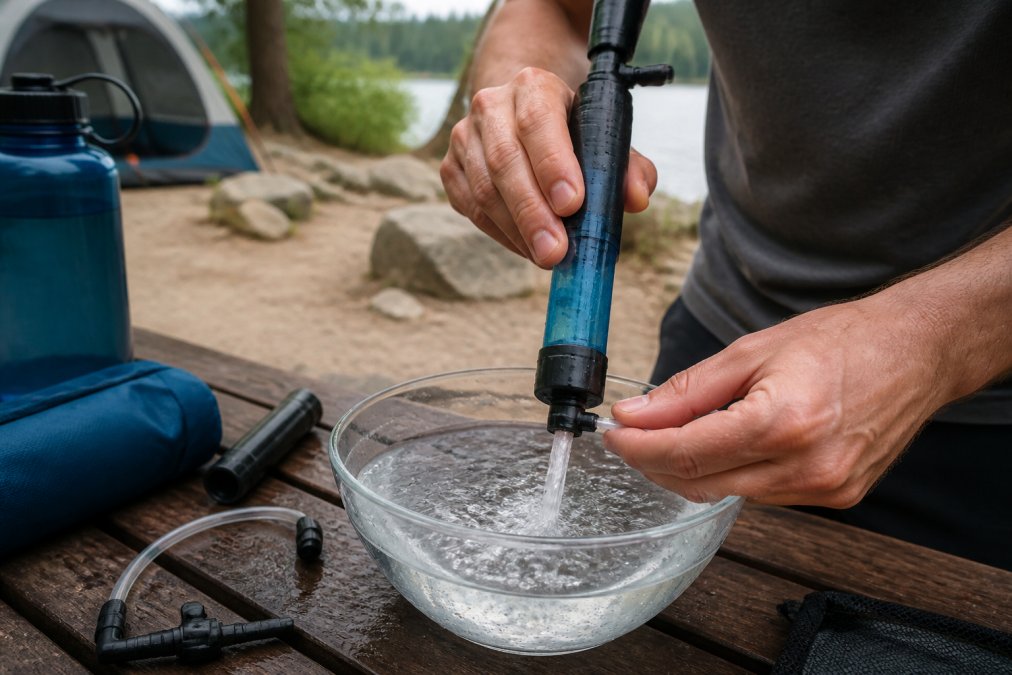
Backflushing reverses water flow through the membrane to dislodge trapped sediment and biofilm. After filtering water for several hours or at day's end, disconnect the straw. Submerge it in clean water and use a small syringe or dedicated backflush pump to force water backward through the straw at higher pressure than normal drinking draws. Backflush for 30 to 60 seconds until water appears relatively clear.
This restores flow rate and extends membrane life. On week-long trips, backflush every evening. On shorter trips, backflush every two to three days.
Field backflushing requires carrying additional gear and clean water. If limited water sources exist, backflush with the least-turbid water available and accept faster performance degradation.

Long-Term Storage and Sanitization
After a trip, proper storage determines whether your straw remains viable for next season. A straw stored wet will develop mold and bacterial growth inside the hollow-fiber membrane.
Immediately after your trip, rinse the straw thoroughly with clean water, backflush it, and allow it to air-dry completely (24 to 48 hours). Store it in a cool, dry place in a protective case.
Before your next trip, sanitize the straw by soaking it in dilute bleach solution (one part household bleach to nine parts water) for 30 minutes. Rinse thoroughly and backflush with clean water to remove bleach residue. If stored for more than a few months, repeat sanitization before use.
| Maintenance Task | Frequency | Time Required | Impact |
|---|---|---|---|
| Backflushing in field | Daily on trips 5+ days | 1-2 minutes | Restores flow rate, extends lifespan |
| Post-trip rinsing | After every trip | 5 minutes | Prevents mold and bacterial growth |
| Air drying | After every trip | 24-48 hours | Essential for long-term storage |
| Sanitization before use | Before trips, or every 3-6 months | 30 minutes | Ensures safety and removes dormant pathogens |
Conclusion
A water filter straw is worth it for solo hikes of three days or fewer from pristine water sources, if you accept reduced flow rate as the filter clogs. For longer trips, groups, or questionable water sources, the straw's limitations outweigh its weight savings.
If your trip is short and solo, the straw wins. If longer, involves a group, or requires filtering from questionable sources, a squeeze filter or pump system becomes smarter.
For ultralight backpackers who understand the straw's limitations, it remains the most packable hydration solution. For everyone else, GreatAdventureSupply's Portable Pump Filter delivers the reliability and flow rate extended trips demand. With 2,000-liter capacity, ceramic-membrane filtration, and pump-driven consistency, it removes guesswork from water gathering.
Frequently Asked Questions
Q: Do water filter straws actually work for removing bacteria and protozoa?
A: Yes, water filter straws with hollow-fiber membranes remove bacteria like E. coli and protozoa like Giardia and Cryptosporidium. Most straws filter down to 0.2 microns, which stops these waterborne pathogens. However, they do not remove viruses or dissolved chemicals. For backcountry water sources, a straw handles the most common threats, but you need chemical treatment or a pump filter for complete viral protection on long international trips.
Q: What's the difference between a water filter straw and a squeeze filter for backpacking?
A: A water filter straw lets you drink directly from a stream with minimal effort but has low flow rate and works only for individual use. A squeeze filter fills a hydration reservoir and delivers water faster, ideal for groups or cooking. For multi-day solo trips in clear water, a straw works; for groups or murky sources, a squeeze system is worth the extra weight.
Q: How do I clean a water filter straw to keep it working on long hikes?
A: Backflush the straw by forcing clean water backward through the membrane, this dislodges trapped sediment. In the field, hold the straw upright, fill it with clean water, and blow hard through the inlet end. After your trip, soak the straw in clean water for 30 minutes, then backflush again. Store it dry in a sealed bag to prevent mold. Never let it freeze or dry completely, as this damages the membrane. Proper maintenance extends straw life from weeks to months.
Q: Is a water filter straw enough for a week-long backpacking trip?
A: A typical straw filters 1,000 gallons before clogging, which sounds like plenty, but turbid water and frequent backflushing reduce real-world capacity to 500-700 gallons. On a week-long trip, you'll drink 10-15 gallons, so one straw is technically sufficient. However, clogging risk increases with dirty water sources, and you have no backup. Many experienced backpackers carry two straws or pair a straw with chemical tablets for longer trips, especially in early spring when snowmelt creates silty water.
Q: Can you drink from any water source with a filter straw, or are there limits?
A: Filter straws work well for clear streams, lakes, and springs but struggle with heavy sediment, algae, or stagnant water. Highly turbid sources clog the membrane quickly. Straws also don't remove viruses, so they're not safe for water from beaver ponds or areas with human activity. Cold weather slows flow and can freeze water inside the straw, damaging it. For diverse water sources on long trips, pair a straw with chemical backup (iodine tablets or purification drops) or upgrade to a pump filter like the GreatAdventureSupply portable purifier, which handles turbidity and includes ceramic filtration for broader protection.
Ready to upgrade your hydration system? Explore GreatAdventureSupply's curated water filtration collection and find the system that matches your trip profile. From lightweight straws to reliable pump filters, we've selected gear built to perform when it matters most, ensuring your next adventure is safer and more enjoyable.
This article was written using GrandRanker