 how-to
Saltwater Fishing Techniques for Redfish
Table of Contents
- Reading Flats and Tides for Redfish
- The Best Bait for Redfish in Saltwater
- Redfish Rig Setup: Carolina and Jig Head Options
- Best Budget Saltwater Spinning Reels and Tackle
- Casting Techniques for Sight Fishing and Blind Casting
- Troubleshooting Spooked Fish and Advanced Electronics
- Landing, Handling, and Conservation
- Frequently Asked Questions
Last Updated: September 28, 2026
Reading Flats and Tides for Redfish
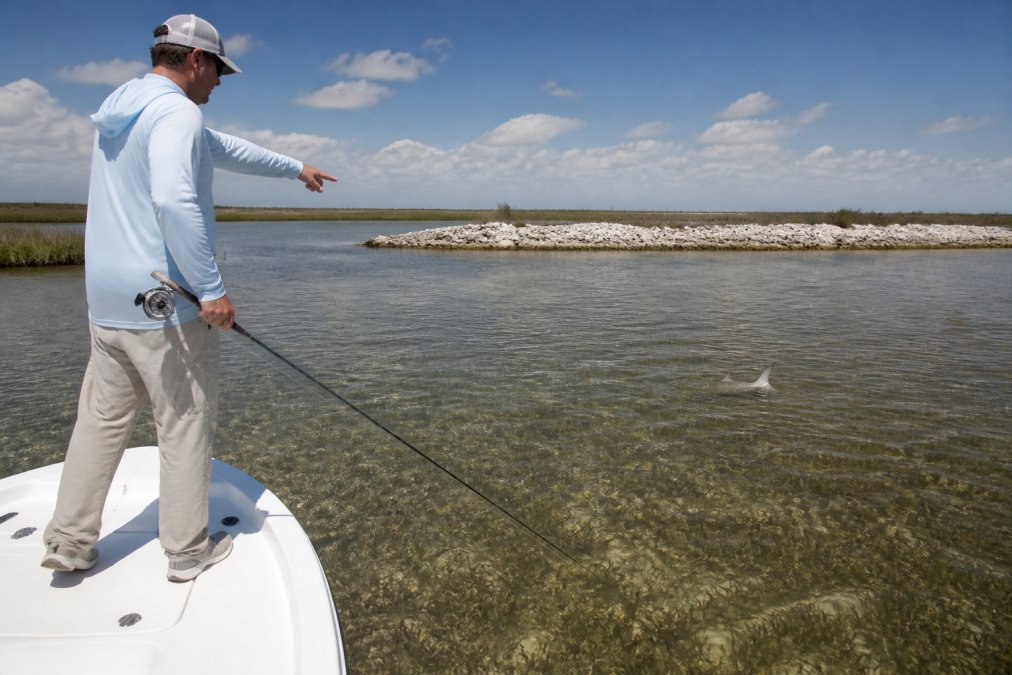
Saltwater fishing techniques for redfish start with reading the tide, because redfish follow moving water onto shallow grass to feed. The last two hours of a rising tide and the first two of the fall are when flats come alive.
Here's what most guides miss: the fish don't spread evenly across the flat. They use it in lanes.
Look for these first:
- Grass beds with scattered potholes
- Oyster bars that break the current
- Sand edges where the flat drops into a channel
When water pushes over an oyster bar, redfish slide in behind it and hold on the calm side. That's your target.
Wind matters too. A steady push of water raises levels on windward shorelines and lets redfish reach spots they can't on a calm day.
On a falling tide, the same fish back off the flat and stack at the drains. Position your skiff uptight and wait. They'll come to you.
The Best Bait for Redfish in Saltwater
The best bait for redfish depends on water clarity, how spooky the fish are, and whether you're hunting or holding. Live and cut natural baits win in dirty water and on pressured fish; artificial lures win when redfish are actively feeding and you need to cover ground. The real skill is matching the bait to the rig and the presentation, not just picking a category.
Natural Baits: Cut Mullet, Shrimp, and Crab
Cut mullet is the workhorse. Cut a fresh mullet into chunks roughly the size of a quarter, leaving the skin on one side so the chunk stays on the hook through a cast and a few bumps on the bottom. Thread a 4/0 to 5/0 circle hook through the meat and out the skin side once. The scent trail does the work; the current carries it down the edge of a channel or along an oyster bar.
Live shrimp gets eaten fast when redfish are keyed in on crustaceans. Hook it through the horn (the sharp rostrum) so it stays alive and swims naturally, or through the tail for a more durable bait when pinfish are thick. Under a popping cork, a live shrimp at the end of a 12- to 18-inch leader is one of the most reliable inshore presentations there is.
Fresh-dead shrimp is the budget option and still produces. Peel it, thread it on a jig head or a small circle hook, and fish it slowly along the bottom.
Blue crab halves and quarters are the go-to when you want to weed out smaller fish.
Artificial Lures That Trigger Strikes
Artificial lures cover water and let you hunt. A few that earn their place in the box:
- Gold spoons (1/4 to 1/2 oz) for flashing through grass and over shell
- Soft plastics on a jig head (3- to 5-inch paddle tails and shrimp profiles) for hopping along the bottom
- Topwater walkers at first light, worked with a steady walk-the-dog cadence
- Crankbaits and lipless baits for covering open flats fast and finding fish by reaction
- Spinnerbaits for dirty water and low light, when vibration beats sight
Bait-to-Rig Matching
This is the part most guides skip. The bait and the rig have to work together:
- Cut mullet or crab → Carolina rig, 1/2 to 1 oz egg sinker, 4/0 to 5/0 circle hook, 18- to 24-inch leader
- Live shrimp under a cork → popping cork, 1/4 to 1/2 oz, 1/0 to 2/0 circle or J-hook, 12- to 18-inch leader
- Soft plastic → jig head, 1/8 to 3/8 oz, matched to the plastic length
- Spoon or topwater → tied direct to braid with a short fluorocarbon leader, no weight
Redfish Rig Setup: Carolina and Jig Head Options
A redfish rig setup comes down to two core choices: the Carolina rig for bottom fishing and the jig head for covering water. Pick based on how you're fishing, not habit. The components and their sizes are what make the rig work.
The Carolina Rig, Component by Component
The Carolina rig puts a sliding egg sinker above a swivel, then a leader to a circle hook. It keeps bait on the bottom and lets a redfish take without feeling weight.
Build it in this order:
- Slide a 1/2 to 1 oz egg sinker onto your main line (braid).
- Tie on a barrel swivel.
- Tie an 18- to 24-inch fluorocarbon leader (20 to 30 lb) to the other side of the swivel.
- Snell or tie a 4/0 to 5/0 circle hook to the leader.
- Thread on cut mullet, crab, or a live shrimp.
The Jig Head, Component by Component
The jig head pairs with a soft plastic. Cast it, let it sink, then hop it back. This is the rig for blind casting and covering ground.
- Weight: 1/8 oz in water under 2 feet, 1/4 oz in 2 to 5 feet, 3/8 oz in deeper water or wind
- Hook: matched to the plastic, usually 3/0 to 5/0
- Plastic: 3- to 5-inch paddle tail, shrimp, or curly tail
- Leader: 12 to 18 inches of 20 to 30 lb fluorocarbon
Rig Selection by Scenario
| Rig | Best For | Weight Range | Hook Type | Leader |
|---|---|---|---|---|
| Carolina rig | Bottom fishing, cut bait, channel edges | 1/2-1 oz | 4/0-5/0 circle | 18-24 in, 20-30 lb fluoro |
| Jig head | Covering water, plastics, blind casting | 1/8-3/8 oz | 3/0-5/0 jig hook | 12-18 in, 20-30 lb fluoro |
| Popping cork | Shallow grass, live shrimp | 1/4-1/2 oz | 1/0-2/0 circle or J-hook | 12-18 in, 20-30 lb fluoro |
| Free-lined | Clear, calm water, live bait | none | 2/0-4/0 circle | 24-36 in, 20 lb fluoro |
Line, Leader, and Hook Notes
Use a fluorocarbon leader in clear water. It disappears. In dirty water, you can get away with heavier line and a shorter leader.
Best Budget Saltwater Spinning Reels and Tackle
You don't need to spend big to catch redfish. A reliable spinning reel, a sensitive rod, and fresh line cover almost every inshore situation.
Rod, Line, and Leader Pairings
Pair a medium spinning rod with braided line for sensitivity and a fluorocarbon leader line for stealth.
- Rod: 7-foot medium, fast tip
- Line: 15-20 lb braid
- Leader: 20-30 lb fluorocarbon
Casting Techniques for Sight Fishing and Blind Casting
Saltwater fishing techniques for redfish split into sight fishing, where you see the fish before you cast, and blind casting. Blind casting means you work water you can't see into. Both have a place, and both reward accuracy over distance.
Troubleshooting Spooked Fish and Advanced Electronics
Spooked redfish are the number one reason a flat goes quiet. The fix is usually less noise and longer casts, not more movement.
- Cut your trolling motor speed
- Turn off the motor and drift
- Make longer casts with lighter lures
- Switch to a natural bait and let it sit
Landing, Handling, and Conservation
Good handling keeps redfish healthy and keeps the fishery strong. A landing net with rubber mesh protects the fish's slime coat, which guards against infection.
Frequently Asked Questions
What is the best bait for redfish in saltwater?
Cut mullet and live shrimp are the top natural baits for redfish, especially around oyster bars and grass beds. For artificial options, a jig head paired with a soft plastic shrimp imitation works well in shallow water. Match your bait to the tide: use cut bait when the current is strong and artificial lures when redfish are tailing on the flats.
What is the best rig setup for redfish fishing?
A Carolina rig with a 1/2 to 1 ounce egg sinker, a swivel, and a 12 to 18 inch leader of 20 to 30 pound fluorocarbon works in most inshore conditions. For sight fishing on the flats, switch to a jig head rigged with a soft plastic. Use braided line as your main line for better hook sets and sensitivity.
What are the best tides for redfish fishing?
Incoming tides are generally best because they push water onto the flats, letting redfish feed in shallow water where you can sight fish. The last two hours of a rising tide and the first hour of the fall are prime windows. During low tide, focus on deeper channels and drop-offs where redfish stage before moving up.
How do you locate redfish in shallow water?
Look for tailing fish, which appear as nervous water or exposed tails on grass beds during high tide. Also watch for pushes, which are wakes made by redfish moving through shallow water. Polarized sunglasses help you spot fish against the bottom. Oyster bars, marsh edges, and grass beds with current flow are reliable holding areas.
Redfish reward anglers who slow down and read the water. The right gear makes that easier, and GreatAdventureSupply carries the reels, rods, and tackle to get you on the flat with confidence. From the SeaKnight AXE spinning reel to the Magictail Inshore series, our curated collections are built for real conditions. Add to Cart and get ready for your next trip.