 comparison
Hiking Boots vs Trail Runners for Multi-Day Expeditions
Table of Contents
- Quick Comparison: Hiking Boots vs Trail Runners for Multi-Day Expeditions
- Weight and Energy Expenditure: The Backpacking Footwear Weight Comparison
- Ankle Support, Stability, and Foot Health on the Trail
- Durability, Materials, and Break-In Period
- Traction, Waterproofing, and Terrain-Specific Performance
- How to Prevent Blisters on Long Hikes
- Transitioning Strategies and Environmental Considerations
- Conclusion
- Frequently Asked Questions
Last Updated: September 16, 2026
Quick Comparison: Hiking Boots vs Trail Runners for Multi-Day Expeditions
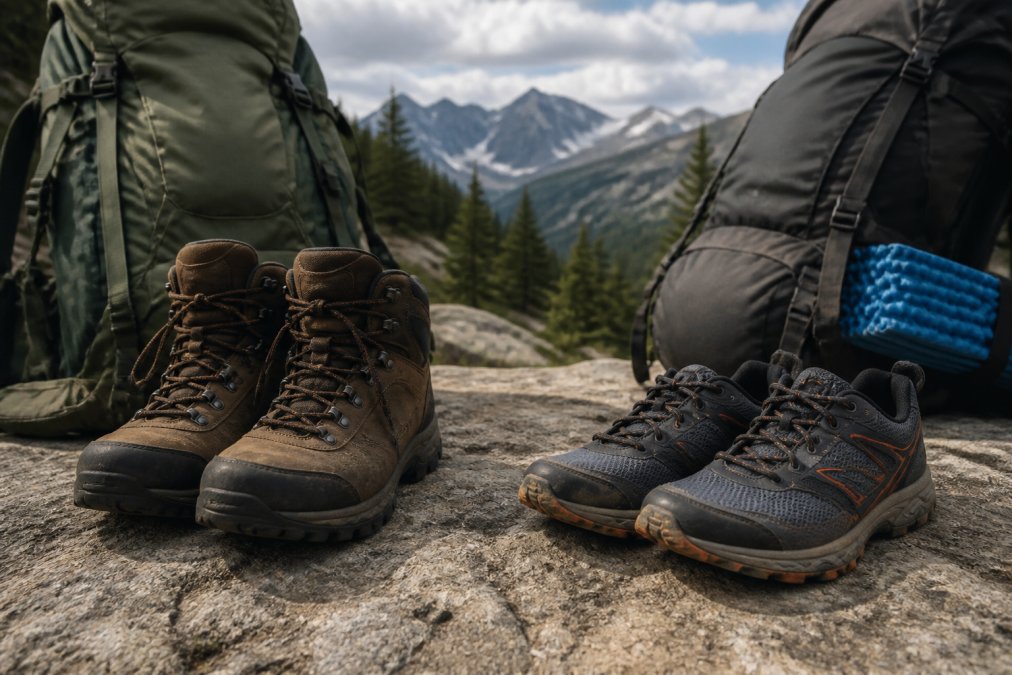
Choosing between hiking boots vs trail runners for multi-day expeditions is the gear decision that most often makes or breaks a long trip. This comparison from GreatAdventureSupply breaks down weight, ankle support, durability, and traction so you can match footwear to your pack weight and terrain.

| Factor | Hiking Boots | Trail Runners |
|---|---|---|
| Weight | Heavier | Lighter |
| Ankle support | High | Minimal |
| Break-in period | Longer | Little to none |
| Waterproofing | Common | Less common |
| Best for | Heavy packs, rough terrain | Light packs, smooth trails |
Weight and Energy Expenditure: The Backpacking Footwear Weight Comparison
The backpacking footwear weight comparison comes down to one principle: weight on your feet costs more energy than weight on your back. Every step of a multi-day expedition lifts your footwear, and over thousands of steps a day, small differences add up.
How Pack Weight Changes the Equation
Pack weight is the variable most hikers underestimate. A light overnight load of around 10 kilograms lets trail runners do almost everything boots can do. Once your pack climbs toward 15 to 20 kilograms for a multi-day expedition with food and water, boots earn their weight.
Ankle Support, Stability, and Foot Health on the Trail
Ankle support is the clearest dividing line. Boots wrap the ankle with a higher collar and stiffer structure, which helps on uneven ground and under a heavy pack. Trail runners leave the ankle free, building proprioception and natural movement.
Footwear for Specific Foot Pathologies
Foot health should override style preferences. Hikers with flat feet, plantar fasciitis, or ankle sprains often do better in boots with firm arch support and a stable heel counter. Hikers with wide feet or bunions often do better in trail runners, which have a roomier toe box and more flexible upper.
Durability, Materials, and Break-In Period
Durability favors boots. Leather and reinforced synthetic uppers resist abrasion from rock and scree far better than the thin mesh on most trail runners. A leather boot can survive multiple seasons of multi-day expeditions; a lightweight trail runner may last one or two.
| Material | Durability | Break-In | Breathability |
|---|---|---|---|
| Full leather | Highest | Long | Low |
| Nubuck leather | High | Moderate | Moderate |
| Synthetic mesh | Lower | Minimal | High |
Traction, Waterproofing, and Terrain-Specific Performance
Traction and waterproofing decide how a shoe behaves once the trail turns ugly, and this is where the categories diverge most sharply. Aggressive lugs bite into mud and loose gravel; shallow patterns slide. A waterproof membrane keeps water out but traps sweat, cutting breathability. The mechanism matters more than the marketing label.
Outsole Compounds and Lug Geometry
Most serious hiking outsoles use a few rubber compounds. Softer, stickier rubber grips wet rock better but wears faster on granite and scree; harder compounds last longer but skate on slickrock and wet roots. Lug depth is the other lever: shallow 3-4 mm lugs pack up with mud, while 5-6 mm lugs shed mud and bite loose gravel but feel vague on hardpack.
Waterproof Membranes vs. Drain-and-Dry
A waterproof membrane is a trade, not a free upgrade. It blocks external water but slows sweat vapor, so feet run warmer and damper in sustained heat. Once water gets in over the collar, creek crossings, deep mud, sustained rain, a membrane boot can take a full day or more to dry, while a non-waterproof mesh trail runner dries in a fraction of that time.
Climate-Specific Performance
- Extreme heat and desert: Breathability wins. Non-waterproof mesh trail runners shed heat and dry quickly after a ford. A waterproof boot in 100°F+ conditions becomes a foot sauna, and the trapped moisture drives maceration and blisters.
- Extreme cold and snow: Insulation and a waterproof membrane win. Boots hold warmth, accept thicker socks, and pair with gaiters and traction devices more cleanly. A low-cut trail runner in deep snow loads up with snow over the collar and loses heat fast.
- Sustained wet and cold: The worst case for either category. A waterproof boot keeps water out until it doesn't, then dries slowly. A non-waterproof trail runner gets wet immediately but drains and dries. The deciding factor is whether you can keep feet dry at all, if not, prioritize drying speed.
- Mixed freeze-thaw and slop: Boots with a stiffer outsole and deeper lugs edge ahead, mostly because they accept crampons and microspikes without collapsing the midsole.
Terrain-Specific Breakdown
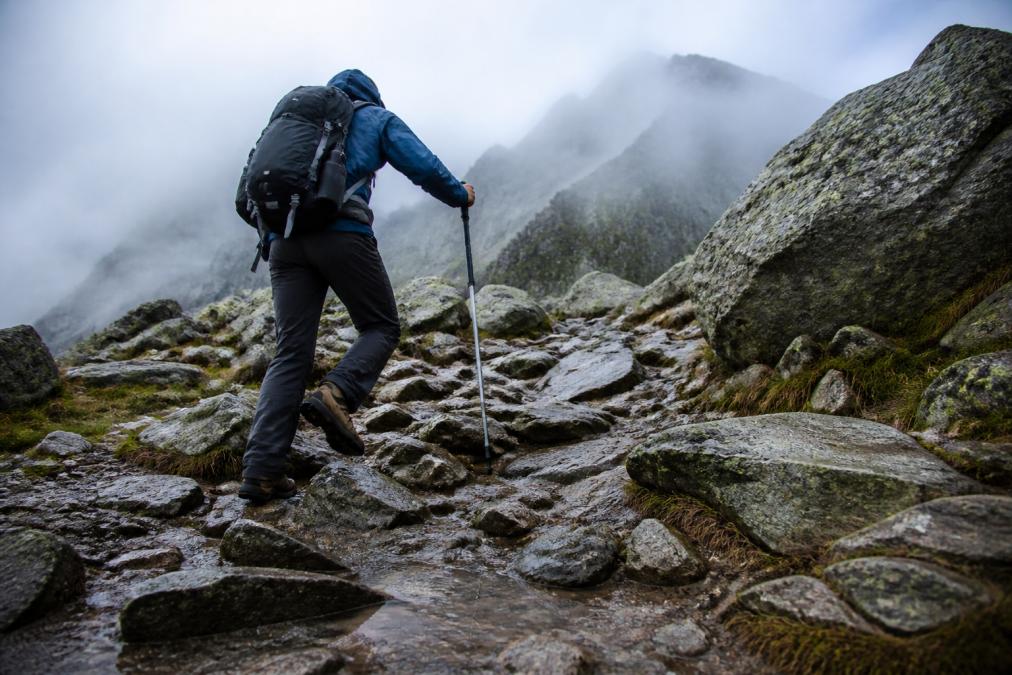
Rocky, wet, steep ground rewards boots with deep lugs, a protective toe cap, and a stiff outsole that spreads point loads from sharp rocks. Smooth, dry, rolling trail rewards the lighter, more flexible option. Many thru-hikers switch to trail runners for exactly this reason, accepting less protection for less weight and faster drying.
How to Prevent Blisters on Long Hikes
Learning how to prevent blisters on long hikes matters more than which category you pick, because most blister problems come from fit and moisture, not shoe type. Heat, friction, and damp skin cause nearly every blister on a multi-day expedition.
- Buy footwear with at least a thumb's width of space in front of your longest toe
- Wear moisture-wicking socks and change them at least once a day
- Lace firmly at the heel to stop your foot sliding forward on descents
- Address hot spots the moment you feel them, before they become blisters
- Air and dry your feet during rest breaks
Transitioning Strategies and Environmental Considerations
Switching from boots to trail runners is not a gear swap you make on day one of a multi-day expedition. It is a physical adaptation, and treating it like a purchase decision is how people end up with plantar pain, Achilles strain, or a rolled ankle three days from a trailhead. Two gaps matter here: how to transition safely, and what the choice costs over its lifecycle.
A Step-by-Step Transition Protocol
Feet, calves, and ankles need several weeks to adapt to less underfoot support and a lower drop. Build load and mileage gradually rather than switching cold.
- Start on day hikes with no pack. Wear the new trail runners on 3-5 mile walks on terrain similar to your target route. The goal is to feel how your foot moves without a stiff midsole or high collar.
- Add pack weight before you add miles. Walk the same short routes with your loaded pack. This is where weak ankles and tired arches show up, and it is far better to find that out on a local trail than on day two of a thru-hike.
- Progress to overnight trips. Do one or two short overnights with your real kit. Pay attention to how your feet feel on the descent, when the calf and arch take the most load.
- Build mileage in roughly 10-20% weekly increments. Sudden jumps in mileage are the most common cause of overuse injury in any footwear, and the risk is higher when you remove support.
- Keep boots in reserve for the first heavy-load days. Many hikers run a hybrid: boots for the heaviest, roughest sections and trail runners for the rest. There is no rule that says you must commit to one category for an entire trip.
- Strengthen the supporting muscles. Calf raises, single-leg balances, and short barefoot walks on safe ground build the proprioception and foot strength that a high collar used to provide.
Footwear Lifecycle, Repairability, and Environmental Impact
Environmental impact deserves a place in this decision, and the honest answer is more nuanced than "boots are greener." Durable leather boots that last several seasons mean fewer pairs replaced, lowering long-term waste. Lightweight trail runners use less material per pair but wear out faster, so the footprint per mile can end up similar. The variables that move the needle are repairability and material composition.
- Resolability: Many traditional leather and nubuck boots can be resoled, and some can have their uppers rebuilt. That extends service life well beyond a single outsole. Most trail runners are cemented constructions that cannot be resoled economically, so the whole shoe is replaced when the midsole packs out.
- Midsole degradation: EVA and similar foam midsoles lose cushioning and rebound over time regardless of tread wear. A trail runner with intact tread but a dead midsole is still finished. This is often the real end-of-life trigger, not the outsole.
- Material composition: Leather tanning and synthetic textile production both carry environmental costs, and the trade-offs are not simple. What is clear is that buying footwear built to last and actually repairing it beats replacing disposable pairs on a per-mile basis.
- End-of-life: Look for take-back or recycling programs where available. Footwear is difficult to recycle because of mixed materials, so keeping a pair in service longer is the most reliable lever a hiker has.
Putting the Two Gaps Together
The transition protocol and the lifecycle question are connected. A hiker who adapts gradually to trail runners and replaces them every 400-600 miles makes a different environmental and physical trade than one who runs resolable boots for multiple seasons. Neither choice is automatically right. What matters is making it deliberately, with pack weight, terrain, climate, and foot health in view, and giving your body time to adapt before you commit.
Conclusion
Matching footwear to your pack weight, terrain, and foot health is the difference between a comfortable multi-day expedition and a painful one. GreatAdventureSupply stocks boots and trail runners selected for real conditions, including waterproof hiking boots with VIBRAM® outsoles and breathable trail running shoes. Add to Cart and head out prepared.

Frequently Asked Questions
Should I get hiking boots or trail runners for backpacking?
It depends on your pack weight and the terrain. Trail runners like the G WEST Men's Trail Running Shoes ($85.00) work well for loads under 20 pounds on maintained trails. When you carry heavier loads or cross rugged, uneven ground, the ankle protection and torsional rigidity of a boot such as the Botas Pro Olive 6 Inch Waterproof Hiking Boots ($80.99) help prevent foot fatigue and reduce injury risk.
Do trail runners provide enough ankle support for heavy packs?
Trail runners offer minimal ankle structure. With a heavy pack, your ankles work harder to stabilize each step, which increases fatigue on long days. Boots with a 6-inch collar, like the ROCKROOSTER Farmington models ($119.99), add support that matters when your load shifts your center of gravity. If your base weight stays light and the trail is smooth, trail runners can still work.
How do I prevent blisters on long hikes?
Fit, moisture management, and sock choice matter most. Choose footwear with a break-in period before your trip, keep feet dry with breathable membranes, and wear moisture-wicking socks. Boots with a waterproof membrane can keep water out while venting sweat, which reduces friction. Address hot spots immediately with tape or blister patches rather than waiting for a blister to form.
Can I use trail running shoes for trekking on rugged terrain?
Trail runners handle moderate terrain well thanks to aggressive lug patterns and lightweight construction. On sharp rocks, scree, or sustained descents, their thin midsoles transmit more impact to your feet. Boots with a VIBRAM outsole and a protective toe cap absorb that punishment better. Match your footwear to the worst terrain on your route, not the easiest section.
Are hiking boots necessary for multi-day expeditions?
Not always, but they earn their place when conditions demand it. Multi-day trips with heavy loads, wet climates, or technical ground favor boots for their ankle support, waterproofing, and durability. Ultralight backpackers on well-graded trails often prefer trail runners for the weight savings. The right answer depends on your pack weight, terrain, and climate rather than a single rule.
The real challenge on any multi-day expedition is that no single pair of footwear suits every trip, and guessing wrong costs you comfort on the trail. GreatAdventureSupply curates boots and trail runners built for real conditions, with waterproof membranes, VIBRAM® outsoles, and cushioned, breathable designs. Browse the collection and gear up with footwear that matches your pack weight and terrain. Get started with GreatAdventureSupply and step onto the trail with confidence.