 ultimate-guide
Essential Camping Safety Tips for Families
Table of Contents
- Camping Safety Starts With Campsite Boundaries and Organization
- Campfire Safety and Fire Suppression Basics
- Water Safety: The Water Watcher and Buddy System
- How to Store Food While Camping to Avoid Wildlife
- Family Camping First Aid Kit Essentials and Allergy Plans
- Camping Safety Rules for Kids: Age-Specific Protocols
- Digital Safety, Offline Navigation, and Weather Preparedness
- Conclusion
- Frequently Asked Questions
Last Updated: September 15, 2026
Camping Safety Starts With Campsite Boundaries and Organization
Most camping injuries involving kids happen inside camp, within sight of a parent who assumed someone else was watching.
This guide from GreatAdventureSupply covers the boundaries, fire rules, water protocols, and age-specific systems that keep families safe, so camping safety is built into your camp layout.
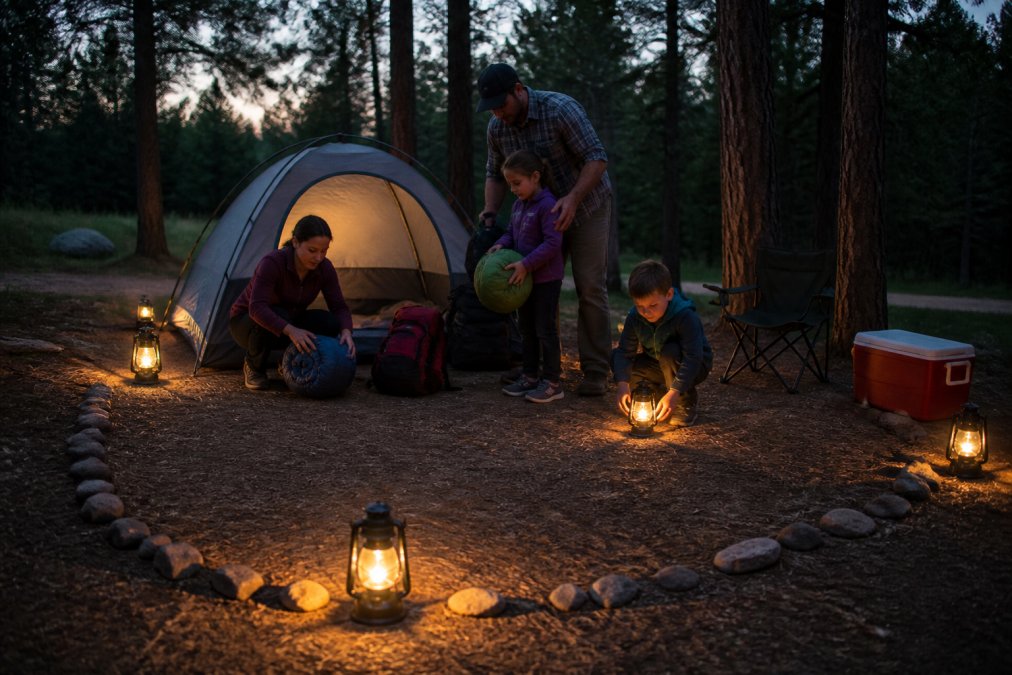
Campsite boundaries are the physical and verbal limits around your sleeping area. Walk the perimeter with your kids on arrival and mark it with stones, a rope between trees, or glow sticks at the corners.
Children who know where "camp" ends are less likely to wander into brush, toward water, or into another site's fire ring.
Marking the Perimeter for Younger Kids
Toddlers and preschoolers need a boundary they can physically feel. A rope at knee height works better than a verbal rule because it gives a tactile stop.
A few practices that hold up in real trips:
- Walk the boundary together and name each corner out loud
- Use glow sticks or a lantern at night so the edge stays visible after dark
- Keep the tent door facing the fire ring and seating area so you always have a sightline
- Store gear bags along one edge to create a natural wall on the least safe side
Campfire Safety and Fire Suppression Basics
Campfire safety means treating the fire ring as a defined zone with one adult assigned to it at all times, plus the tools and water to fully extinguish a fire. The family rule: no fire without an adult within arm's reach.

Fire suppression means fully extinguishing a fire, not just dampening it. Keep a bucket of water and a shovel beside the ring before you light anything; a fire that looks out is often still hot underneath and can reignite in wind.
The Three-Zone Fire Layout
Use three concentric zones, each with its own rule:
- Hot zone (0-3 feet from the ring): adults only, and only the adult currently managing fuel. No kids, no pets, no exceptions.
- Warm zone (3-6 feet): seated area for older kids and adults. Chairs only, no running, no getting up to poke the fire.
- Cold zone (6+ feet): where younger kids sit, eat, and play. This is where the camp chairs for toddlers and the marshmallow sticks live.
Mark the hot-zone edge with stones or a log so the line is physical, not verbal. Kids respect a line they can see more reliably than one they must remember.
Gear That Actually Suppresses a Fire
A bucket of water is the minimum. Additions that speed up shutting a fire down:
- A metal shovel for moving ash and dirt onto the coals. Plastic shovels melt.
- A second bucket so one can be refilling while the other is in use.
- A fire extinguisher rated for Class A (ordinary combustibles) kept within reach of the ring, not locked in the vehicle.
- A lid or metal grate to smother a fire if water runs short.
For a contained, low-risk fire, a portable propane fire pit with an on/off valve eliminates the ember problem and is allowed in many areas during burn bans. Check local fire restrictions before you go, since bans change weekly in dry conditions.
The Drown-Stir-Drown Method, Done Properly
Before bed, or before leaving the site, run this sequence:
- Drown the fire with water until the hissing stops.
- Stir the ashes and remaining coals with a shovel to expose anything still hot underneath.
- Drown again, adding water until the ash is cold slurry.
- Feel the ash with the back of your hand, held a few inches above it. If it's too hot to touch, it's too hot to leave.
Repeat the stir-and-drown step as many times as it takes. A fire drowned once and left overnight can reignite in morning wind, which is why the second drowning matters more than the first.
Teaching Kids Fire Rules Without Fear
The goal is respect, not terror. Practices that work:
- Let kids help gather dead-and-down wood (never break branches off live trees) so they feel involved without touching the fire.
- Teach the "stop, drop, and roll" response and practice it once at camp, not just at school.
- Show them the back-of-hand test so they understand why the ash is still dangerous after the flames are gone.
- Assign older kids a real job, like refilling the water bucket, so their role is useful rather than just "stay back."
A family that treats the fire ring as a system, not a spot, is far less likely to have an incident than one relying on reminders.
Water Safety: The Water Watcher and Buddy System
The water watcher system assigns one adult to do nothing but watch the water, in shifts of no more than 15 to 20 minutes, no phone, no cooking, no conversation. When the shift ends, they hand off out loud.
The buddy system pairs each child with another person, and both are responsible for knowing where the other is at all times. Pair a younger child with an adult or older sibling rather than another young child.
Making the Water Watcher Role Actually Work
The system fails when the watcher is "kind of watching" while also flipping burgers. Mechanics that hold up:
- One watcher, one job. The watcher holds a physical token, like a bright lanyard or a whistle, that gets passed at handoff. If you don't have the token, you're not the watcher.
- Verbal handoff, every time. The outgoing watcher says, "I'm handing off to you, do you have eyes on all four kids?" The incoming watcher confirms out loud before the outgoing one looks away.
- Count heads on a schedule. Every 10 minutes, the watcher counts kids out loud. This catches the moment a child slips under a dock or behind a rock.
- Position matters. The watcher sits or stands where they can see the entire swim area, including the bottom in shallow water. If they can't see the bottom, kids shouldn't be swimming there.
With one adult, the watcher and cook roles cannot run at once.
Buddy Pairings by Age and Ability
Life Jackets: Fit Matters More Than Type
Moving Water, Cold Water, and the Rules That Change
How to Store Food While Camping to Avoid Wildlife
Bear Canister or Hang? Choosing Based on Your Site
Family Camping First Aid Kit Essentials and Allergy Plans
Camping Safety Rules for Kids: Age-Specific Protocols
Toddlers (Ages 2-5)
School-Age Kids (Ages 6-12)
| Age Group | Supervision Level | Key Rule | Gear to Carry |
|---|---|---|---|
| Toddlers (2-5) | Arm's reach at all times | Physical boundary, life jacket near water | Whistle on lanyard |
| School-age (6-12) | Checked in regularly | Buddy system, stay put if lost | Whistle, small flashlight |
| Teens (13+) | Checked in at set times | Never alone off-trail | Whistle, headlamp, map |
Digital Safety, Offline Navigation, and Weather Preparedness
Conclusion
Frequently Asked Questions
What should be in a family camping first aid kit?
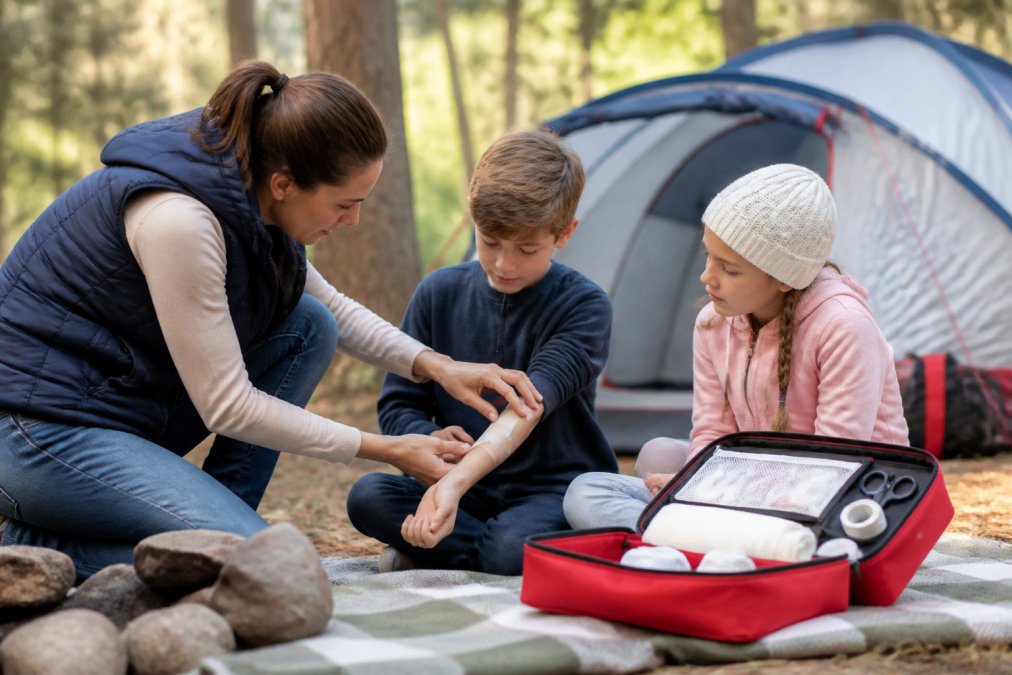
A family camping first aid kit should include adhesive bandages in multiple sizes, sterile gauze pads, medical tape, antiseptic wipes, tweezers, scissors, instant cold packs, children's acetaminophen or ibuprofen, oral antihistamine, hydrocortisone cream, and any prescription medications your family needs. Add a tick removal tool, blister treatment, and a laminated card with emergency contacts and allergy information. A compact kit like the Portable First Aid Kit for Camping, Hiking & Outdoor Activities ($19.00) covers most of these basics in a portable red bag that fits in a daypack.
What are important camping safety rules for kids?
Set clear rules before you arrive: stay inside the campsite boundary, never approach or feed wildlife, always use the buddy system, ask an adult before touching the fire or stove, wear closed-toe shoes at all times, and carry an emergency whistle. For younger kids, add a rule about staying within sight of an adult. For school-age kids, teach them to stop and stay put if they get lost, and to blow three short blasts on a whistle as a distress signal. Review the rules at the start of every trip, not just the first one.
How do you store food while camping to avoid wildlife?
Store all food, scented items, and cooking gear in a bear canister, a locked vehicle, or a hung bear bag at least 100 yards from your tent and 10 feet off the ground. Never keep snacks, toothpaste, or sunscreen in your tent. Cook and eat at least 100 feet from where you sleep, and clean up all crumbs and grease immediately. In bear country, use an approved bear canister. In raccoon-heavy areas, a locked cooler inside a vehicle works if your site allows it.
What is the 3-3-3 rule for camping?
The 3-3-3 rule is a family-friendly planning guideline: arrive at your campsite by 3 p.m. so you have daylight to set up, plan to stay within 3 hours of home or a hospital for shorter trips with young kids, and stop hiking or exploring by 3 p.m. to return to camp before dark. Some families use a variation: 3 minutes without air, 3 days without water, 3 weeks without food, as a reminder of survival priorities. Either version helps structure a safer trip.